
 1 hour ago
1
1 hour ago
1
ARTICLE AD BOX
Last Updated:April 08, 2026, 12:39 IST
Alexander burned it, Mongols ravaged it, yet Iran's civilisation remains among world's oldest and continuous: News18 explains the unbroken cultural thread despite foreign invasions


The 400-year-old Si-o-seh Pol bridge, named for its 33 arches, in Isfahan, Iran. (AP File)
Iran’s ‘civilisation’, one of the world’s oldest and continuous, has been the buzzword over the past 24 hours, amid US President Donald Trump’s threats to end it before the ceasefire agreement was reached.
While many ancient civilisations like those in Mesopotamia or Egypt saw their core identities absorbed or replaced over millennia, Iran has maintained a distinct and unbroken cultural thread despite numerous foreign invasions. News18 explains all you need to know.
IRAN’s CIVILISATION: ONE OF WORLD’S OLDEST AND CONTINUOUS
The history of Iranian civilisation from the Paleolithic to the Mongol invasion is a narrative of profound antiquity followed by the rise and fall of world-defining empires, ultimately meeting a catastrophic turning point in the 13th century.
The major eras: At a glimpse
- Elamite Era (c. 3200–539 BC): One of the earliest urban societies in world history.
- Achaemenid Empire (550–330 BC): The world’s first true superpower, known for its model of tolerance and administrative efficiency.
- Sasanian Empire (224–651 AD): Seen as the peak of ancient Persian culture before the Islamic era, heavily influencing the Roman and Byzantine Empires.
- Islamic and Modern Periods: Even after the 7th-century Arab conquest, the Persian language and culture were revived and remain central to Iranian identity today.
Prehistory: The Foundations (c. 1,000,000 – 3000 BCE)
Iran’s landscape is among the oldest human-occupied regions on Earth, with evidence of early hominins dating back nearly one million years.
Paleolithic Era: Stone tools used by Neanderthals have been found in the Zagros Mountains and central Iran at sites like Bisitun Cave and Warwasi.
Neolithic Revolution: Around 10,000 BCE, some of the world’s first agricultural communities emerged. Ganj Dareh provides evidence for the earliest known domestication of goats, while Chogha Golan shows early emmer wheat farming.
Early Urbanism: By the 4th millennium BCE, sophisticated cultures like the Jiroft culture in southeastern Iran were producing unique chlorite vessels and early inscriptions that may pre-date Mesopotamian writing.
The Era of Great Empires (c. 3000 BCE – 651 CE)
This period saw the consolidation of the Iranian plateau into centralised states and the first global superpowers.
Elam (c. 3000–539 BCE): Centered in Susa, the Elamites were a major power that interacted closely with Mesopotamia, often raiding Babylon and even bringing Hammurabi’s law code back to Susa as a trophy.
The First Iranian Empires:
Median Empire (c. 728–550 BCE): Unified by Cyaxares, the Medes were the first Iranian group to consolidate power over a vast territory.
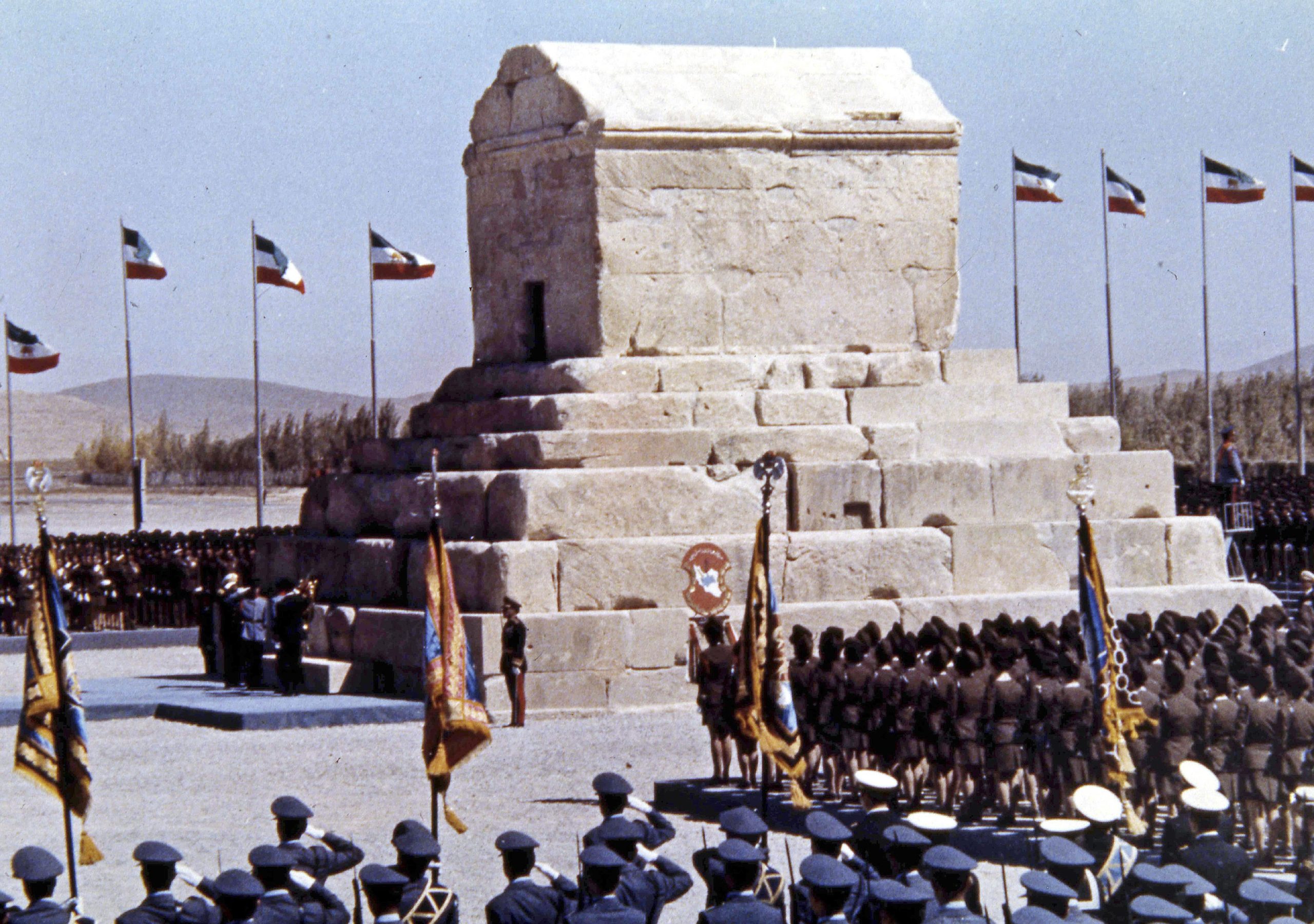
Achaemenid Empire (550–330 BCE): Founded by Cyrus the Great, it became the world’s first true superpower, known for the Cyrus Cylinder and a model of administrative tolerance.
Hellenistic to Sasanian Periods
Seleucid & Parthian Empires: After Alexander the Great destroyed the Achaemenids, the Seleucids introduced Hellenistic culture. The Parthians later reclaimed the plateau and became a formidable rival to Rome.
Sasanian Empire (224–651 CE): Considered the peak of ancient Persian culture, the Sasanians revived Zoroastrianism and deeply influenced art and administration from China to Byzantium before falling to the Arab conquest.
The Islamic Transition and the Mongol Catastrophe (651 – 1334 CE): Following the Arab conquest, Iran underwent a “Persianisation" process where it deeply influenced the Islamic world’s administration and science.
The Seljuks (c. 1000–1218 CE): A Turkic dynasty that adopted Persian culture, they presided over a “Golden Age" of science and the expansion of the Silk Road.
The Mongol Invasion (1219–1258 CE): Led by Genghis Khan and later his grandson Hulagu, the Mongol conquest was one of the bloodiest events in history. Millions were killed, and major centers like Merv, Nishapur, and Rey were leveled. Irrigation systems were destroyed, and the population took nearly 800 years to recover. Despite the initial slaughter, the Mongols eventually established the Ilkhanate, converted to Islam, and adopted Persian administrative methods, becoming patrons of a new, distinct Persianate culture.
Alexander burned it. The Mongols ravaged it. History tested it.#Iran is still here. A psychopath’s threats won’t end what time couldn’t. pic.twitter.com/Okp1dJSByo— Iran Embassy in Türkiye (@Iran_in_Turkiye) April 7, 2026
IRAN: THE HUB OF GLOBAL INNOVATION
Urban settlements on the Iranian plateau date back to the 5th millennium BC. Some modern assessments, such as those by World Population Review, even rank Iran as the world’s oldest country based on the establishment of its earliest known organised government around 3200 BCE. Despite being conquered by the Greeks, Arabs, Turks, and Mongols, the Iranian national identity was repeatedly asserted and preserved. Instead of disappearing, Iran often “Persianised" its conquerors, influencing their administration, art, and literature.
The region has been a hub of global innovation for thousands of years such as:
- The Cyrus Cylinder (c. 539 BC): Often cited as the world’s first charter of human rights.
- The Royal Road: One of the world’s first major postal and trade highways.
- Zoroastrianism: One of the oldest revealed monotheistic religions, which deeply influenced major world faiths.
- Scientific Legacy: During the Islamic Golden Age, Persian scholars like Avicenna (medicine) and Al-Khwarizmi (the father of algebra) laid the foundations for modern science and mathematics.
INVADERS VERSUS CONTINUITY: THE IRANIAN PARADOX
The Iranian regime’s relationship with its ancient past is a calculated paradox. While early revolutionary leaders like Ayatollah Khomeini initially dismissed pre-Islamic history as “pagan" or “royalist" propaganda used by the Shah, the current establishment increasingly invokes these ancient roots to project geopolitical resilience against modern rivals.
The regime and modern Iranian nationalists frame foreign invasions not as breaks in history, but as “tests" that ultimately proved the superiority of Persian culture.
Alexander the Great: Often referred to as “Alexander the Accursed," he is viewed as a destroyer who burned Persepolis in a drunken stupor. However, the regime points to the fact that he was eventually “Persianised" — adopting Persian dress and court customs—as evidence that Iranian civilisation absorbs its conquerors.
The Mongols: Similar to the Macedonian and Arab invasions, the Mongol period is cited as a time of devastation that failed to extinguish the Iranian spirit. The regime’s official messaging often highlights that even the Mongols eventually built monuments in the Persian style and patronised Persian scholars.
Modern Narrative: The Islamic Revolutionary Guard Corps (IRGC) frequently uses the contrast between Iran’s “7,000-year history" and the “paltry history" of modern Western powers to delegitimise current sanctions or military threats.
The Heirship of Cyrus: The regime has shifted from trying to erase the legacy of Cyrus the Great to attempting to Islamicise him. A popular theory promoted by some Iranian clerics and state-backed scholars identifies Cyrus as the Quranic figure Dhul-Qarnayn, a righteous monotheistic king. This allows the regime to claim his legacy of “human rights" and “justice" without validating the secular nationalism of the Pahlavi era. By claiming to be the heir of ancient Persian empires, the state justifies its current “forward defense" policy and influence in Iraq and Syria, framing it as a natural return to historical Iranian spheres of influence. Despite this rhetorical embrace, the government often blocks access to the Tomb of Cyrus during “Cyrus the Great Day" (October 29), fearing that unmonitored nationalist gatherings could turn into anti-regime protests.
CULTURAL PHOENIX: WHAT IS IRAN’s SURVIVAL MECHANISM? WHAT ARE ITS THREE PILLARS?
Historians note that Iranian civilisation developed a “survival mechanism" of transforming defeat into continuity. Unlike Egypt or Mesopotamia, Iran retained its language (Persian/Farsi) through the Islamic conquest, which the regime now uses as a pillar of its unique identity separate from the Arab world.
The “continuity" the current regime and nationalists claim rests on three unbreakable pillars:
The Persian Language (Farsi): While Egypt and Mesopotamia switched to Arabic, Iran kept its tongue. The poet Ferdowsi is credited with saving the language through the Shahnameh (Book of Kings), ensuring Iranians never lost their ancestral myths.
Bureaucratic Genius: Whether it was Alexander’s generals or Mongol Khans, every invader realised they couldn’t run the plateau without the Persian Viziers. They needed the existing systems of taxation, irrigation (qanats), and diplomacy to rule.
The “Iranian Idea": This is a cultural identity that proved more infectious than military might. By the time the Mongols became the Ilkhanate, they were building Persian mosques, writing in Persian, and acting more like Persian Shahs than steppe warriors.
The regime frequently highlights that the Islamic Golden Age was driven largely by Persian scientists and philosophers, essentially arguing that Islam provided the “soul" while Persian civilisation provided the “mind" of the modern state. That resilience is exactly why historians often call Iran a “cultural phoenix".
It’s one of the few civilisations that didn’t just survive its conquerors—it sublimated them. There is a famous saying that “the Arabs conquered Iran, but the Persians conquered Islam," referring to how Persian administration, art, and philosophy became the backbone of the Islamic Golden Age.
KEY FAQs
Did conquerors like Alexander and Genghis Khan destroy Iranian civilisation?
No, while invaders like Alexander the Great and Genghis Khan caused massive destruction, they did not erase Iranian civilisation. Mongol invasions destroyed major cities like Nishapur and Baghdad and killed large populations However, Iran’s culture, language, and administrative traditions survived and later revived under new rulers
Why was Iranian civilisation so resilient?
Iran’s civilisation endured because it has deep historical roots, strong cultural identity, ability to absorb invaders culturally. Even after political collapse, the society reorganised and rebuilt over time.
What actually made Iran hard to “destroy" permanently?
Mountains and vast terrain made full control difficult; even if capitals fell, regional centres survived; after invasions, local elites and administrators restored order. For example, after Mongol devastation, new regimes like the Ilkhanate helped rebuild governance in Iran.
First Published:
April 08, 2026, 12:36 IST
News explainers Alexander, Genghis Khan To Trump: Why Iran’s 7,000-Year-Old Civilisation Outlives Every Invader
Disclaimer: Comments reflect users’ views, not News18’s. Please keep discussions respectful and constructive. Abusive, defamatory, or illegal comments will be removed. News18 may disable any comment at its discretion. By posting, you agree to our Terms of Use and Privacy Policy.
Read More





 English (US) ·