
 (6).png) 4 hours ago
1
4 hours ago
1
ARTICLE AD BOX

Summary
With the Strait of Hormuz closure impacting 54% of India's LNG and crude imports, the government is exploring new supply routes.
India's crude oil refiners are scouting for new supply sources after Iran's historic announcement of the closure of Strait of Hormuz, three people aware of the development said. The Union petroleum ministry is consulting with the refiners, taking stock of oil stocks and exploring possible alternatives in Africa and South America, even as the global oil cartel Opec+ has decided to boost production.
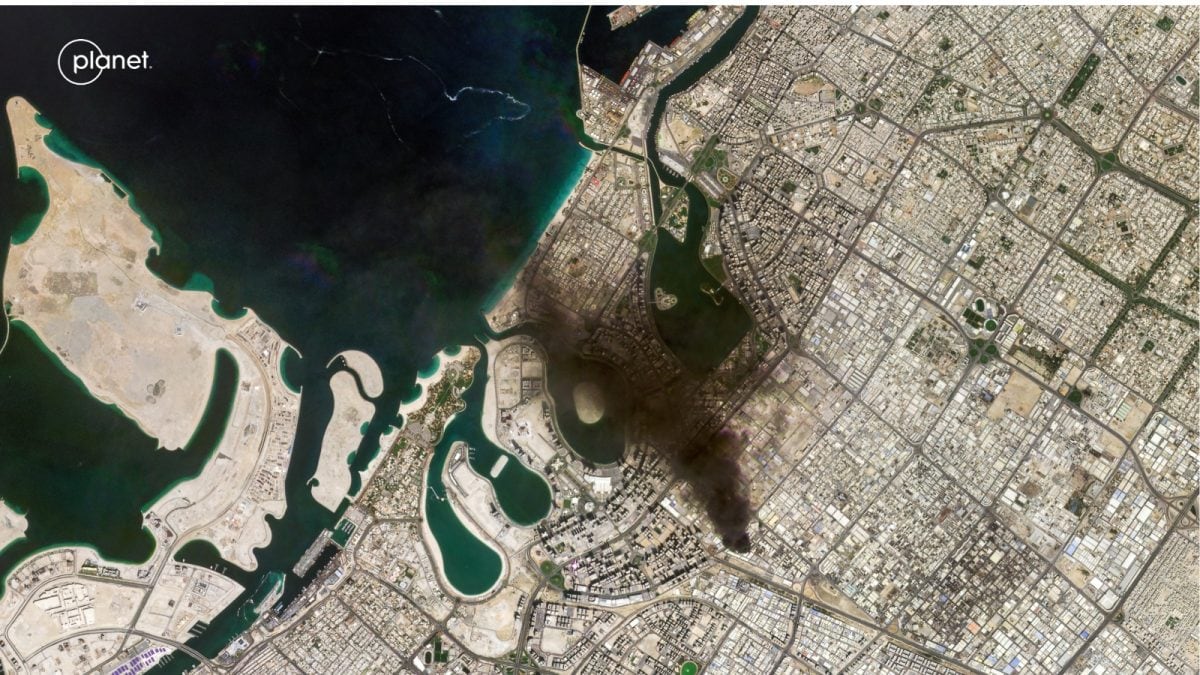
The assassination of Iran's supreme leader Ali Khamenei on Saturday during joint strikes by the US and Israel and Iran's retaliatory attacks across the US military and air bases in the Gulf and civilian areas are expected to hit the global trade in oil. Freight rates are expected to soar, even as cargo vessels are stuck at both sides of the Strait.
In FY25, nearly half of India’s crude oil imports and 54% of LNG imports were routed through the Strait of Hormuz. Even during previous periods of strife in West Asia, such as the Iran-Iraq war, the vital supply route had remained open. Its closure is a setback for New Delhi, which was beginning to veer towards West Asian supplies.
Taking stock
"The petroleum ministry is taking continuous stock of the energy supply scenario along with the refiners. They are looking at ways to ensure that supplies are not interrupted. Saudi Arabia and Iraq has emerged as the major suppliers of late, and the situation is concerning. Import from alternative sources may pick up. Even if supplies are ensured, prices are sure to rise and will impact the cost and margins of the refineries," said one of the three people mentioned above.
Prime Minister Narendra Modi was set to chair a meeting of the Cabinet Committee of Security in Delhi on Sunday night, PTI reported.
While experts had forecast Opec+ to increase production by 137,000 barrels per day, the cartel agreed on 206,000 bpd, citing "a steady global economic outlook and current healthy market fundamentals." The eight-strong V8 group in the alliance, which includes top oil producers Saudi Arabia and Russia, as well as several Gulf states bearing the brunt of Tehran's missile strikes, said they had agreed a "production adjustment", but skipped mention of Iran.
"Over the past two to three months, India’s dependence on Middle Eastern (West Asian) barrels has increased as refiners have pivoted away from a portion of Russian volumes. As a result, the relative weight of Gulf-origin crude in India’s import basket has risen, increasing short-term sensitivity to any disruption in Hormuz transit. Kpler tracking indicates continued availability of Russian cargoes in the Indian Ocean and Arabian Sea region, including volumes in floating storage. Should Middle Eastern inflows tighten, Indian refiners could pivot back toward Russian grades relatively quickly," said Sumit Ritolia, lead research analyst, refining & modelling at Kpler.
Fatih Birol, executive director of the International Energy Agency wrote on X that the agency is "actively monitoring" events and the potential implications for global oil & gas markets and trade flows. "Markets have been well supplied to date. I am in contact with ministers from major producers in the region & IEA governments about the situation," Birol wrote.
Choke point
With crude oil prices set to rally as global markets open Monday, the evolving situation assumes strategic importance for India. India, the world's third-largest oil buyer, consumes about 5.5 million barrels of crude oil daily, and 1.5-2 million of those barrels pass through this choke point vital for global energy supplies. With India already lowering Russian oil imports, West Asia had emerged as an alternative during the past two months. Oil prices have rallied to around $73 per barrel in the last two weeks on rising expectations of a conflict.
Aditi Nayar, chief economist at ICRA Ltd said: "The situation in West Asia is unfolding and the extent that it prolongs and widens, would have a bearing on India's macros, including things like the impact of fuel prices on inflation and the twin deficits, as well remittances."
Supplies of liquefied natural gas (LNG) would be impacted as well.
In February 2024, Petronet LNG Ltd extended its contract to buy 7.5 million tonnes of LNG annually from QatarEnergy for another 20 years. Among other recent deals, Abu Dhabi National Oil Co. Gas (Adnoc Gas) and its subsidiaries signed a 10-year LNG sales and purchase agreement with Hindustan Petroleum Corp. Ltd in January this year, valued between $2.5 billion and $3 billion.
Contingency
Mint earlier reported that India’s contingency for ensuring energy security involves securing crude oil supplies through two pipelines specifically built to bypass the Strait of Hormuz, and tapping Abu Dhabi National Oil Company (Adnoc) and Saudi Arabian Oil Co.’ (Saudi Aramco) global reserves and portfolios for replacement barrels.
India imports nearly 90% of its oil requirement and sourced oil worth $161 billion last fiscal, with its ’ total petroleum product consumption projected to increase by 4.65% and reach a record 252.9 million metric tonnes (mmt) in FY26. A $1 rise in oil prices leads to an increase of ₹13,000 crore in the country's annual import bill.
In the past two months, West Asia has emerged as the best alternative to replace the Russian barrels. Mint earlier reported that Saudi Arabia surpassed Russia as India’s top oil supplier in early February, signalling New Delhi’s effort to reduce imports from Moscow after its trade pact with the US. Saudi Arabia shipped 1.13 million barrels per day (bpd) in the first 10 days of February compared to 1.09 million bpd by Russia, according to data from global ship tracking firm Kpler.
Queries mailed to the ministries of petroleum and external affairs, and the state-owned refiners remained unanswered.
Volatility
Around 2.5–2.7 million barrels per day (mbpd) of India’s crude imports transit through the Strait of Hormuz, largely from Iraq, Saudi Arabia, UAE and Kuwait.
Prashant Vasisht, senior vice-president and co-group head, corporate ratings, ICRA Ltd noted that the escalating conflict in West Asia and reported attacks on several oil producers are likely to exacerbate volatility in crude oil prices.
The Strait of Hormuz remains a critical global energy choke point, with nearly 20% of global petroleum liquids and 20% of global liquefied natural gas (LNG) shipments transiting through the route. As Iran and several West Asian energy producers straddle the Strait of Hormuz, any escalation in regional conflict could impede energy shipments through this corridor.
"Any attack on oil and gas production facilities of other major Middle East producers would further aggravate supply concerns. Crude oil prices have already increased from approximately $65 per barrel to $72–73 per barrel over the past few days, reflecting the build-up of geopolitical tensions in the region," Vasisht added. Media reports suggest that Iran has already hit an oil tanker off the coast of Oman. As the conflict escalates, such instances may increase, hurting energy supplies.
While Indian refiners may be able to source crude oil from alternate locations such as the US, Africa and South America, elevated energy prices could result in a higher import bill, he added.
'Critical point'
Harsh V. Pant, vice president of Observer Research Foundation and professor of international relations with King's India Institute at King's College London said: "The (Iranian regime) is at a critical point. They would be looking at survival. Now, everything depends on what happens in Iran internally". He said there may be managed continuity, with the regime able to find a successor and the governance model and regime continuing; the Islamic Revolutionary Guard Corps (IRGC) taking over control; or the regime completely collapsing.
"Although the US has been asking the Iranian people to topple the government, if there is no defection within the military, the military would be able to crush any protest, and the question is why would people want to die. The regime knows it's a do-or-die situation. So, there is a possibility that the conflict turns more violent. Trump, too, will keep the pressure up till there is regime change. The political endgame has been defined in very expansive terms by the US President. If regime change is not achieved, it may impact the credibility of Trump back home," Pant added.
If the conflict lengthens, it would have a major impact globally and in India in economic and trade terms.
West Asian countries are trade partners with India. India also has a free trade agreement with the UAE. As per commerce ministry data, India’s exports to the West Asian bloc of countries including Saudi Arabia, Iran, Iraq, the UAE, Qatar, Oman, Bahrain, Kuwait, Yemen, Jordan and Israel, stood at $65.55 billion in FY25 in comparison to $68.18 billion in FY24, marking a decline of about 4%. The bloc accounts for around 15% of India’s total exports.
Evolving situation
Ajay Sahai, director general & CEO of the Federation of Indian Export Organisations (FIEO), a trade body under the ministry of commerce, noted that recent developments involving Iran carry both immediate and short-term implications for India’s external trade, although the actual impact will depend on how the situation unfolds in the coming days.
"Any escalation in the region increases sensitivities around the Strait of Hormuz and adjoining Gulf shipping lanes, through which a substantial share of India’s merchandise trade transits. Even in the absence of a direct physical disruption, elevated war-risk premiums, higher insurance costs, and potential vessel re-routing can exert upward pressure on freight rates and logistics expenses," he said, while adding that the shipping schedule has already been disrupted and containers for West Asia and other regions have been put on hold.
According to Anil Devli, CEO of the Indian National Shipowners’ Association (INSA), the developments have the potential to impact shipping and world trade. "There are mostly tanker movements in the region and about seven to eight Indian ships are also moving in the Strait at present. We are also in close touch with the Information Fusion Centre - Indian Ocean Region (IFC-IOR), hosted by the Indian Navy. Whether the Indian Navy would enter in the war zone to provide safety cover to Indian ships is not known at present," he said.
Right now, ships are stuck in the Strait on both sides, Devli said. The real impact would be felt for fresh freight bookings, he added.
War premium
Insurance premiums have shot up with insurers charging additional war risk premiums. Gaurav Agarwal, vice president for marine insurance, Prudent Insurance Brokers said: "The Persian Gulf and the Red Sea–Suez Canal corridor have already been designated as high-risk zones for the past three years. Insurers have, therefore, been charging additional war risk premiums for cargo transiting through these waters. When global insurers and reinsurers resume office on Monday, we expect clarity on whether war risk rates will be further increased, coverage terms will be restricted or withdrawn for certain voyages, or the market will stabilize depending on geopolitical developments."
Historically, marine war premiums react immediately to heightened hostilities, especially in strategically critical trade corridors such as the Persian Gulf and the Red Sea route via the Suez Canal.
Any sustained escalation could translate into higher freight costs, extended transit routes, and increased insurance outlays for exporters and importers, stakeholders said. This increase in insurance premium and freight cost would further add to India's woes in terms of higher import costs, more so on the energy front.




 English (US) ·