
 3 hours ago
1
3 hours ago
1
ARTICLE AD BOX
Last Updated:April 07, 2026, 09:04 IST
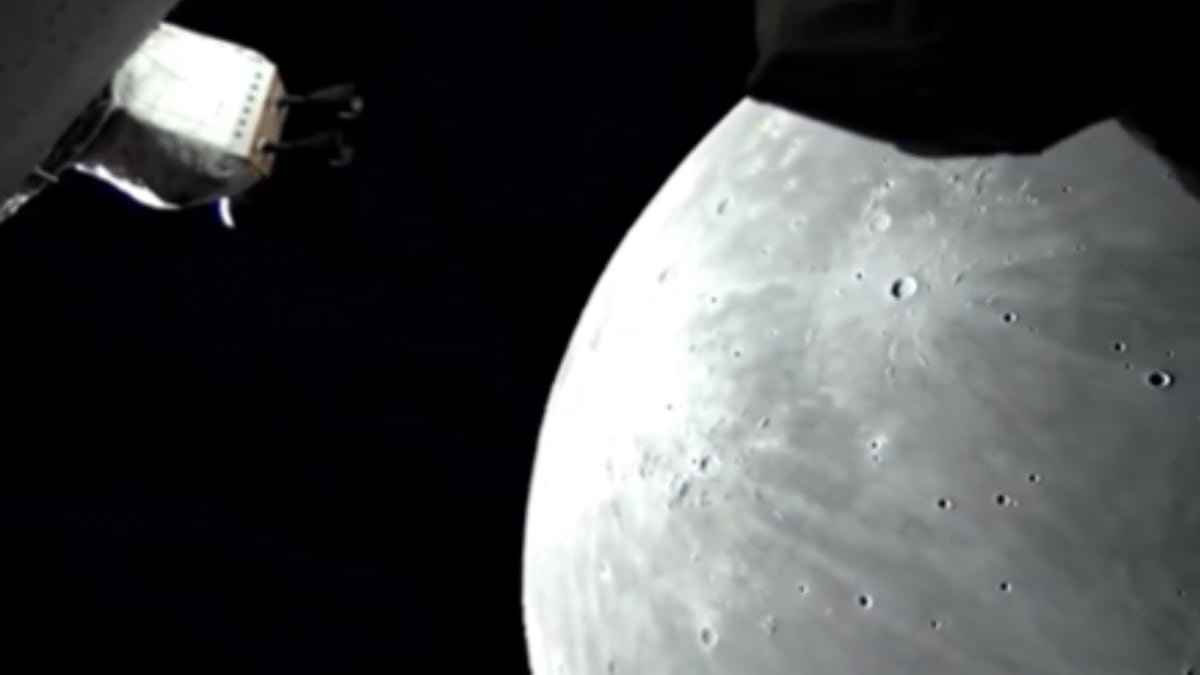
NASA’s Artemis II astronauts made their closest approach to the Moon early Tuesday. The crew is now heading back to Earth.


The crew is documenting these features with specialised cameras and protective eyewear. (X)
The four astronauts aboard NASA’s Artemis II mission witnessed a celestial spectacle that no human on Earth can see. As the Orion spacecraft moves behind the Moon, the astronauts entered a period of total solar eclipse. From their vantage point in deep space, the Moon completely blocks the Sun, turning daylight into deep darkness.
This rare alignment, which began at 6:05 a.m. IST, allowed the four-member crew to observe the Sun’s outermost atmosphere, known as the solar corona, without the blinding glare of the solar disk.
“Wow! It’s amazing!" – Artemis 2 astronaut Victor Glover describes a solar eclipse as the Moon passed in front of the Sun during the Orion capsule’s lunar flyby. pic.twitter.com/TdmiKdLKk7— Spaceflight Now (@SpaceflightNow) April 7, 2026
This deep-space eclipse lasted until 7:02 a.m. IST on Tuesday. Unlike eclipses on Earth, which last only a few minutes, this event lasts much longer due to the spacecraft’s trajectory and its proximity to the Moon.
The solar corona is a region of intense scientific interest, as it is significantly hotter than the Sun’s surface, an enduring mystery that solar physicists are still trying to explain. Using the Moon as a natural shield, the astronauts observed the shimmering, wispy filaments of the corona extending into space.
The crew is documenting these features with specialised cameras and protective eyewear. Their observations will offer ground-based scientists a fresh perspective on solar winds and flares, which can affect satellite communications and power grids on Earth.
NASA’s Artemis II Heads Back To Earth
The astronauts aboard NASA’s Artemis II mission made their closest approach to the Moon in the early hours of Tuesday, following 40 minutes of radio silence as their spacecraft passed behind the Moon’s far side. The crew is now on its way back to Earth.
The four astronauts lost contact with NASA for 40 minutes as the Orion spacecraft curved around the Moon’s far side, leaving them farther from Earth and more isolated than any humans in over 50 years. “We will see you on the other side," pilot Victor Glover said before the communications blackout.
After the spacecraft reappeared from behind the Moon, NASA managed to restore communications. “Houston, Integrity, comm check," mission specialist Christina Koch said as she broke the silence from Orion.
“It is so great to hear from Earth again." “You are Earthbound, and we’re ready to bring you home," Houston mission control said.
Location :
United States of America (USA)
First Published:
April 07, 2026, 09:04 IST
News world Artemis II Astronauts Witness Rare Deep-Space Solar Eclipse, Heads Back To Earth | Watch
Disclaimer: Comments reflect users’ views, not News18’s. Please keep discussions respectful and constructive. Abusive, defamatory, or illegal comments will be removed. News18 may disable any comment at its discretion. By posting, you agree to our Terms of Use and Privacy Policy.
Read More







 English (US) ·