
 2 hours ago
1
2 hours ago
1
ARTICLE AD BOX
Last Updated:April 06, 2026, 17:52 IST
Missiles and military drills dominate headlines, but on the ground in Paju, life near the DMZ moves with an unexpected calm.


The Imjin River flows through the Korean DMZ, crossing from North to South Korea, though the actual border is the Military Demarcation Line, not the river itself. (IMAGE: SUKANYA SAHA/CNN-News18)
It was grey, windy and unusually quiet.
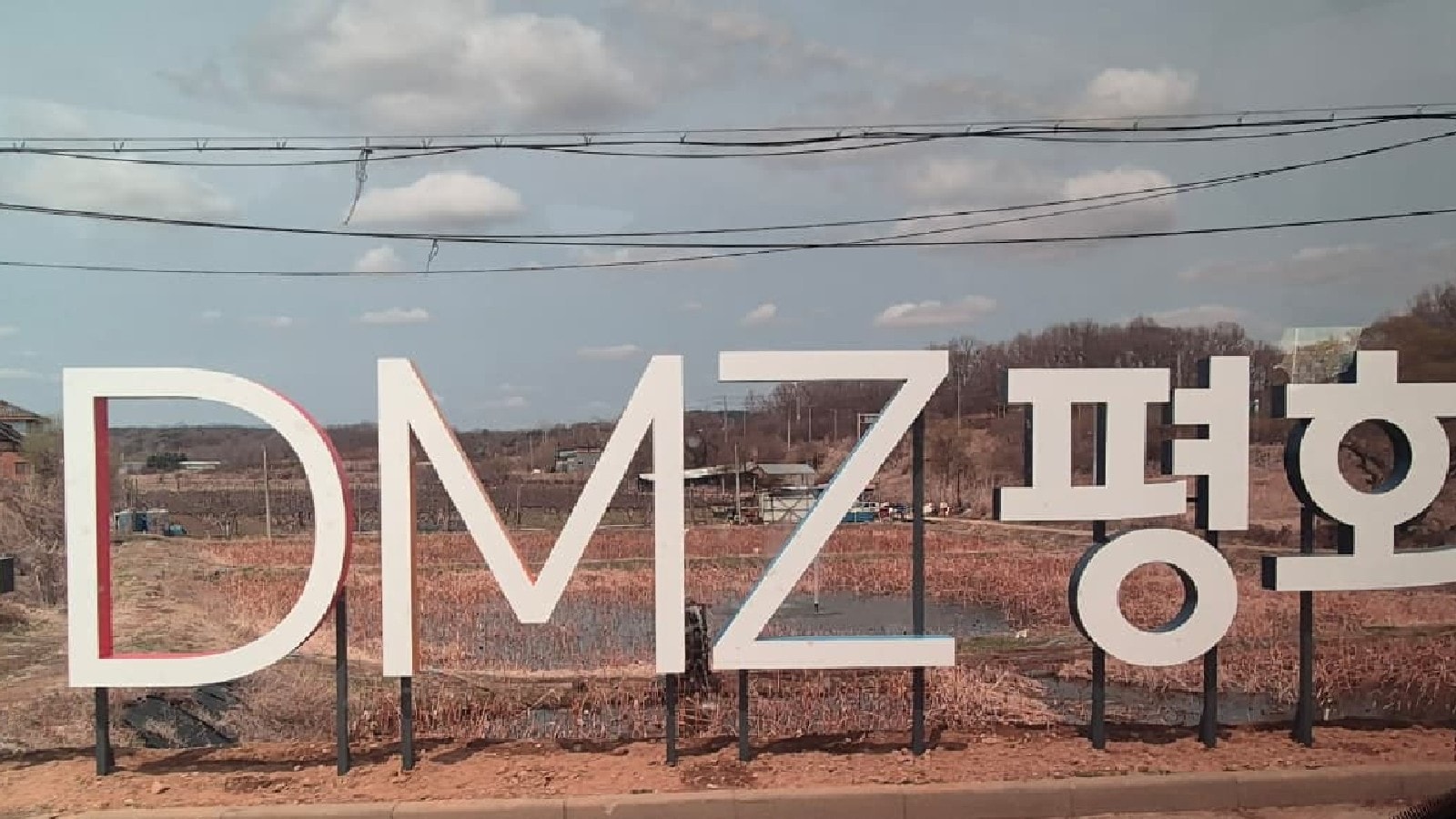
From a viewing point in South Korea’s Paju, a stretch of the Imjin River cuts across the landscape. On the other side lies North Korea. There are no dramatic signs marking the divide. Just still water, low hills and silence.
For a place that sits next to one of the most heavily militarised borders in the world, it doesn’t look the part.
Over 40 journalists from 30 countries, gathered in Seoul at the invitation of the Journalists Association of Korea for the World Journalists Conference 2026, were given access to the restricted civilian zone near the Korean Demilitarized Zone. CNN-News18 was the only media house representing India.
After the conference came the field visit. From the buzz of Seoul, we drove into a very different reality.
Checkpoints, Silence And A Missing Passport
Before entering the area, passports were collected by the military at a checkpoint and returned only on exit.
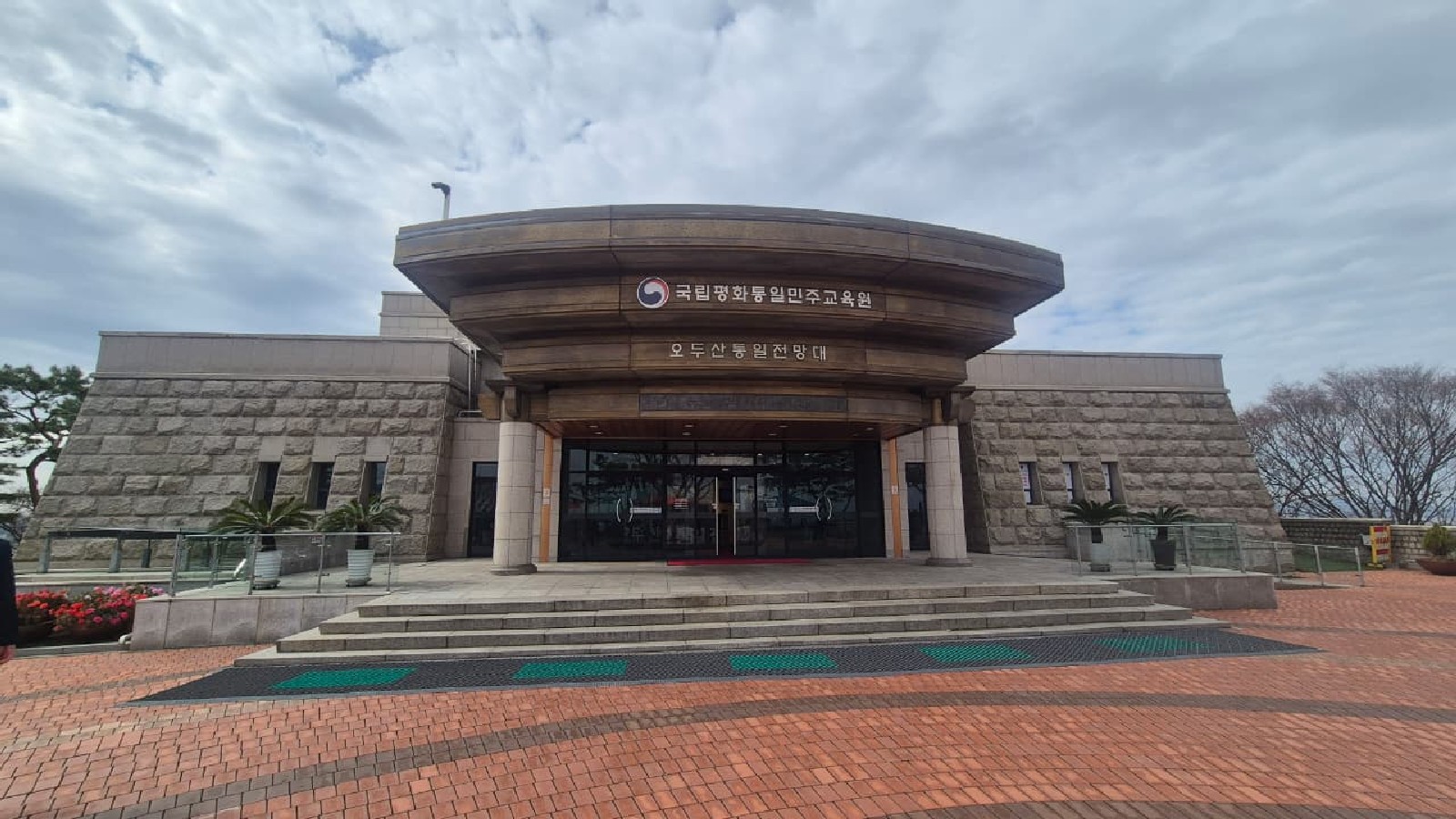
At the Odusan Unification Observatory, the conditions were hazy. North Korean territory was not clearly visible that day, but the proximity was evident.
Soldiers stood guard. Large loudspeakers faced north. These loudspeakers have a history. Both Koreas have used them for psychological warfare, blasting propaganda, music and messaging across the border.
In recent years, tensions have also played out in stranger ways. Like North Korea sending trash-filled balloons across the border, a move that sounds bizarre but is taken seriously in Paju.
A Museum Of Unfinished History
Inside the Joint Security Area museum, the conflict is documented through sound as much as visuals.
Old telephones placed across the exhibit play recorded moments when picked up.
One carries the 1950 announcement by former US President Harry S. Truman, ordering US military support for South Korea after the North’s invasion. Another plays a soldier’s final radio call from the war. A separate installation refers to the 2019 meeting between President Donald Trump and his North Korean counterpart Kim Jong Un at the DMZ.
Different decades. Same conflict.
A Strange Kind Of Normal
A short distance away, at Camp Greaves, the setting shifts.
The former US military camp, now repurposed, feels calm and largely undisturbed. There are no visible signs of urgency or panic. Movement is controlled, but not tense.
And then there was lunch at Tongil Village Jangdan Bean Restaurant, known for its soybean-based dishes. The meal was simple, local and unremarkable in the best way possible.
A table full of soybean-based dishes, laid out. Quiet conversations. Nothing about it screamed “border town."
If you didn’t know where you were, you’d think this was just another day in just another small city.
Over that meal, CNN-News18 spoke to Kim Kyung-il, Mayor of Paju City. “People live here. Life must go on," he said.
His message was simple, but telling. “We need to ease tensions. We don’t want tensions to rise," he said, speaking through a translator. “We are continuously sending messages of peace."
He acknowledged the reality people here live with. “When tensions between the North and South increase, people do become worried," he remarked. “The situation often depends on politics."
But there was also a clear line he kept coming back to. “This is where people live… they should live."
That balance between fear and routine defines Paju.
Politics Vs People
What the mayor hinted at, but didn’t fully spell out, is the bigger truth.
Life in border towns like Paju is deeply tied to politics in Seoul and Pyongyang. When relations sour, anxiety rises. When diplomacy resumes, things calm down.
Residents don’t control that cycle. They live through it. And yet, they stay.
The India Angle That Isn’t There Yet
Interestingly, despite growing India–South Korea ties, the mayor admitted there has been no formal engagement between Paju and any Indian city. But he seemed open to it.
“If there is an opportunity, we would like to take the first step," he said.
It’s a small detail, but a telling one. Even in a region defined by division, there’s space for new connections.
The Bigger Takeaway
For visitors, the contrast is difficult to miss.
Global headlines often frame the Korean peninsula in terms of missiles, military drills and escalation. On the ground in Paju, the picture is quieter. People are having lunch, going to work, raising families.
Living. Right next to one of the most heavily fortified borders in the world.
As one official said during the visit, almost casually, “You get used to it." That might be the most striking thing of all.
Because from the outside, this place represents one of the world’s most dangerous fault lines. From the inside, it’s just… home.
Location :
Seoul, South Korea
First Published:
April 06, 2026, 17:52 IST
News world At The Edge Of War, Life Goes On: Reporting From The Korea Border
Disclaimer: Comments reflect users’ views, not News18’s. Please keep discussions respectful and constructive. Abusive, defamatory, or illegal comments will be removed. News18 may disable any comment at its discretion. By posting, you agree to our Terms of Use and Privacy Policy.
Read More







 English (US) ·