
 1 day ago
2
1 day ago
2
ARTICLE AD BOX
Last Updated:May 08, 2026, 19:18 IST
One man wrote his book in 1987, when Manhattan was negotiable and the world was younger. The other wrote his in 2014, out of office, with time to think.


Iran Foreign Minister Abbas Araghchi and US President Donald Trump.
In 1987, a Manhattan real-estate developer published a book about himself. “My style of deal-making is quite simple and straightforward," Donald Trump wrote in The Art of the Deal. “I aim very high, and then I just keep pushing and pushing and pushing to get what I’m after."
In 2014, a mid-career Iranian diplomat, and, then deputy foreign minister published a book about his craft. “The main principle of bargaining is practice: repetition, repetition, and repetition, combined with steadfastness and persistence," Abbas Araghchi wrote in The Power of Negotiation: Principles and Rules of Political and Diplomatic Negotiations. “Insisting on positions and repeating demands is a necessity that must be done each time with different rhetoric and reasoning."
In the spring of 2014, Araghchi sat across from United States chief negotiator Wendy Sherman at talks in Vienna, for what would become the Joint Comprehensive Plan of Action (JCPOA), the 2015 nuclear deal. The talks had been running for months. Sherman, a seasoned diplomat who had helped broker the 1994 Agreed Framework with North Korea, was reduced to tears.
Those present say it wasn’t threats that did it. It was the slow, grinding, patient repetition of Iranian positions, phrased with unfailing courtesy and stoically resolute in their refusal to move. The Guardian’s diplomatic editor Patrick Wintour later reported that Araghchi confessed to having regretted it.
These two books and the men who penned them have metaphorically been in the same room, on and off, since the war began.
On February 28, 2026, the US and Israel launched Operation Epic Fury, a coordinated campaign of airstrikes targeting Iran’s military infrastructure, with Iranian Supreme Leader Ayatollah Ali Khamenei killed in the opening strikes.
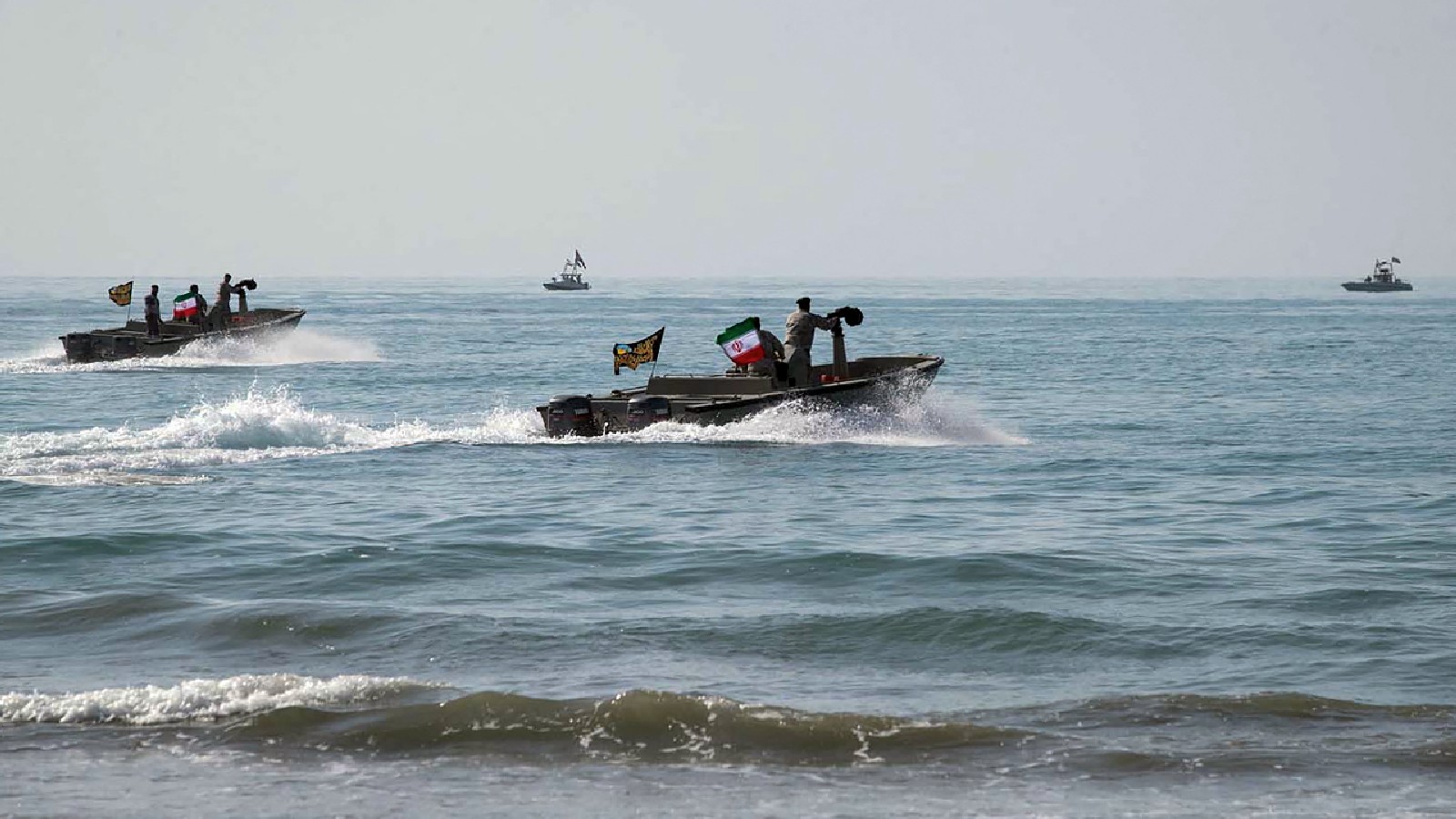
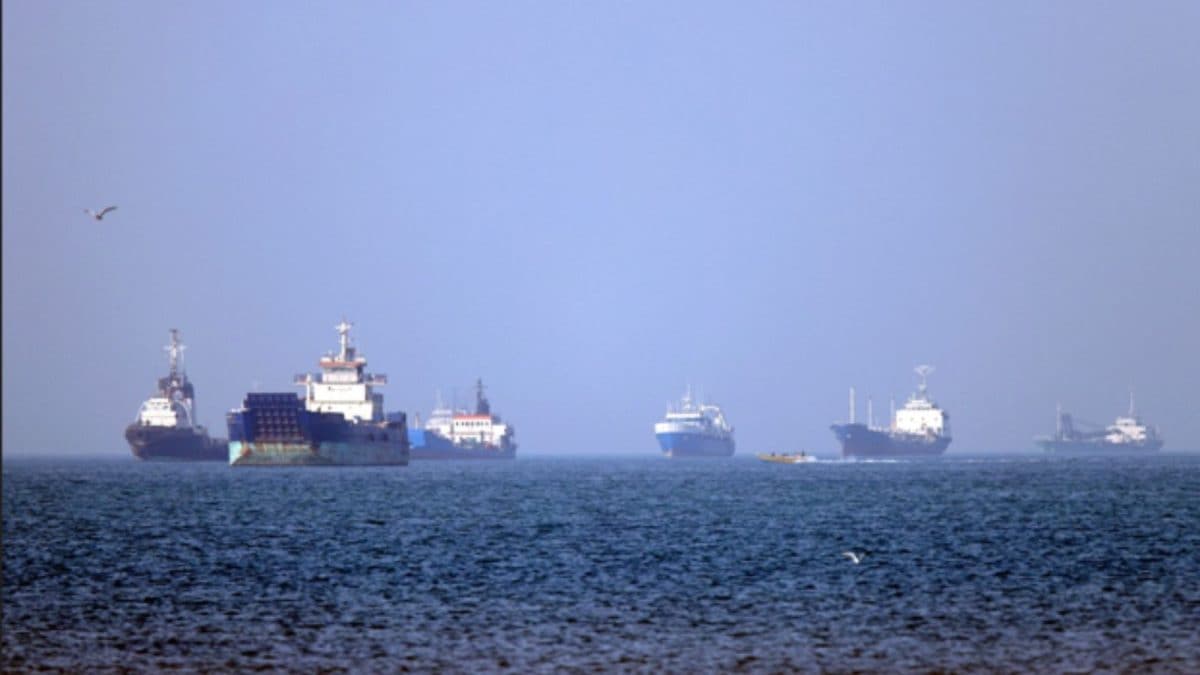
Iran’s response was measured, asymmetric, and immediately recognisable to anyone who has spent time in a Persian bazaar: it closed the Strait of Hormuz to its enemies, kept it open to its friends and waited to see what happened next.
“The juxtaposition of Donald Trump’s The Art of the Deal and Abbas Araghchi’s The Power of Negotiation provides a fascinating, almost cinematic study in the clash of civilisations – not of people, but of negotiating philosophies.“
– Dr. Shashi Tharoor, Member of Parliament for Thiruvananthapuram, Lok Sabha; Chairman, Parliamentary Standing Committee on External Affairs

The Man Who Wrote The Book On The Art Of Deals Is Losing
On April 2, US strikes brought down the B1 bridge connecting Tehran to the suburb of Karaj, described as the highest bridge in West Asia. Iran’s state media reported eight people killed and 95 wounded. Trump posted a video of the collapse on Truth Social with the words: “The biggest bridge in Iran comes tumbling down, never to be used again. Much more to follow!" Araghchi’s response was composed. “Striking civilian structures, including unfinished bridges, will not compel Iranians to surrender," he wrote. “It only conveys the defeat and moral collapse of an enemy in disarray. Every bridge and building will be built back stronger. What will never recover: damage to America’s standing."
The Economist reached back into Trump’s own book for the sharpest diagnosis of his predicament. The Art of the Deal warns that “the worst thing you can possibly do in a deal is seem desperate to make it. That makes the other guy smell blood, and then you’re dead." Iran smells blood.
A YouGov survey for The Economist placed Trump’s net approval at minus 18 per cent on March 23. Protests swept thousands of American cities over fuel prices. By May 8, the national average for regular petrol in the US had climbed to $4.56 a gallon, up from $2.98 before the war began, according to AAA data. The direct military cost to the US stands at an estimated $25 billion, with the Pentagon requesting an additional $200 billion. Iran has allowed only a handful of tankers through the Strait, sometimes at a reported $2 million per ship. US Secretary of State Marco Rubio had a name for it: the “Ayatollbooth," coined by Naysan Rafati of the International Crisis Group (ICG).
In formal negotiation theory, this is called anchoring high – a strategy documented by Harvard Business School professors Deepak Malhotra and Max Bazerman in Negotiation Genius (Bantam Books, 2007), which demonstrated that extreme opening positions, however unrealistic, tend to pull the final settlement towards the opening offer. A legitimate strategy. Also, incidentally, precisely what Iranians have been practising in their markets for centuries.
The Diplomat
Abbas Araghchi was born into a merchant family. His grandfather was a carpet trader. Patrick Wintour, diplomatic editor of The Guardian, wrote on 16 February 2026 that Araghchi is “steeped in almost fifteen years of Iranian nuclear talks" and is “a near lifelong diplomat who has written a book on the art of negotiations that reveals the secrets of the Iranian diplomatic trade, the feints, the patience, the poker faces."
Araghchi himself writes in that book that the Iranian negotiation style is “generally known in the world as the ‘market style’, which means continuous and tireless bargaining. It requires a lot of time and energy, and he who gets tired and bored quickly will lose."
The Persian bazaar as mentioned earlier, or the ‘market style’ as mentioned above, is not the caricature of tented stalls and haggling merchants that Western films have made of it. It is covered arcades stretching for kilometres beneath domed ceilings, organised by guild and trade, governed by codes of conduct that predate most modern governments. In a bazaar, the stated price is never the real price. The real price is arrived at through a ritual of opening positions, theatrical reluctance, patient counter-offers, and mutual face-saving.
Araghchi holds a bachelor’s degree in international relations, a master’s in political science and a doctorate in political thought from the University of Kent. He spent four years as the Iranian ambassador to Japan. He has been inside nuclear negotiations with the United States, on and off, for the better part of the last two decades. As Wintour put it: “Trump sees diplomacy as a branch of pro-wrestling. The Iranian foreign ministry regards it as a branch of chess, almost an art form." Wintour’s contrast between the two men who sit, indirectly, across from each other is worth stating plainly. Trump’s special envoy Steve Witkoff studied law at Hofstra University on Long Island before making his fortune in property development.
“Araghchi explicitly references the ‘bazaar-style’ of negotiation — a method defined by patience, deliberate ambiguity, and incremental haggling. Iranian negotiation is about ‘running down the clock’ and using Taarof (ritualised politeness) to mask firm positions. To Araghchi, time is an ally; if you wait long enough, the opponent’s urgency becomes your leverage. Where Araghchi sees a marathon, Trump sees a sprint."
– Dr. Tharoor
To understand, from a layman’s perspective, why Iran is so comfortable in this position, one must understand what ta’arof [tæˈɑːɾof] is.
Ta’arof is the Persian system of ritual politeness that has governed social interaction in Iran for centuries. The word derives from the root “arf," meaning to know – as in, to know the unwritten rules – as cultural anthropologist William O. Beeman documents in Language, Status and Power in Iran, published by Indiana University Press. It is not simple courtesy. It is, as the academic Katyafaris, drawing on Beeman’s work, describes it, “a kind of verbal sparring" in which the game’s outcome is determined by who relents.
Offers are made, declined, insisted upon, declined again, and accepted, with the understanding that the one in the inferior position will give ground first. The word for “I insist" in Persian is befarma’id [befɑːɾˈmɑːˀiːd], derived from the root verb farmudan, meaning “to command." The word means both “please" and “I insist," rooted in the act of commanding. In Persian, the very word for courtesy shares its etymology with the word for authority. The inferior position, linguistically encoded, is the one with more to give – and therefore, more to extract.
This is not weakness. In Persian culture, as Beeman documents, the strategic power lies with the one who appears to yield. One cannot lose by deferring. Katyafaris, drawing on Beeman, notes that seeking the inferior position in a social encounter is often aspirational, not submissive, because it removes obligation from you while creating it in the other. In the bazaar, the one who appears to want less walks out with more.
Iran has been practising this at the diplomatic level for decades, and no one knows whether the Trump administration is playing the same game wittingly or not.
This means we have an “incompatibility problem" between the two adversaries as negotiations are attempted.
– Dr. Tharoor
As of April 1, 2026, as reported by the Associated Press (AP), Trump addressed the nation in a 19-minute prime-time speech from the White House, declaring that “core strategic objectives are nearing completion" and that American forces would “finish the job" within two to three weeks. The same morning, he claimed on Truth Social that “Iran’s New Regime President" had asked for a ceasefire. Iran’s Foreign Ministry spokesperson Esmail Baghaei called the claim “false and baseless," according to Iranian state television. Iran still has the same president it had on February 27. The White House offered no documentation of how the alleged request was communicated. The US administration’s stated position remains that any agreement requires Iran to surrender its enriched uranium stockpile and commit to zero enrichment – a demand Tehran has consistently rejected as a precondition for any discussion.
In an interview with Al Jazeera the same day, Araghchi acknowledged receiving direct messages from Witkoff. He did not say he was negotiating. “You cannot speak to the people of Iran in the language of threats and deadlines," he said. “We do not set any deadline for defending ourselves. The trust level is at zero."
As reported by Iranian state broadcaster Press TV and confirmed by the AP, it was not Iran reaching out. It was Witkoff, repeatedly texting Iranian officials through intermediaries, while Trump told cameras in Miami that Iran was “begging to make a deal."
Iran has presented its own five-point counter-framework, which includes reparations for wartime damage, sanctions relief, a long-term non-aggression guarantee, and, most pointedly, the right to retain sovereignty over the Strait of Hormuz. Russia has separately offered to take custody of Iran’s enriched uranium stockpile – a proposal under active consideration as a potential mechanism to resolve Washington’s central nuclear demand without Iran formally surrendering its programme.
The Ceasefire That Wasn’t Quite One
Pakistan brokered a conditional two-week ceasefire on April 8, after Trump threatened the night before that “a whole civilisation will die tonight, never to be brought back" if Iran did not reach terms. Iran presented a 10-point counter-framework; the Strait was reopened to commercial shipping under the truce. The agreement came apart almost immediately: Israeli Prime Minister Benjamin Netanyahu rejected Lebanon’s inclusion, Israel launched fresh strikes, and Iran paused Hormuz traffic in response. Direct talks in Islamabad on April 11 and 12, attended by a nearly 300-member American delegation led by Vice President JD Vance, Witkoff and White House Senior Advisor Jared Kushner, and a 70-member Iranian team led by Araghchi and Iranian parliament speaker Mohammad Bagher Ghalibaf, ended without agreement after 21 hours. Araghchi said the two sides had been “inches away from a memorandum of understanding"; Vance declared the breakdown “bad news for Iran much more than for the United States." Trump imposed a full naval blockade on Iranian ports, extended the ceasefire indefinitely on April 21, and on April 25 cancelled his envoys’ planned return to Islamabad because, as he told reporters, the return flight was “15 hours" and “too much work."
I would see it, first, as a case of Transactionalism vs. Institutionalism. Trump’s approach is fundamentally transactional and personality-driven. It relies on “hyperbole," leverage, and the belief that any deal is a zero-sum game where one side “wins" visibly. In his framework, the individual negotiator is the star, and institutional constraints are often viewed as obstacles to a “great deal."
Araghchi, as a career diplomat, frames negotiation as a systematic, scholarly process. His book emphasizes “smart power"—the blend of hard capabilities and soft diplomatic skill. For him, the negotiator isn’t a “maverick" but a representative of a state with millennia of history, operating within strict rules and principles.
– Dr. Tharoor
The ceasefire has eroded sharply since. Iranian drone strikes hit the Fujairah Oil Industry Zone in the United Arab Emirates on May 4. Trump launched Project Freedom – a US naval operation to escort commercial vessels through the Strait – on May 5; Iran responded by attacking vessels in the waterway and launching missiles and drones at the UAE, and Trump paused the operation within 48 hours, citing “great progress" in negotiations. On May 7, three US Navy guided-missile destroyers – the USS Truxtun, USS Rafael Peralta and USS Mason – transited the Strait under fire from Iranian missiles, drones and small boats. US Central Command launched what it described as “self-defence strikes" in response. No American assets were damaged. Trump called the exchange “a trifle" and told reporters the ceasefire was “going. It’s in effect." Rubio declared on May 6 that Operation Epic Fury was “concluded" and that what Washington now sought was merely a “memorandum of understanding for future negotiations" – for weeks, precisely what Iran had been demanding. On May 8, Iran is reviewing the latest US proposal. No commercial vessel has transited the Strait for two consecutive days, according to S&P Global Market Intelligence. The Strait of Hormuz remains closed.
“Trump wants a definitive surrender or a brand-new ‘grand bargain’ that looks like a business acquisition. Araghchi seeks a managed coexistence that preserves national dignity and ‘strategic autonomy’ through a complex web of technical clauses. When Araghchi uses ‘bazaar-style’ delay tactics, Trump sees it as a lack of ‘seriousness.’ When Trump applies ‘maximum pressure,’ Araghchi views it as an ‘uncivilised’ departure from the rules of diplomatic engagement."
– Dr. Tharoor
Araghchi writes in The Power of Negotiation that “the face of a skilled diplomat is inscrutable, and it is impossible to catch any emotion from it. The ability to control the expression of emotions on the face is not easy and requires continuous work and practice."
His other observation on diplomacy is more philosophical. Providing your adversary a graceful exit, he argues, is not concession but craft. He calls it “the Golden Bridge," a term he absorbed during four years as ambassador to Japan. “Diplomacy is not a game that you must necessarily win," he writes, “but a process where you must necessarily understand the other side."
Araghchi once recalled meeting then-Iranian Foreign Minister Javad Zarif in a lift at Hassan Rouhani’s residence, shortly after Rouhani’s 2013 presidential election victory. Zarif had not yet agreed to serve as foreign minister. Araghchi asked why. “In the end," Zarif replied, “we’ll be found wanting. And we will be the victims." Zarif took the job anyway, and sat in room after room, city after city, repeating the same positions with different words until the other side ran out of patience.
In the bazaar, nobody wins cleanly. Everyone walks out having paid more than they wanted to and received less than they asked for. The question, at the end of it all, is who knew that going in, and who had been practising the answer for the better part of three thousand years.
One man wrote his book in 1987, when Manhattan was negotiable and the world was younger. The other wrote his in 2014, out of office, with time to think. He comes from a family of carpet merchants. He has been at this table before. He is not going anywhere.
One is looking for a signature on a contract; the other is looking for a state of balanced leverage. The one in a hurry is likely to be the one to make the first false move."
– Dr. Tharoor
Befarma’id, Mr. President.
Handpicked stories, in your inbox
A newsletter with the best of our journalism
News world Befarma'id, Mr. Trump: The Art Of The Deal Meets The Art Of The Bazaar
Disclaimer: Comments reflect users’ views, not News18’s. Please keep discussions respectful and constructive. Abusive, defamatory, or illegal comments will be removed. News18 may disable any comment at its discretion. By posting, you agree to our Terms of Use and Privacy Policy.
Read More





 English (US) ·