
 2 days ago
5
2 days ago
5
ARTICLE AD BOX
Last Updated:March 11, 2026, 13:21 IST
Both US and Iran have claimed they will decide the end of the ongoing war that has now entered its twelfth day.


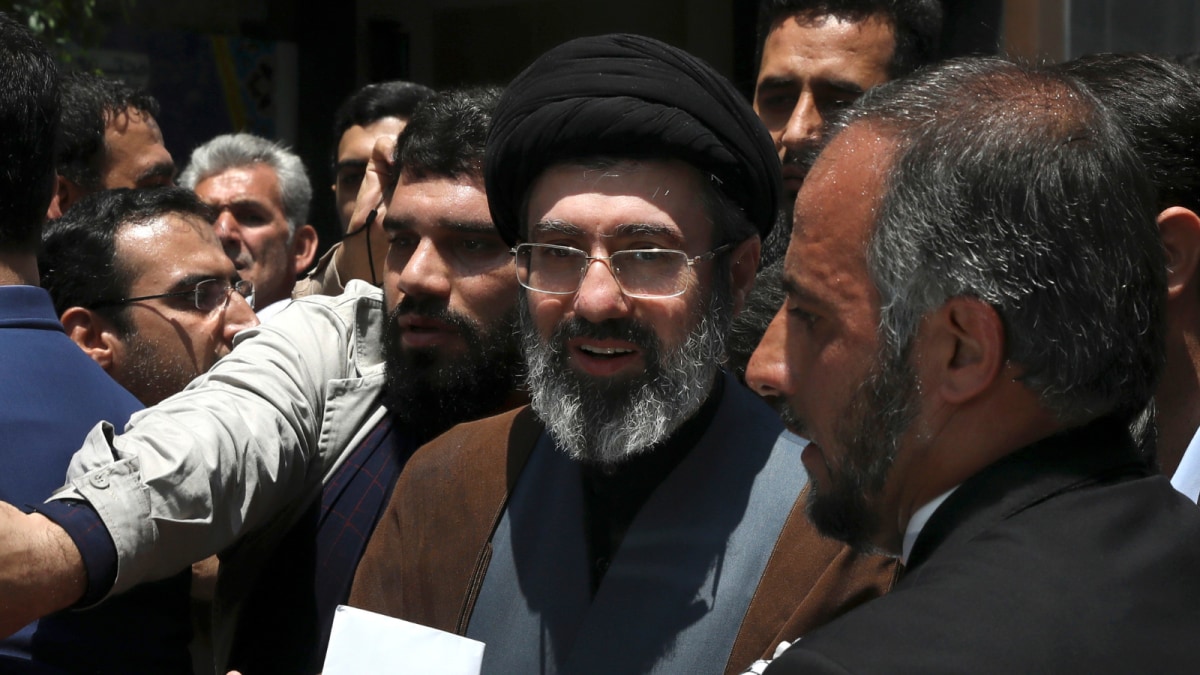
US President Donald Trump and Iran's new Supreme leader Mojtaba Khamenei.
As the war involving the United States, Israel and Iran enters its twelfth day, the question increasingly being asked in diplomatic and military circles is not just how the war will unfold — but how it might end. US President Donald Trump has publicly suggested that the conflict could conclude soon. Speaking recently, Trump said he believes he “will end this war," signalling confidence that American military pressure will force Iran to back down. Click here for Live updates on the US-Israel-Iran war.
Tehran, however, has rejected that framing. Iranian officials responded sharply, saying Iran — not Washington — will determine when the war ends, highlighting the widening gap between the two sides’ expectations.
With military strikes continuing and tensions spreading across the region, analysts are examining several possible endgames for the conflict. A recent analysis by Axios outlined multiple scenarios for how the war could conclude, noting that “the end of the war will ultimately depend on what the US defines as victory."
Negotiated Ceasefire After Heavy Fighting
One possibility, as per the Axios report, is that both sides eventually seek a diplomatic exit after sustaining significant losses.
In this scenario, neither side fully achieves its objectives but declares partial victory. International mediators — potentially Gulf states or European powers — could broker a ceasefire once the economic and military costs of the war become too high.
This type of outcome has precedent in Middle East conflicts, where prolonged fighting eventually pushes adversaries towards reluctant negotiations.
However, the deep mistrust between Washington and Tehran makes this scenario difficult in the short term.
Limited US military victory
Another scenario is that the United States declares victory after achieving a narrow set of military objectives. According to the Axios report, some officials in Washington view the destruction of Iran’s nuclear infrastructure and long-range missile capabilities as the core goal of the campaign.
If those capabilities are neutralised, the United States could end major combat operations while arguing that it has eliminated the main strategic threat.
The challenge with this outcome is that Iran could attempt to rebuild those capabilities over time, potentially setting the stage for future confrontation.
Regime change in Tehran
Some hardliners in Washington and among US allies believe the conflict could end only if Iran’s ruling system collapses or is replaced.
Such an outcome could emerge if sustained military strikes weaken the Iranian state and trigger internal instability. The death of several senior Iranian military leaders in recent attacks has already intensified speculation about the country’s leadership structure.
But analysts warn that regime change in a country as large and politically complex as Iran could produce prolonged chaos rather than stability.
Recent history — including the aftermath of the Iraq war — has shown that dismantling a government does not necessarily produce a stable political order.
Prolonged regional war
A darker scenario is that the conflict expands into a wider regional war involving multiple countries and armed groups.
Iran maintains strong links with several allied militias and proxy forces across the Middle East. If those groups intensify attacks against US or Israeli targets, the conflict could spread across several fronts.
Such a situation could turn the war into a drawn-out regional confrontation lasting years rather than months.
Shift to guerrilla warfare
If Iran’s conventional military capabilities are severely degraded, Tehran could pivot to asymmetric warfare. Iran’s military doctrine has long emphasised irregular tactics, including proxy warfare, drone attacks and guerrilla operations.
Under this scenario, even if large-scale battles end, the conflict could continue through smaller but persistent attacks against US and allied interests in the region.
Some analysts believe this type of prolonged, low-intensity conflict could prove more difficult to contain.
Global energy shock
Another scenario shaping the trajectory of the war is the growing disruption to global energy supplies — that is already underway.
Iran sits along the Strait of Hormuz, one of the world’s most critical energy corridors. Under normal circumstances, roughly 20 per cent of global oil shipments pass through this narrow waterway each day.
But since the escalation of the war, Iran has effectively shut the passage by threatening and attacking vessels attempting to transit the strait. Maritime traffic has collapsed, with many oil tankers anchoring outside the Gulf and major shipping companies suspending voyages through the area.
Internal power struggle inside Iran
Finally, the war could end through political changes within Iran itself. Periods of intense external pressure have historically triggered internal power struggles within governments. If competing factions within the Iranian establishment disagree over how to respond to the conflict, it could lead to leadership changes or shifts in strategy.
A new leadership structure might decide that de-escalation is necessary to stabilise the country.
Alternatively, internal political competition could push Iran towards even more aggressive military responses.
An unpredictable endgame
Despite the many possible scenarios, one thing remains clear: the war’s outcome is deeply uncertain.
Trump has projected confidence that the conflict will end on terms favourable to the United States. Iran, meanwhile, insists it will determine the war’s conclusion on its own terms.
With military operations ongoing and geopolitical stakes rising, the endgame could depend as much on political decisions in Washington and Tehran as on developments on the battlefield. For now, the war’s trajectory — and its eventual conclusion — remains one of the biggest strategic uncertainties facing the Middle East.
First Published:
March 11, 2026, 13:21 IST
News world Ceasefire Or Regime Change: How Will The US-Israel-Iran War End?
Disclaimer: Comments reflect users’ views, not News18’s. Please keep discussions respectful and constructive. Abusive, defamatory, or illegal comments will be removed. News18 may disable any comment at its discretion. By posting, you agree to our Terms of Use and Privacy Policy.
Read More







 English (US) ·