
 2 hours ago
1
2 hours ago
1
ARTICLE AD BOX
Last Updated:March 03, 2026, 12:49 IST
According to intelligence note accessed by News18, much of the Chinese cooperation involves components, access, or negotiations rather than confirmed large-scale deliveries


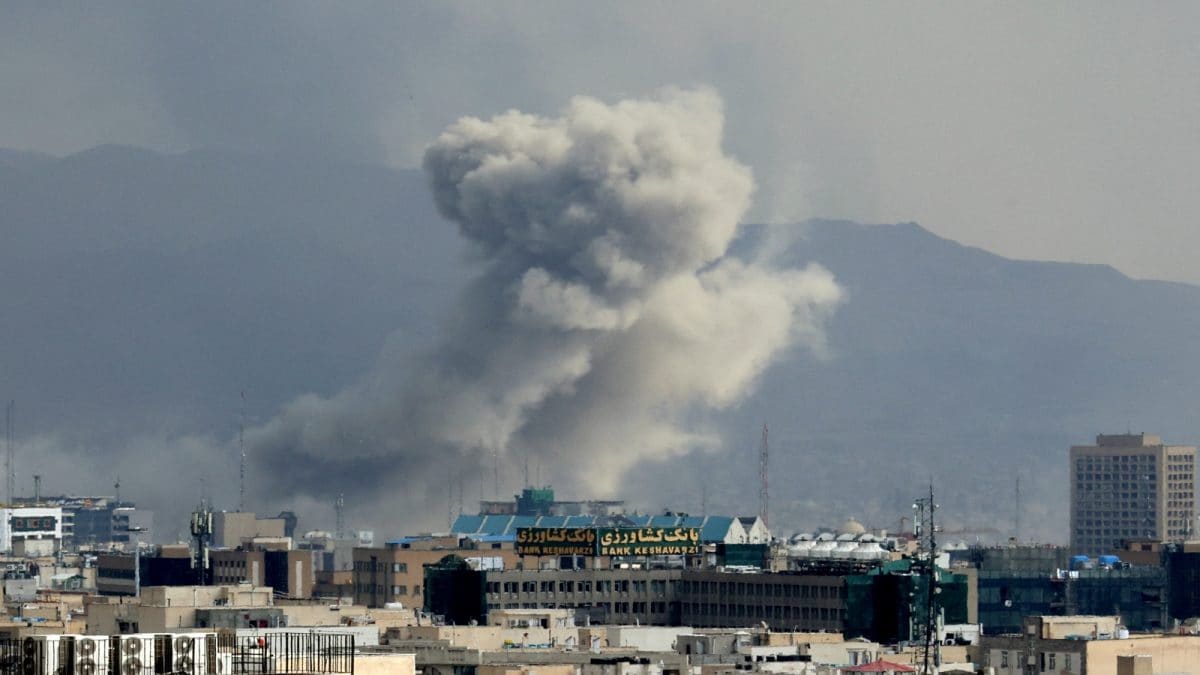
Iran launched retaliatory attacks after joint US-Israeli strikes. (Image: Representative/Reuters)
Even as China has officially denied direct arms deals, many have questioned their role amid Iran’s defensive rebuilding of air and missile defence in the face of the US-Israel war.
Iran’s capabilities still rely heavily on domestic adaptation and other partners like Russia.
According to the intelligence note, accessed by News18, much of the Chinese cooperation involves components, access, or negotiations rather than confirmed large-scale deliveries due to sanctions and geopolitical risks.
CM-302 Supersonic Anti-Ship Cruise Missiles, an export variant of China’s YJ-12
Primarily used as a carrier killer or high-speed anti-ship weapon to target large naval vessels, including aircraft carriers, destroyers, and other warships.
Negotiations happened in 2025, post 12-day war and were reported as near completion by February 2026. These missiles are in range 290–460 km, 500 kg warhead, sea-skimming and evasion features. They represent one of the most advanced systems potentially transferred recently, enhancing Iran’s ability to threaten naval forces US carriers in the Persian Gulf and Strait of Hormuz.
Reports suggest senior Iranian officials visited China in summer 2025 to finalise the deal though China denied finalisation.
HQ-9B Long-Range Surface-to-Air Missile Systems (SAM)
It is designed for strategic air and missile defense to protect key sites nuclear facilities, cities, military bases from aerial threats. Deliveries and integration began in summer of 2025. This was with systems positioned around key sites like nuclear facilities.
The HQ-9B range ~200–260 km, high-altitude interception is China’s advanced equivalent to the S-300/S-400, aimed at rebuilding Iran’s depleted air defenses after 2025 strikes. It formed part of a layered network, though recent 2026 US/Israeli operations highlighted challenges in performance against advanced threats
YLC-8B UHF Long-Range Surveillance Radars Anti-Stealth Detection
Used for early warning and surveillance in integrated air defense networks, detecting low-observable (stealth) aircraft and ballistic threats at extended ranges. The supplies started in 2025, with reports of multiple units integrated into Iran’s network.
These 3D radars excel at detecting low-observable aircraft F-35, B-2 at extended ranges due to UHF band operation. This is to counter stealth and jamming. They complement air defence layers and provide early warning, with deliveries tied to broader post-2025 rebuilding efforts.
Missile Propellant Ingredients, Components and Sodium Perchlorate/Ammonium Perchlorate
Enables production of medium and short-range ballistic missiles Haj Qasem, Kheibar Shekan for precision strikes, saturation barrages, or proxy support.
Sodium perchlorate converts to ammonium perchlorate oxidiser, ~70% of solid fuel in many Iranian missiles. This also enables production of medium and short-range ballistic missiles like Haj Qasem, Kheibar Shekan for precision strikes, saturation barrages, or proxy support. Major transfers in 2025 included ~1,000 tons of sodium perchlorate February 2025. This is sufficient for 200–300 ballistic missiles like Haj Qasem or Kheibar.
Additional shipments and dual-use items via sanctioned Chinese firms continued into late 2025 and early 2026 to give Iran’s depleted missile stocks after the 12-day war.
Loitering Munitions (Attack/Kamikaze Drones) and related systems
Employed as low-cost, precision strike weapons for one-way attacks on high-value or defended targets. They loiter over areas, identify targets, then dive in suicide mode and similar to Shahed-136 but potentially Chinese variants.
Reported deliveries in 2025–2026, including offensive drones to replenish stockpiles post-conflict
These complement discussions on MANPADS (man-portable air defense), anti-ballistic, and even anti-satellite tech.
Some reports mention hybrid architectures involving Chinese ISR (intelligence, surveillance, reconnaissance) support, though specifics remain less confirmed than hardware like radars/SAMs.
First Published:
March 03, 2026, 12:49 IST
News world China Helped Iran Build Its Air & Missile Defence Ahead Of US-Israel War? Exclusive From Intel Note
Disclaimer: Comments reflect users’ views, not News18’s. Please keep discussions respectful and constructive. Abusive, defamatory, or illegal comments will be removed. News18 may disable any comment at its discretion. By posting, you agree to our Terms of Use and Privacy Policy.
Read More



 English (US) ·