
 1 hour ago
1
1 hour ago
1
ARTICLE AD BOX
Last Updated:March 07, 2026, 13:10 IST
Educated partly in Switzerland, Mohammad Reza Shah Pahlavi inherited the kingdom at a moment of geopolitical tension and rising nationalism.


For decades, Mohammad Reza Shah Pahlavi was known as the “King of Kings” — a monarch who ruled one of the Middle East’s most powerful states. (Image: Getty)
The final days of Mohammad Reza Shah Pahlavi, Iran’s last monarch, were marked not by imperial grandeur but by illness, political isolation and exile.
For decades, he was known as the “King of Kings" — a monarch who ruled one of the Middle East’s most powerful states and hosted lavish celebrations attended by global leaders and royalty. Yet when he died in 1980, the once-powerful ruler was far from the country he had governed for nearly four decades.
A King Who Ruled Iran for Nearly Four Decades
Mohammad Reza Pahlavi became the Shah of Iran in 1941, after Allied forces forced his father, Reza Shah, to abdicate during World War II. However, he was formally crowned 26 years later, after ascending to the throne, on October 26, 1967.
He delayed the coronation until his 48th birthday to signify that his country had achieved stability and progress.
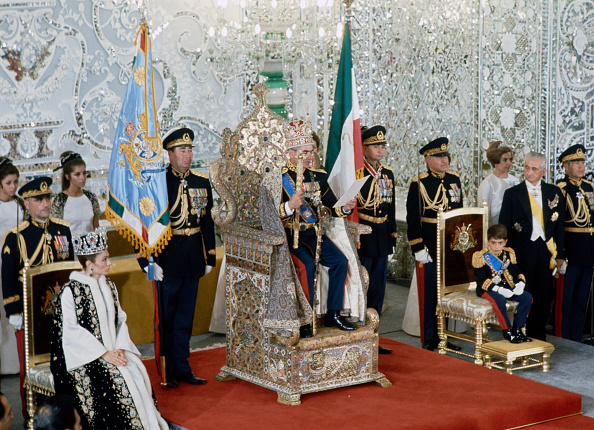
Educated partly in Switzerland, the young monarch inherited a kingdom at a moment of geopolitical tension and rising nationalism.
During his reign, the Shah sought to transform Iran into a modern state. His ambitious reform programme, known as the White Revolution, expanded infrastructure, improved literacy, and promoted industrial growth using the country’s vast oil revenues.
But modernisation came with a cost. Critics accused the Shah of ruling with an iron hand, suppressing dissent and concentrating power around the monarchy.
By the late 1970s, growing inequality, political repression and anger against his pro-Western policies triggered mass protests across Iran.
A Revolution Forced The King To Flee
The unrest eventually exploded into the 1979 Iranian Revolution, led by exiled cleric Ayatollah Ruhollah Khomeini. Demonstrations intensified, and the monarchy’s authority collapsed.
On January 16, 1979, Mohammad Reza Shah left Iran, officially for medical treatment but effectively in exile. He never returned.
Within months, a national referendum abolished the monarchy and established the Islamic Republic of Iran, ending the 2,500-year tradition of Persian kingship.
A Monarch Without A Home
Exile proved to be a humiliating journey for the former ruler. Countries that had once welcomed him as an ally were now reluctant to host a deposed king whose presence could trigger diplomatic tensions with Iran’s new revolutionary government.
In the months after leaving Iran, the Shah moved repeatedly across continents. He sought temporary refuge in Egypt, Morocco, the Bahamas and Mexico, while quietly battling a form of lymphatic cancer.
In October 1979, the United States allowed him to enter for medical treatment. The decision angered Iran’s revolutionary leadership and helped spark the US Embassy hostage crisis in Tehran, where militants held more than 50 Americans captive for 444 days while demanding the Shah’s return to face trial.
The political storm forced the ailing monarch to leave again. From the United States, he travelled to Panama, where uncertainty over his legal status and fears of extradition deepened his isolation.
Eventually, one leader agreed to take him in: Egyptian President Anwar Sadat, who offered the Shah asylum despite diplomatic risks.
By early 1980, the Shah arrived in Cairo with his wife, Empress Farah, physically weakened and politically abandoned. Once the ruler of a wealthy oil state and host to world leaders, he now lived quietly under protection in Egypt.
On July 27, 1980, Mohammad Reza Shah Pahlavi died at the age of 60 in Cairo after complications related to his cancer.
He was buried in Cairo’s Al-Rifa’i Mosque, far from the land he had ruled for 37 years. Egypt granted him a state funeral — a final gesture of honour for a king who had once been among the most powerful rulers in the Middle East.
His son, Crown Prince Reza Pahlavi, later declared himself the heir to the throne in exile, but Iran remained under the Islamic Republic established after the revolution.
First Published:
March 07, 2026, 13:10 IST
News world Crowned In Glory, Buried On Foreign Land: How Iran’s Last Shah Died Far From Home
Disclaimer: Comments reflect users’ views, not News18’s. Please keep discussions respectful and constructive. Abusive, defamatory, or illegal comments will be removed. News18 may disable any comment at its discretion. By posting, you agree to our Terms of Use and Privacy Policy.

Stay Ahead, Read Faster
Scan the QR code to download the News18 app and enjoy a seamless news experience anytime, anywhere.




 English (US) ·