
 14 hours ago
2
14 hours ago
2
ARTICLE AD BOX
Last Updated:January 29, 2026, 12:57 IST
The world’s largest doomsday vault has opened, safeguarding what could help rebuild Earth after disaster. Who built it, what lies inside, and how many such vaults exist worldwide?

The Millennium Seed Bank stores more than 2.4 billion seeds collected from 190 countries. (AI Generated)
The Doomsday Vault is designed to be virtually indestructible, a fortress built to survive the end of the world. Bomb-proof and capable of withstanding even a direct aircraft attack, its specially engineered concrete walls are resistant to radiation, making it one of the safest structures ever created.
This is no ordinary safe found in homes or banks. Built deep underground with multiple levels, the vault is guarded by alarms, automated systems, and strict security protocols.
Inside, there is no cash, gold, or jewellery. Instead, it protects something far more precious – the future of life on Earth itself.
What Makes This Vault So Special?
The vault is designed to remain secure even if a global catastrophe strikes the planet. Its construction ensures that disasters such as war, nuclear fallout, climate collapse, or mass extinction events cannot destroy its contents.
Everything inside is preserved to survive long after humanity itself.
The Millennium Seed Bank: A Global Lifeline
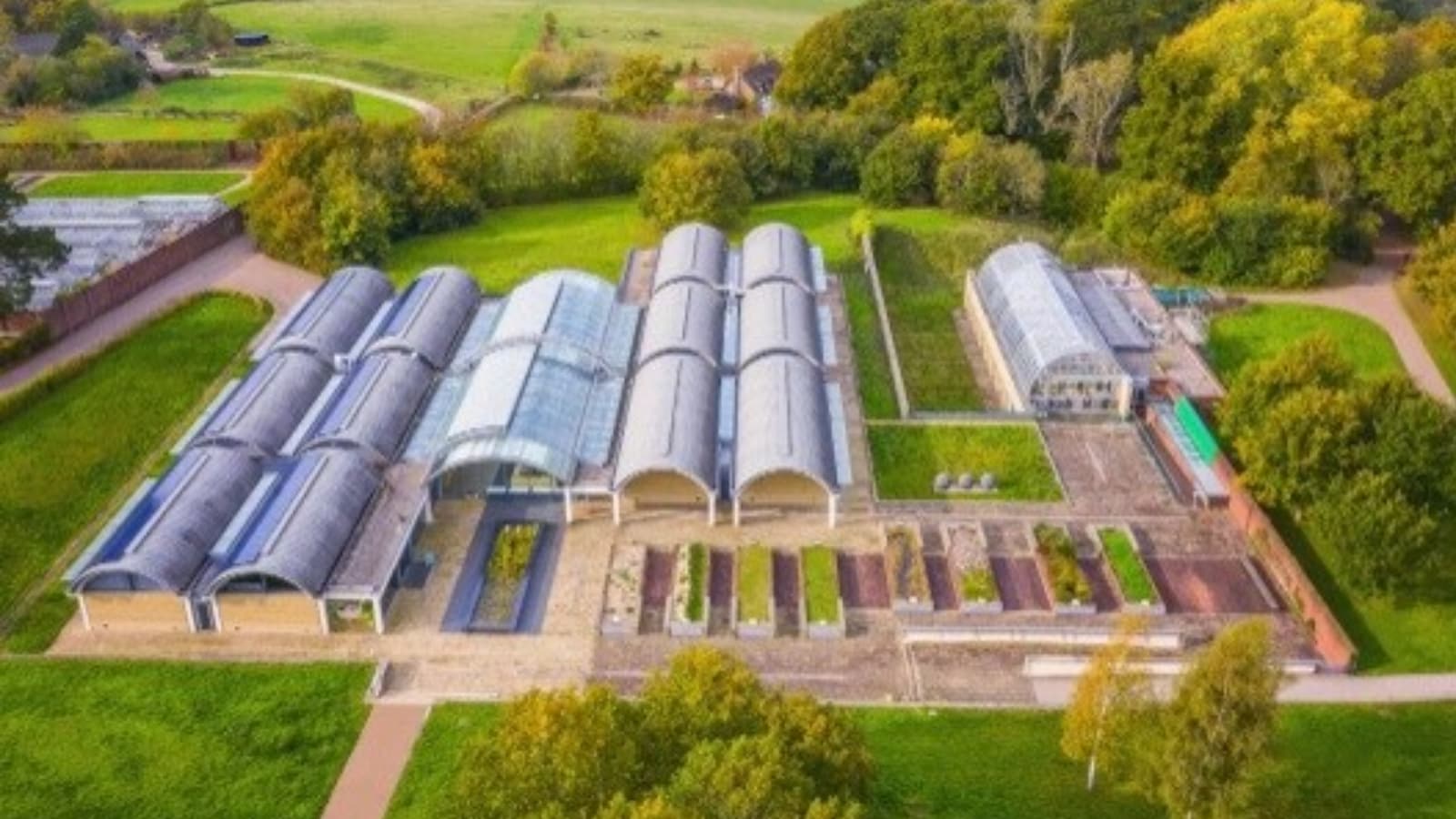
This vault, located in a forest-like setting in Sussex, United Kingdom, is also known as the Millennium Seed Bank (MSB). It is built beneath trees and vegetation, blending seamlessly into the landscape. Though hidden, it contains one of the most valuable collections on Earth.
The bank stores more than 2.4 billion seeds collected from 190 countries, spread across an area equivalent to three tennis courts. It preserves samples from 40,150 different plant species, making the scale of the collection almost unimaginable.
Seeds Of Every Shape And Size
Inside the vault are seeds of astonishing variety. Some are as large as 8.5 centimetres, while others are as tiny as 0.07 millimetres. Certain species are stored in dozens, while others are preserved in the millions.
Some seeds are spiky or hairy, others tightly curled or complex in structure. A few can even cause irritation simply by touch. Each seed represents a unique form of life, carefully catalogued and preserved.
Extreme Cold And Strict Safety Rules
The temperature inside the Millennium Seed Bank is maintained at –20°C (–4°F). Anyone entering must wear heavy winter coats and gloves. No person is allowed to remain inside for more than 10 minutes, as the extreme cold can be dangerous.
If someone stays longer than permitted, automated security systems are triggered. Visitors must also sign a consent form acknowledging that if their heart were to stop inside the vault, it would be considered their own responsibility.
Preserving Seeds For The Future
The sub-zero temperature keeps seeds dormant, allowing them to remain viable for decades or even centuries. When needed, they can be brought back to life and germinate quickly. More than 1,700 seed banks worldwide follow this same preservation method.
The oldest seeds stored at the Millennium Seed Bank date back to the 1950s, although the bank itself officially opened in 2000. Its mission has always been to preserve backup copies of as many plant species as possible.
A Collection Beyond Price
Some of the species stored in the vault are already extinct in the wild, while others are critically endangered. Many are considered priceless by botanists and collectors. Entry to the vault is strictly restricted, with certain areas accessible only through key-card systems.
High-security storage systems ensure that it is impossible to identify where specific seeds are kept just by looking. All data is stored digitally, adding another layer of protection.
Doomsday Reserves Around The World
Vaults like these are often referred to as ‘doomsday reserves’, that is, places designed to protect life that could help restore the planet after a global disaster.
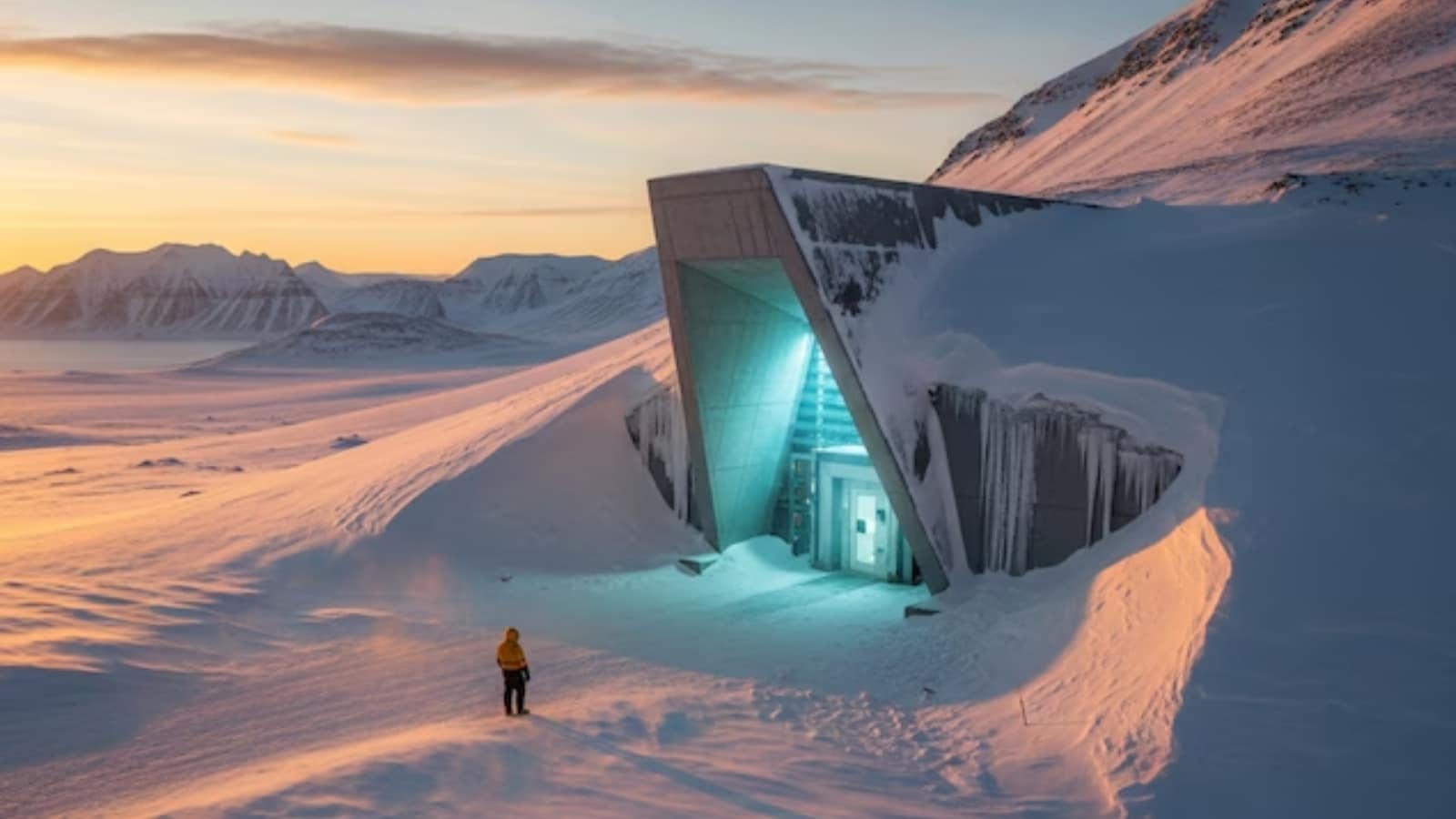
One of the most famous examples is the Svalbard Global Seed Vault, located on a remote Norwegian archipelago. Built deep inside a mountain on the Arctic island of Spitsbergen, it stores food crops and plants from around the world.
Inside The Svalbard Global Seed Vault
The Svalbard vault holds more than 1.4 million seeds from over 6,000 species. Experts believe that nearly all of the world’s food plants and crops could be restored using its collection.
Seeds here are stored at –18°C. Construction of the vault cost around $9 million, while annual maintenance costs range between $150,000 and $200,000.
Other Global Seed Protection Efforts
In Colorado, USA, American crop varieties are preserved in cryogenic tanks. In Pisac, Peru, a similar reserve protects native crops. Across the globe, local seed banks work quietly to safeguard regional plant species.
Together, these facilities form a global safety net for biodiversity.
Why These Vaults Matter More Than Ever
The primary purpose of doomsday vaults is to protect species on the brink of extinction and to restore essential food crops lost due to disasters. Climate change, wildfires, and environmental destruction are wiping out vegetation at alarming rates.
When the Millennium Seed Bank opened 25 years ago, its goal was to prepare for emergencies. In regions where devastating fires destroyed plant life, seeds from the vault were sent back to help restore ecosystems.
Proof That The System Works
The Millennium Seed Bank has successfully returned stored seeds to their original habitats, with around 80% successfully sprouting. One plant species, G. latrobiana, narrowly escaped local extinction thanks to seeds recovered from the vault.
Humanity’s Last Insurance Policy
Humans have preserved seeds since the dawn of agriculture, yet many crucial plant species remain at risk. Doomsday seed vaults exist to protect those last remaining genetic resources, a final insurance policy for life on Earth.
If disaster ever strikes on a global scale, these frozen seeds could be the key to starting again.
Handpicked stories, in your inbox
A newsletter with the best of our journalism
Location :
United Kingdom (UK)
First Published:
January 29, 2026, 12:57 IST
News world Doomsday Vault: No One Can Stay Inside For Over 10 Minutes But It's Humanity's Last Hope
Disclaimer: Comments reflect users’ views, not News18’s. Please keep discussions respectful and constructive. Abusive, defamatory, or illegal comments will be removed. News18 may disable any comment at its discretion. By posting, you agree to our Terms of Use and Privacy Policy.
Read More





 English (US) ·