
 5 hours ago
4
5 hours ago
4
ARTICLE AD BOX
Last Updated:May 20, 2026, 22:22 IST
India’s situation is different. Although the country is now below replacement level, its population will continue growing for years because of demographic momentum.


India, the world’s most populous country, has a fertility rate of 1.94, while China’s has dropped sharply to 1.02, among the lowest in the world. (IMAGE: REUTERS) ATTENTION EDITORS: PICTURE 23 OF 33 FOR PACKAGE 'SURROGACY IN INDIA' TO FIND ALL IMAGES SEARCH 'SURROGACY ANAND'
The global population story is changing rapidly. Countries that once feared overpopulation are now struggling with falling birth rates, ageing societies and shrinking workforces.
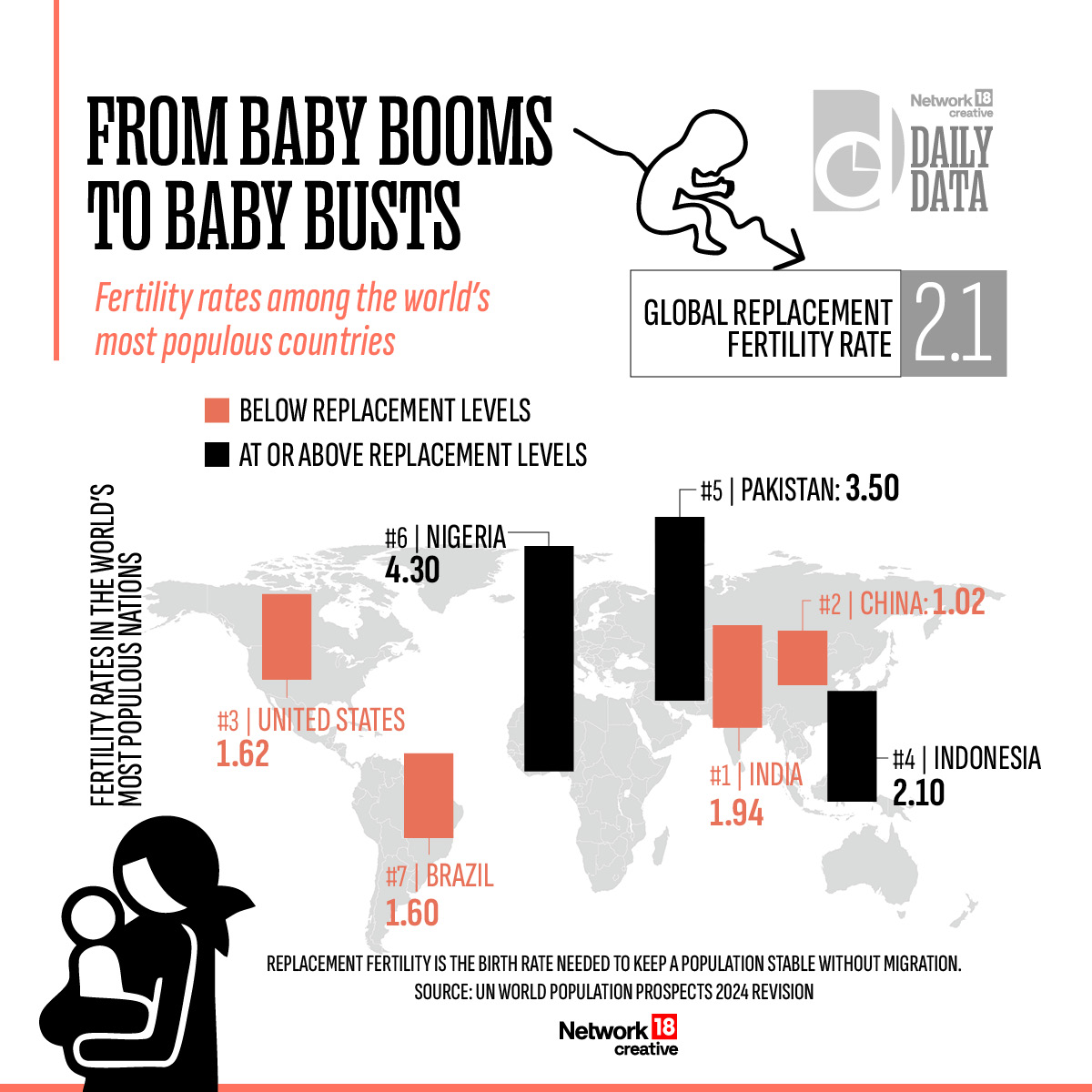
According to the United Nations’ World Population Prospects 2024, several of the world’s most populous nations now have fertility rates below the replacement level of 2.1 births per woman — the level needed to maintain a stable population without migration.
India’s fertility rate stands at 1.94, while China’s has fallen sharply to 1.02. The United States and Brazil are also below replacement levels.
South Korea, which has one of the world’s lowest fertility rates, recently reported a modest rise in births after years of decline. Official data showed nearly 23,000 babies were born in February, the highest for that month in seven years. Experts partly attribute the increase to government incentives, including childcare subsidies, housing support and monthly allowances for parents.
Still, South Korea’s fertility rate remains at just 0.8 — far below replacement level — highlighting how difficult it is to reverse demographic decline once it sets in.
China is facing a similar crisis. The country’s population shrank for the fourth straight year in 2025, with births dropping to a record low of 7.92 million. Analysts have linked the decline to the long-term effects of the one-child policy, rising living costs and changing attitudes towards marriage and parenting.
The concern is now spreading to India as well. Andhra Pradesh Chief Minister N Chandrababu Naidu recently announced cash incentives for couples having a third and fourth child, arguing that declining birth rates could hurt future economic growth.
However, India’s situation is different. Although the country is now below replacement level, its population will continue growing for years because of demographic momentum — a large young population entering childbearing age.
While countries like Pakistan and Nigeria remain above replacement levels, much of the world is moving in the opposite direction — from baby booms to what many governments increasingly fear could become a baby bust.
Handpicked stories, in your inbox
A newsletter with the best of our journalism
News world From Baby Booms To Baby Busts: Why Countries Are Worried About Falling Birth Rates
Disclaimer: Comments reflect users’ views, not News18’s. Please keep discussions respectful and constructive. Abusive, defamatory, or illegal comments will be removed. News18 may disable any comment at its discretion. By posting, you agree to our Terms of Use and Privacy Policy.
Read More





 English (US) ·