
 2 days ago
2
2 days ago
2
ARTICLE AD BOX
Last Updated:May 02, 2026, 16:05 IST
Spirit Airlines shuts down after 34 years, cancels all flights, cites Iran war fuel costs, stranding thousands and risking 17000 jobs after failed Trump bailout talks.


Spirit Airlines shuts down after 34 years, cancels all flights. (Image: Reuters)
The American low-cost carrier Spirit Airlines has abruptly shut down operations after 34 years, cancelling all flights and beginning an immediate “orderly wind-down" as soaring fuel costs linked to the Iran war pushed the already struggling budget carrier into collapse.
The airline announced on Saturday that all flights had been cancelled and customer service operations had been discontinued with immediate effect.
“To our Guests: all flights have been cancelled, and customer service is no longer available," Spirit said in a statement, adding that it had hoped to continue serving passengers despite mounting financial difficulties.
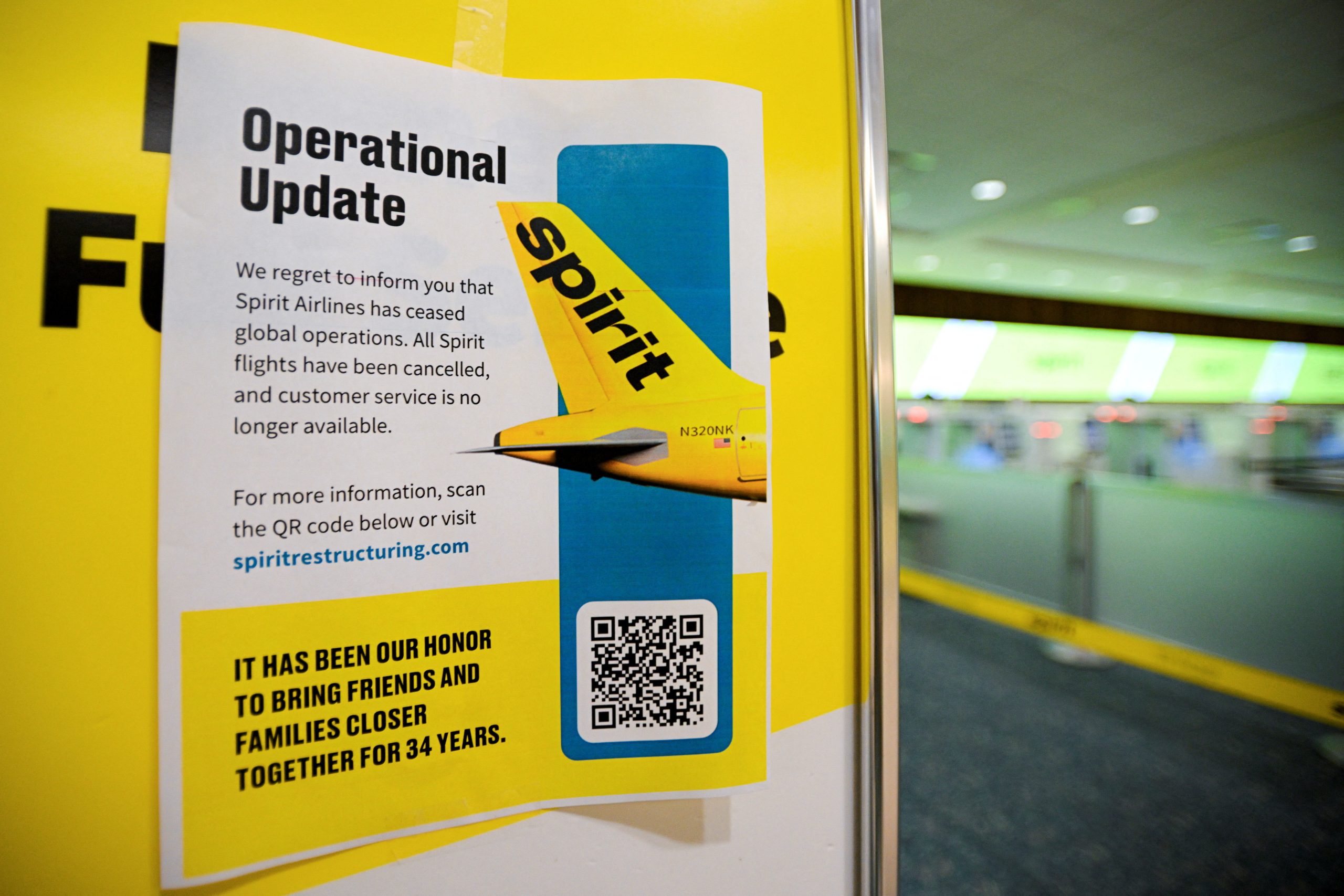
The shutdown leaves thousands of passengers stranded and places around 17,000 jobs at risk, marking one of the biggest airline collapses in recent US aviation history.
Spirit, which had filed for bankruptcy twice since 2024, had been attempting to restructure operations and secure fresh funding. However, negotiations involving the White House, creditors and bondholders reportedly broke down at the last moment.
The airline said sharp increases in oil and jet fuel prices, along with broader operational pressures, made continuing operations financially impossible.
How The Iran War Triggered Spirit’s Collapse
Industry analysts and multiple US media reports have described Spirit as the aviation sector’s first major casualty of the ongoing Iran war.
The conflict involving Iran, the United States and Israel triggered a massive surge in global oil prices after fighting disrupted energy markets and threatened shipping routes through the strategically vital Strait of Hormuz — a waterway through which nearly 20 per cent of the world’s oil supply normally passes.
According to industry reports, jet fuel prices nearly doubled following the escalation of the conflict, devastating airlines already operating on razor-thin margins. Spirit’s restructuring plans had reportedly assumed jet fuel costs of around $2.24 per gallon in 2026, but prices surged above $4.30 per gallon after the outbreak of the war.
The closure and repeated disruption of shipping in the Strait of Hormuz also intensified the global fuel shortage. Airlines worldwide have since been forced to cut flights, raise fares and impose additional baggage fees as operational costs climbed sharply.
Budget airlines such as Spirit were hit especially hard because of their dependence on low fares and high passenger volumes to remain profitable. Experts warned for weeks that smaller low-cost carriers might not survive if oil prices remained elevated.
Rescue Talks Collapse
Reports said Spirit had approached the administration of US President Donald Trump for a potential $500 million bailout. Trump had initially indicated willingness to support a rescue package, but talks ultimately failed amid political resistance and lack of creditor backing.
Spirit CEO Dave Davis said the company could no longer secure enough liquidity to sustain operations.
“Sustaining the business required hundreds of millions of additional dollars of liquidity that Spirit simply does not have and could not procure," Davis said.
The airline advised passengers not to travel to airports and said refunds would be automatically processed for bookings made directly through credit or debit cards.
Meanwhile, the US Transportation Department said major carriers, including United Airlines, Delta Air Lines, JetBlue and Southwest Airlines, would offer capped fares and support for stranded travellers and displaced Spirit employees.
Founded originally as a Michigan trucking company before entering aviation in the 1980s, Spirit became one of America’s best-known ultra-low-cost airlines and was once valued at nearly $6 billion. Its collapse is now being viewed as a stark example of how geopolitical conflicts and energy disruptions can rapidly destabilise industries far beyond the battlefield.
Handpicked stories, in your inbox
A newsletter with the best of our journalism
Location :
United States of America (USA)
News world How Iran War Pushed A Major Low Cost American Airline Into Shutdown
Disclaimer: Comments reflect users’ views, not News18’s. Please keep discussions respectful and constructive. Abusive, defamatory, or illegal comments will be removed. News18 may disable any comment at its discretion. By posting, you agree to our Terms of Use and Privacy Policy.
Read More







 English (US) ·