
 3 days ago
2
3 days ago
2
ARTICLE AD BOX
Last Updated:April 13, 2026, 23:30 IST
As India and South Korea deepen ties, a lawmaker explains the systems, strategy and state role behind Seoul’s growth story.


A Korean War exhibit in Jongno district, central Seoul, with international flags on display, reflecting the city’s historical memory and global engagement. (IMAGE: SUKANYA SAHA/CNN-NEWS18)
There’s a certain rhythm to South Korea that becomes evident only when you step outside the capital.
In Seoul, it’s the pace. In Incheon, it’s the precision. In Suwon, the structure. And in Siheung, the quiet sense of expansion, a country constantly building ahead of itself.
Over the course of the World Journalists Conference (WJC), more than 40 journalists from over 30 countries travelled across these cities, getting a closer look at South Korea’s development model.
CNN-News18 was the only media network invited from India, and the experience was as much about observation as it was about conversation.
One such conversation, on the sidelines of the conference, was with Kim Sang-wook, a member of South Korea’s National Assembly, and someone who speaks about the country’s growth story not in abstractions, but with a sense of lived reality.

What emerged from that conversation was not just an explanation of South Korea’s success, but a framework — one that has direct relevance for developing economies across the world.
A Country Shaped By Pressure
To understand South Korea’s rise, Kim argues, one must begin with its geography.
“This is a peninsula where the interests of major powers converge and collide," he says, referring to the United States, China, Japan and Russia. “When a country knows its survival depends on its own capabilities, there is no room for complacency."
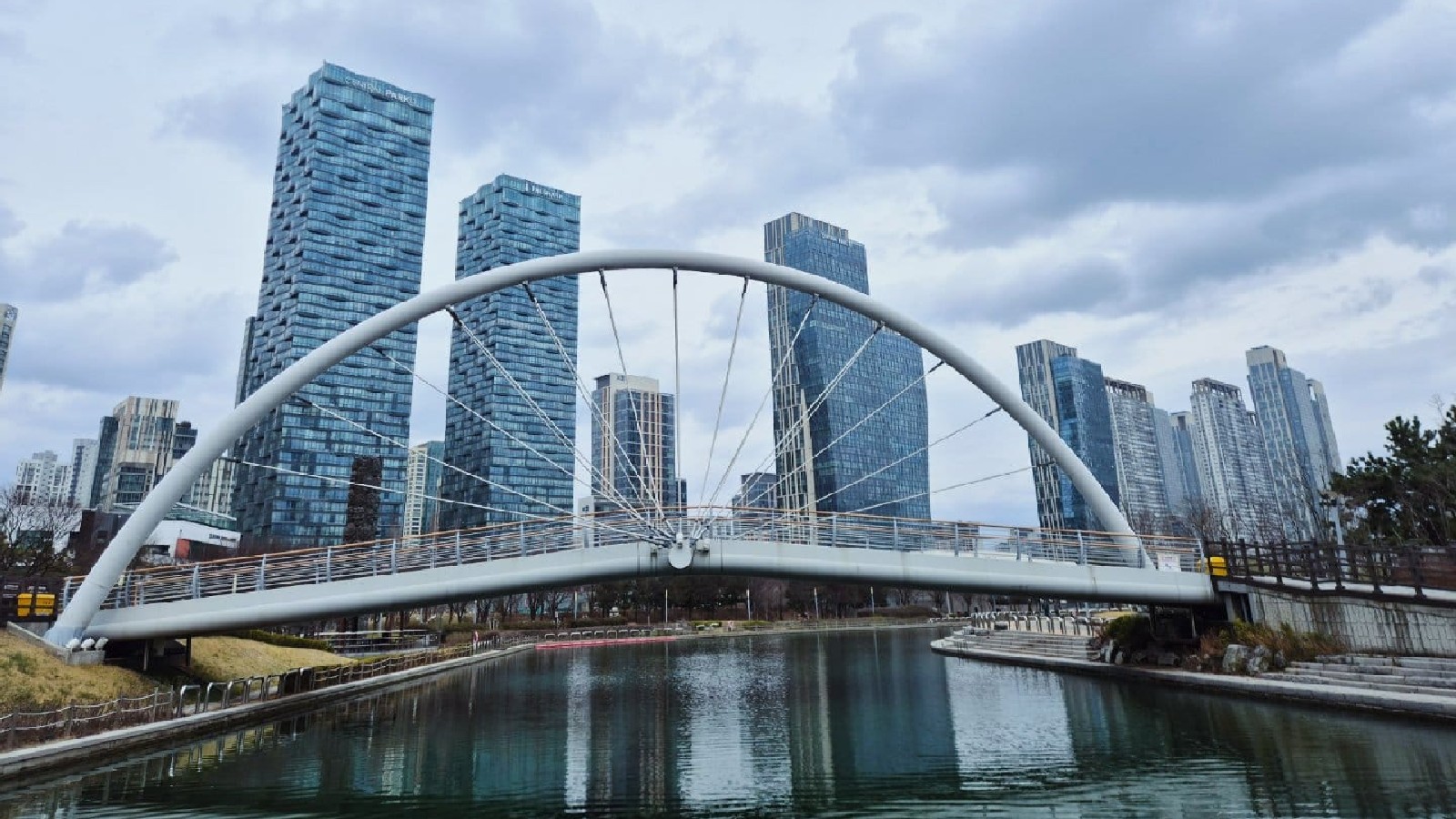
It’s a point that resonates when you look at South Korea today, a global leader in semiconductors, shipbuilding, electric vehicles, and digital infrastructure.
But according to Kim, technology is only the outcome. The real story lies in the discipline that drove it.
After the Korean War, South Korea had little in the way of natural resources. What it did have, he says, was urgency — a national will that translated into policy, education, and industrial output at a scale few countries have managed to replicate.
“That was engineered," he says. “It did not happen by accident."
The State And The System
That sense of deliberate planning is visible across the country.
A visit to Samsung’s headquarters and the Hyundai Motor district, both symbols of South Korea’s industrial power, makes it clear that this is not just a story of corporate success. It is a story of coordination.

Kim describes it as a partnership.
“The state provided vision, financing frameworks, infrastructure. The private sector provided execution, risk-taking, and eventually global competitiveness," he explains.
Companies like Hyundai did not just grow, they evolved. From construction to automobiles, to shipbuilding, and now to hydrogen and robotics. That transformation, he says, required both protection in the early stages and exposure to global competition at the right time.
“The state must be a strategic partner, not just a regulator," he adds.
Building cities before they are needed
If Seoul reflects South Korea’s present, cities like Incheon, Suwon and Siheung offer a glimpse into how that present was built.
Unlike many rapidly urbanising countries, South Korea did not allow everything to collapse into one city. Instead, it spread out.
Incheon was developed as a logistics and aviation hub. Suwon as a centre for manufacturing and technology. Siheung as an emerging urban-industrial zone.
“This was deliberate decentralisation," Kim explains. “We designated specific cities for specific functions."
The second pillar, he says, was even more critical: building infrastructure ahead of demand.

Roads, railways, ports — much of it came before the economic activity it now supports. The logic was simple: connectivity creates growth.
It’s visible in everything from the high-speed rail network to the seamless movement between cities that now feel like extensions of each other.
“The cost of under-investment is always higher than early investment," Kim says.
The India–South Korea Equation
Throughout the conversation, Kim returns repeatedly to India, not as a passing reference, but as a central part of South Korea’s future.
“India and South Korea are natural partners," he says. “This is not diplomatic language. It is a strategic assessment."
The reasoning is straightforward. South Korea brings technological depth, manufacturing strength and innovation capacity. India brings scale, resources, and a growing domestic market.
“These are complementary strengths," he says.
The areas of cooperation are wide-ranging: from defence and aerospace to green energy, digital infrastructure, and urban development. In sectors like semiconductors, AI and smart manufacturing, the potential is particularly strong.
But beyond economics, there is also a geopolitical layer.
Both India and South Korea operate in a complex strategic environment, balancing relationships with major powers while trying to maintain autonomy.
“Neither of us can afford to be defined solely by the United States or China," Kim says. “The answer lies in building partnerships, with each other and with other middle powers."
It’s a perspective that aligns closely with India’s own foreign policy approach, particularly in the Indo-Pacific.
A Model, Not A Template
If there is one question that comes up repeatedly when looking at South Korea, it is whether its model can be replicated.
Kim is cautious here.
“There is no one-size-fits-all model," he says. But there are lessons.
The first, he stresses, is education — not just as a social priority, but as industrial policy. South Korea’s focus was not simply on literacy, but on building an engineering and scientific workforce capable of absorbing and creating technology.
The second is the role of the state — not in picking winners arbitrarily, but in supporting key sectors with discipline and timelines.
The third is infrastructure, built with foresight rather than reaction.
And the fourth is coordination — between central government, local administrations, and industry.
That coordination, he admits, is not always smooth. But it is structured. National development plans provide direction. Local governments implement and adapt. Industry participates, sometimes pushing back, but remaining engaged.
“That tension is healthy," he says. “It means the system is working."
Looking Ahead
Kim himself is at a transition point. He is stepping down from the National Assembly to run for mayor of Ulsan, South Korea’s industrial capital.
Ulsan, he says, is now facing a new challenge: The shift towards AI-driven industry and energy transition.
His vision is to turn it into a city that leads that transformation, not just adapts to it. And once again, India features in that vision.
“I would like Ulsan to become a place where Indian and Korean innovation meet," he says.
It’s an ambitious idea, but not an unrealistic one.
Because after travelling through Seoul, Incheon, Suwon, and Siheung, one thing becomes clear: South Korea’s success is not built on isolated breakthroughs. It is built on systems, on planning, coordination, and a willingness to invest ahead of certainty.
And if conversations like this are any indication, both countries are beginning to see that possibility not just as an idea, but as a direction.
Handpicked stories, in your inbox
A newsletter with the best of our journalism
Location :
Seoul, South Korea
First Published:
April 13, 2026, 23:26 IST
News world Inside South Korea’s Growth Story: A Lawmaker Explains The Model And Where India Fits In
Disclaimer: Comments reflect users’ views, not News18’s. Please keep discussions respectful and constructive. Abusive, defamatory, or illegal comments will be removed. News18 may disable any comment at its discretion. By posting, you agree to our Terms of Use and Privacy Policy.
Read More






 English (US) ·