
 (6).png) 13 hours ago
1
13 hours ago
1
ARTICLE AD BOX
The Israeli military conducted extensive airstrikes in Lebanon, targeting hundreds of Hezbollah operatives. Lebanese officials condemned the strikes, which hit populated areas in Beirut, resulting in casualties. Israeli forces maintain their operations aim to protect northern Israel.
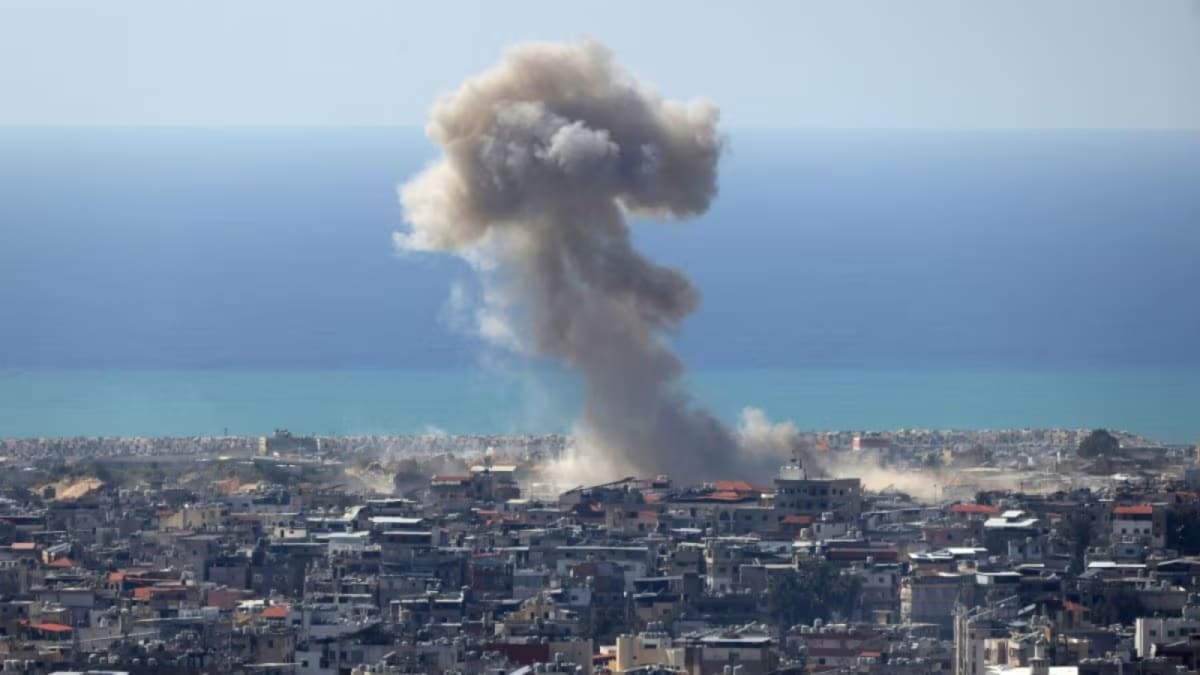
 Smoke rises from an explosion following Israeli bombardment on southern Lebanon near the border with northern Israel on March 2, 2026. The war launched by the United States and Israel against Iran spread across the Middle East on March 2 with Lebanon's Hezbollah entering the fray and a British air base in Cyprus targeted. (AFP)
The Israel Defense Forces (IDF) on Wednesday said it carried out the ‘largest coordinated strike across Lebanon’ since the joint military operation against Iran. “In 10 minutes, the IDF completed the largest coordinated strike across Lebanon since the start of Operation Roaring Lion,” the IDF said in a post on X.
According to the IDF, the strike targeted more than Hezbollah headquarters, military arrays, and command-and-control centers in Beirut, Beqaa and southern Lebanon.
“The State of Lebanon and its civilians must refuse Hezbollah’s entrenchment in civilian areas and its weapons build-up capabilities,” the military said in a statement.
Israel insisted separating Iran, Lebanon wars
Israeli Defense Minister Israel Katz said the IDF’s large wave of strikes in Lebanon targeted “hundreds of Hezbollah operatives.”
“Hundreds of Hezbollah operatives were targeted in surprise strikes at headquarters across Lebanon, in the largest concentrated blow Hezbollah has suffered since the pager operation,” he said.
Katz also said Israel insisted on separating the war with Iran from the fighting in Lebanon in order to change the reality in Lebanon, and remove threats to northern Israel.
Strikes in the heart of Beirut
Confirming the strikes, Lebanon’s National News Agency reported that the airstrikes hit at least five different neighborhoods in Beirut's central and coastal areas.
According to The Associated Press, it was not immediately clear how many people were killed or wounded, but several strikes were in busy commercial locations, causing panic in the streets.
Lebanon's Minister of Social Affairs, Haneed Sayed condemned the Israeli strikes, calling it a “very dangerous turning point.”
“These hits are now at the heart of Beirut … Half of the sheltered (internally displaced persons) are in Beirut in this area,” she told The Associated Press, adding that she had just driven by the areas hit.
Israeli strikes on Lebanon
The latest Israeli strike in Lebanon comes hours after the US, Israel and Iran agreed on a 15-day ceasefire. But Israel has made it clear that Lebanon was not part of the ceasefire deal and that strikes in the country, targeting Hezbollah, will continue.
Israeli military’s chief of staff Lt Gen. Eyal Zamir on Wednesday said they will continue to “utilize every operational opportunity” to strike Hezbollah. Gen. Zamir said it’s to protect Israel’s northern residents, who have come under heavy fire.
Israel began bombing Lebanon in the first week of March after Hezbollah launched missiles from across the border in response to the killing of Ali Khamenei, the former Supreme Leader of Iran, on February 28.
Lebanese PM calls for international help
On Wednesday, Lebanese Prime Minister Nawaf Salam called on his country's friends to help put an end to Israeli attacks following a series of deadly strikes across the country.
In a statement, Salam said that while Beirut "welcomed the agreement between Iran and the United States and intensified our efforts to reach a ceasefire agreement in Lebanon, Israel continues to escalate its attacks".
"All of Lebanon's friends are called upon to help us stop these attacks by all available means," he added.
Israeli airstrikes have killed more than 1,530 people in Lebanon, including more than 100 women and 130 children. The Israeli military has said it has killed hundreds of Hezbollah fighters.
Key Takeaways
- Israel's airstrikes in Lebanon represent a significant escalation in the ongoing conflict, impacting civilians and infrastructure.
- The strikes are a response to perceived threats from Hezbollah, illustrating the complex interplay of regional politics.
- International calls for intervention highlight the global implications of the conflict and the humanitarian crisis unfolding in Lebanon.
About the Author
Bobins Vayalil Abraham
Bobins loves telling the human side of all stories, from the intersection of geopolitics, international relations, and conflicts around the world. In his nearly one-and-a-half-decade career as a journalist, Bobins has covered South Asia, the Middle East, and North America, from elections to mass protests and conflicts. <br> Bobins has also done extensive reporting on environmental issues, climate change, and sustainability, focusing on solutions and people working to make the planet a better place to live. <br> In 2018, Bobins was awarded by Times Internet for the impact of his story on Delhi tree cuttings. Bobins also loves telling the stories of Indian startups and the journey of their founders. <br> Total Years of Experience: 14 <br> Years of experience at LM: Bobins has been a part of Live Mint since February 2026 <br> Interests: When he is not tracking conflicts, Bobins loves to cook, travel across India, click photos, and watch documentaries on history. Past Experience: Before joining Live Mint, Bobins worked with The Indian Express, where he led the Global Breaking News coverage, Indiatimes, where he led the news team, covering everything trending, ANI, where the focus of his coverage was South Asia, and NBS News. <br> Current Role: Bobins is currently working as an Assistant Editor at Live Mint.





 English (US) ·