
 2 hours ago
1
2 hours ago
1
ARTICLE AD BOX
Ethics experts are calling President Donald Trump’s so-called “anti-weaponization” fund a corrupt scheme unlike anything that has been seen in American history. But to an attorney representing hundreds of Jan. 6 defendants, the $1.8 billion looks a lot like “relief.”
“This is a stigma that’s been put on all these people,” said Peter Ticktin, a Florida-based lawyer who plans to pursue claims for as many as 400 clients. “For some, it’s literally going to be a lifesaver.”
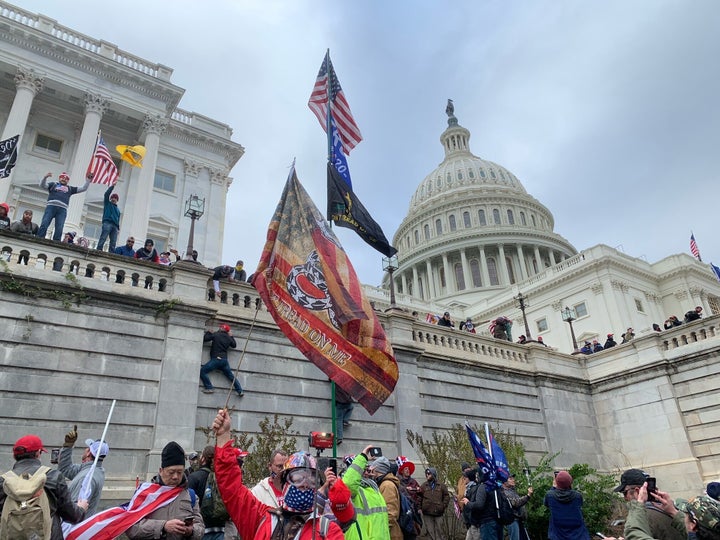
Trump has been rewriting the history of the insurrection since the day it happened, and on his first day of office last year he granted clemency to nearly 1,600 supporters who were charged with crimes related to the Jan. 6, 2021, attack on the U.S. Capitol. But the prospect of compensating participants through a new slush fund ― administered by Trump’s Justice Department, for supposed victims of “weaponization and lawfare” ― has even made some Republican allies squirm.
For Ticktin, a high school classmate of the president who describes the 2020 insurrection as a leftist conspiracy, the rioters Trump pardoned after retaking the White House are exactly the people the new fund should be rewarding. His firm has been filing lawsuits against the government seeking damages for their clients’ prosecutions, and he sees the fund as a potential way to resolve those claims outside of court.
Administration officials have said little about how the payouts would work or who exactly would be eligible, but they haven’t dismissed the notion of rioters getting a piece of the action ― even if they were convicted of violently assaulting police officers. A five-person commission is expected to review claims and dole out payments of taxpayer dollars, but acting Attorney General Todd Blanche hasn’t named the commission members yet.
Ticktin suggested payouts should be determined by some kind of set criteria, perhaps a dollar amount for each day spent in prison, but said some factors would be difficult to quantify for those who stormed the Capitol.
“Some people lost their families” after the riot, he said. “Their wives or husbands left them. I don’t know what kind of value you can put on that.”
Michael Robinson Chavez/The Washington Post via Getty Images
The fund could be a boon not just to convicted rioters but to the MAGA-aligned lawyers who maintain their clients are the real victims. Ticktin said his firm plans to charge a 20% contingency fee on fund claims, noting that the rate would be lower than the typical fee on personal injury cases in his area. He said he hopes the fund will directly cover attorney’s fees, though even if it doesn’t, taxpayer funds could still indirectly foot the bill through any awards claimants receive.
Mark McCloskey, an attorney who infamously brandished an assault rifle outside his St. Louis home during a Black Lives Matter protest in 2020, has pursued cases alongside Ticktin on behalf of Jan. 6 rioters. McCloskey bowed out of the litigation earlier this year, citing health issues, but he experienced a shocking turnaround once the new DOJ fund was announced and rejoined the cases, The Bulwark reported.
“It seems money has a medicinal characteristic,” Ticktin said.
A compensation fund for Jan. 6 rioters is “what we had suggested” and “what we had hoped for,” McCloskey told HuffPost before the DOJ announced the pot of money.
Some attorneys are likely to wait on pursuing claims until the criteria becomes clearer.
Ed Tarpley, a lawyer for Stewart Rhodes, founder of the right-wing extremist group the Oath Keepers, said he and his client were taking a “wait and see” approach. Rhodes was convicted of seditious conspiracy and sentenced to 18 years in prison for his role in the riot. He did not receive a pardon from Trump last year, but the Justice Department recently asked an appeals court to throw out his conviction.
Tarpley said they’re focused on Rhodes’ appeal but acknowledged his client and others involved in the conspiracy case were excited by news of the $1.8 billion fund.
“I think generally everybody is intrigued with the possibility that there may be some compensation. I don’t think there’s any doubt about that,” Tarpley said. “But right now I just think it’s too early. We don’t really know what the process is going to be. We don’t know anything about how it’s going to work.”
Brent Stirton via Getty Images
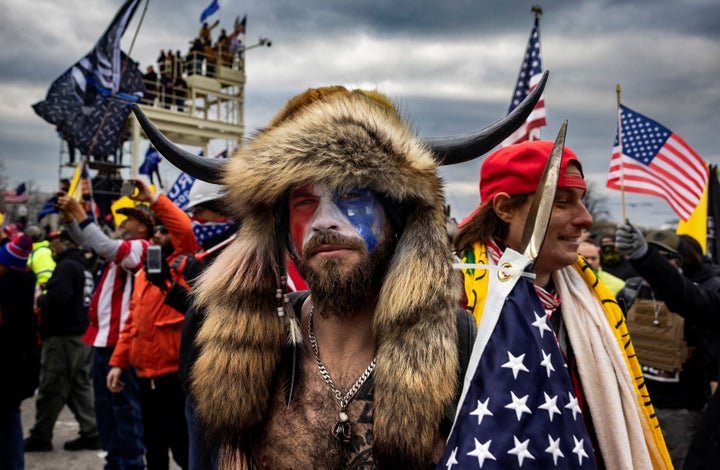
At least one high-profile Jan. 6 participant has said he will not pursue a claim. Jake Angeli, who was known as the QAnon Shaman and was prosecuted as Jacob Chansley, described the fund as corrupt in an interview with HuffPost. Angeli was sentenced to 41 months in prison after pleading guilty to a felony charge related to the insurrection, but was later pardoned by Trump.
Angeli noted that the fund was part of a broader settlement between Trump and the Internal Revenue Service after the president sued over a contractor’s leak of his tax information. As part of the deal, Trump’s own administration is giving him and his family immunity from ongoing tax inquiries ― what ethics experts and Angeli describe as a brazen bit of self-dealing.
“It’s a way of Trump paying people off, bro,” Angeli said. “He’s using our money to do it. And then he’s insulating himself and his companies and his children from further prosecution in the future.”
Related
Donald TrumpJustice Department DOJjanuary 6



 English (US) ·