
 (6).png) 1 hour ago
4
1 hour ago
4
ARTICLE AD BOX

Summary
With no approved vaccine for the rare Bundibugyo species, India has intensified airport screenings and deferred a major diplomatic summit to prevent the highly fatal virus from entering the country.
As cases of Ebola, a severe and often fatal viral infection, spread across African countries last week, the World Health Organization (WHO) termed it an international public health emergency. While no cases have been reported in India so far, the government has stepped up screening and surveillance at airports, issued advisories to travellers, and postponed the India-Africa Forum Summit in Delhi.
Mint unpacks the concerns and the risks of a larger spread.
What's happening?
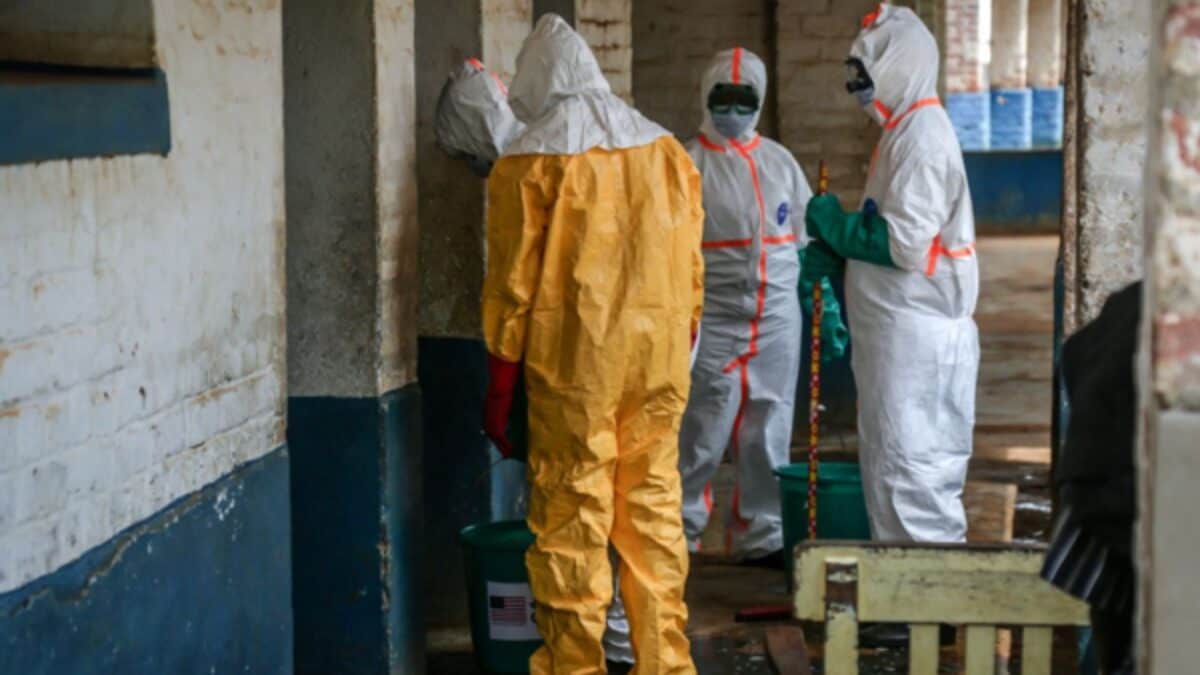
On 15 May, Africa’s Centre for Disease Control (CDC) reported an outbreak of Ebola in eastern Democratic Republic of Congo (DRC), which soon spread to neighbouring Uganda. Soon after, the WHO termed it a public health emergency of international concern and warned of its rapid spread, terming the situation “deeply worrisome”.
While Ebola outbreaks aren’t new to the continent, the current outbreak has been caused by the Bundibugyo species of Ebola, for which no vaccines or treatments are yet available. Late detection, ongoing armed violence, and high mobility among people in the DRC have exacerbated the situation.
While Ebola outbreaks aren’t new to the continent, the current outbreak has been caused by the Bundibugyo species of Ebola, for which no vaccines or treatments are yet available. Late detection, ongoing armed violence, and high mobility among people in the DRC have exacerbated the situation.
Cases tripled in a week, with nearly 750 suspected cases and 177 suspected deaths recorded in DRC, and five confirmed cases in Uganda by Saturday.
What is Ebola?
Ebola is a viral hemorrhagic fever involving internal bleeding and high fever. It affects multiple organs and is often fatal. Four virus species have been detected to date. The Zaire species—the most common cause of epidemics such as the 2014-16 West Africa crisis—has a 90% fatality rate. This current outbreak involves the rarer Bundibugyo species, which has triggered two prior outbreaks and has a 30-40% fatality rate.
The disease spreads through bodily fluids such as urine, saliva, feces, vomit, breast milk and sweat, putting caretakers and health workers at high risk.
While initial symptoms can be non-specific (similar to those of other viral infections), additional symptoms including vomiting, diarrhea, and bleeding may appear as the illness progresses.
How has the world responded?
The WHO quickly swung into action after the outbreak was detected in DRC, terming it a public health emergency on 17 May, a day before the Africa Centres for Disease Control and Prevention (Africa CDC) declared it a public health emergency of continental security.
Since then, the WHO said it has been working with the Africa CDC and partners in the DRC and Uganda to contain the outbreak, support affected people, and help coordinate the response. The European Centre for Disease Prevention and Control (ECDC) also deployed experts to respond to the outbreak, it said on 18 May.
On Saturday, the Africa CDC said 10 countries were at risk in the current outbreak: Angola, Burundi, the Central African Republic, the Republic of Congo, Ethiopia, Kenya, Rwanda, South Sudan, Tanzania and Zambia.
However, global risk remains low. While the WHO has raised its risk assessment for the DRC, it has maintained its earlier assessment that there is a high risk at the regional level but a low risk at the global level.
The lack of a vaccine or treatment for the current species, as well as reductions in foreign aid from major international donors, especially the United States, have made the situation worse.
Global health agencies are accelerating treatment development. Scientists at Oxford University working on a vaccine said it could be ready for clinical trials within two to three months, the BBC reported. Pune-based Serum Institute of India is also joining in, saying it is ready to mass-produce the vaccine once Oxford can supply medical-grade material.
How has India responded?
On Sunday, India’s health ministry advised Indian citizens to avoid non-essential travel to the DRC, Uganda and South Sudan until further notice. Indian citizens currently living in or travelling to these countries have been advised to strictly follow public health guidance issued by local authorities and maintain heightened precautions.
Over the past week, Indian authorities have stepped up screening at airports and ports for travellers from high-risk countries experiencing any symptoms related to the disease. The health ministry also held a meeting with states to check preparedness levels, sharing protocols on pre-arrival and post-arrival screening, quarantine, case management, referral mechanism, and laboratory testing.
On Thursday, the government announced that the India-Africa Forum Summit, scheduled to take place in New Delhi from 28-31 May, would be postponed.
India has had only one confirmed case of Ebola, from the Zaire species in 2014.
Why is surveillance being stepped up?
Public health experts said speedy surveillance and screening, and preparing treatment options for the species remain key to containing the outbreak. This is already the third-largest Ebola outbreak on record, and is likely to grow substantially before it’s controlled, said Yonatan Grad, professor of immunology and infectious diseases at the Harvard T.H. Chan School of Public Health.
The outbreak is particularly concerning due to delayed detection and the DRC's fragile healthcare system, which has been weakened by ongoing conflict. The rarity of this specific species further complicates the situation, as there is a lack of established treatments and diagnostic tools, prompting experts to urge for heightened global surveillance.
However, history shows that Ebola outbreaks, including the 2014 epidemic that claimed over 11,000 lives, rarely evolve into pandemics. Consequently, the risk of a global spread remains low.
About the Author
Jessica Jani
Jessica has been tracking the pharmaceutical, life sciences and healthcare sector for Mint since November 2024. Based in the country's financial capital, she reports on everything to do with health and medicines. This includes corporate action, patent wars, deals, startup activity and consumer trends. She also keeps a keen eye on the ever-evolving world wellness and preventive health, which moves faster than regulation can keep up. She has a deep interest in what the future of health looks like and how science, innovation, policy and company decisions inform and impact the health of citizens. She has been a reporter for five years, working with publications like The Core and News18 prior to this, covering various sectors like automobiles, real estate, energy, sustainability and urban mobility. Jessica has a bachelor’s degree in English from St Xavier’s College, Mumbai and a postgraduate diploma in media from Sophia’s College, Mumbai. Her work is driven by a desire to decode how macro decisions and events alter and shape the lives of ordinary people. Drop her a mail or a message to discuss business scoops, exciting new medicines and inventions, or your latest wellness routine.



 English (US) ·