
 1 hour ago
2
1 hour ago
2
ARTICLE AD BOX
Last Updated:April 06, 2026, 13:11 IST
More than 1,000 JASSM-ERs have already been used in the Iran war, and now the US is preparing to deploy most of its remaining stockpile, signalling a major escalation.


The JASSM-ER, or Joint Air-to-Surface Standoff Missile – Extended Range, is a long-range cruise missile designed to strike targets from a safe distance.
After US President Donald Trump warned that Iran could be bombed “back to the Stone Age", Washington is now preparing to back that escalation with some of its most lethal long-range weapons. At the centre of this shift is the JASSM-ER cruise missile, a stealth system designed to strike targets from hundreds of kilometres away without exposing aircraft to enemy air defences.
A Bloomberg report said the United States is moving to commit nearly its entire inventory of JASSM-ER missiles to the Iran campaign, drawing them from stockpiles in the Pacific and other regions. The order, issued at the end of March, includes repositioning missiles from US facilities worldwide to bases under US Central Command and to Fairford in the United Kingdom.
The scale of the move comes after heavy usage in the opening weeks of the war. More than 1,000 JASSM-ER missiles have already been used in the first four weeks of operations, the Bloomberg report said, reducing available inventory from a pre-war stockpile of around 2,300 to roughly 425 for the rest of the world.
What Is The JASSM-ER Missile?
The JASSM-ER, or Joint Air-to-Surface Standoff Missile – Extended Range, is a long-range cruise missile designed to strike targets from a safe distance.
The missile can travel more than 600 miles (around 965 km) and is built to hit targets without requiring aircraft to enter heavily defended airspace. This standoff capability allows aircraft to launch attacks from outside the range of enemy air defence systems.
The extended-range variant marks a significant upgrade over the baseline JASSM, which has a range of about 250 miles (around 402 km). Along with the JASSM-ER, about two-thirds of the shorter-range JASSM missiles have also been committed to the Iran war.
Why Is The US Relying On It In The Iran War?
The US has increasingly relied on long-range weapons like the JASSM-ER to limit risks to service members while continuing sustained strike operations.
Despite US and Israeli assertions that a significant portion of Iran’s air defences has been destroyed, recent battlefield developments indicate that the threat persists. Iran on Friday shot down a US F-15E strike fighter and an A-10 attack aircraft, and also hit two Black Hawk helicopters involved in search-and-rescue operations. Tehran has also destroyed more than a dozen MQ-9 drones during the course of the war.
How Many Missiles Has The US Used So Far?
The scale of usage reflects the intensity of the campaign.
US operations through the first four weeks of the war have consumed more than 1,000 JASSM-ER missiles, according to the Bloomberg report. The missiles have been launched from B-52 and B-1B bombers, as well as strike fighters, indicating sustained use across multiple platforms.
In addition to the Iran campaign, US aircraft also fired 47 JASSM-ER missiles during a separate raid to capture Venezuelan President Nicolas Maduro.
US Missile Stockpiles Facing Significant Strain
The heavy use of these missiles is placing significant strain on US inventories.
Before the war, the US had around 2,300 JASSM-ER missiles in its stockpile. After current commitments, only about 425 are expected to remain available globally, the Bloomberg report said. Additionally, around 75 missiles are considered “unserviceable" due to damage or technical faults.
To sustain operations, missiles are being pulled from stockpiles across different regions, including the Pacific, and repositioned to US Central Command bases and to Fairford in the UK.
Why Is This Raising Strategic Concerns?
The rapid depletion of JASSM-ER stockpiles is raising concerns about long-term preparedness.
Replacing the weapons used in the current campaign would take many years at existing production levels. Lockheed Martin’s scheduled production rate for 2026 is 396 of the longer-range version, although as many as 860 can be manufactured if production is scaled up.
What Does This Say About The Nature Of The War?
The reliance on JASSM-ER missiles highlights both the scale and the evolving nature of the conflict.
US forces have struck more than 12,300 targets across Iran since the start of the campaign, including naval vessels, missile launchers, and defence manufacturing facilities, according to US Central Command.
However, recent US intelligence assessments suggest that the damage may not be as complete as official statements indicate. Roughly half of Iran’s missile launchers are still intact, while thousands of one-way attack drones remain operational, according to CNN, which cited sources familiar with the intelligence.
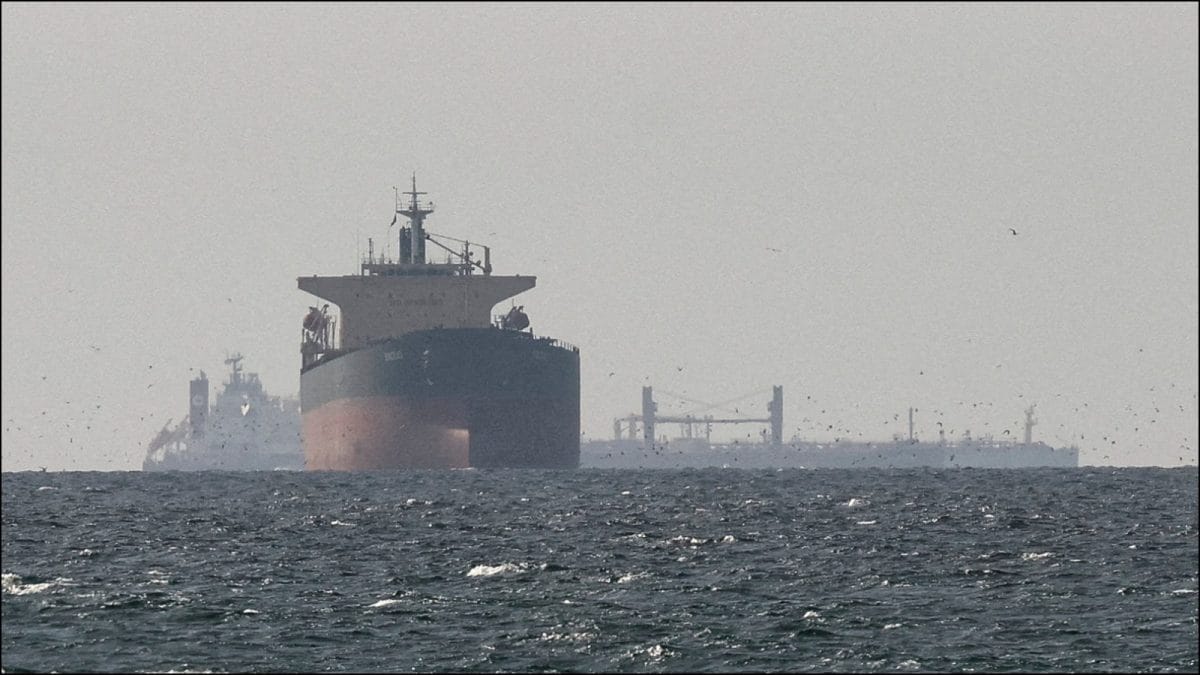
The assessment indicates that some launchers may be inaccessible rather than destroyed, including those buried under debris from strikes. It also found that a large share of Iran’s coastal defence cruise missiles remains intact—capabilities that allow Tehran to threaten shipping routes in the Strait of Hormuz.
This stands in contrast to claims by US President Donald Trump, who said Iran’s ability to launch missiles and drones had been “dramatically curtailed".
Iran has continued to respond with significant firepower. It has launched more than 1,600 ballistic missiles around the region, according to Gulf countries’ official reporting, and about 4,000 Shahed-type rudimentary cruise missiles.
Is The Conflict Entering A More Dangerous Phase?
There are indications that the war could be entering a more volatile stage.
In a profanity-laced Easter Sunday post, Trump issued a stark warning to Tehran, threatening strikes on key infrastructure if it did not reopen the Strait of Hormuz.
“Tuesday will be Power Plant Day, and Bridge Day, all wrapped up in one, in Iran," Trump wrote on his social media platform, in what appeared to be a direct threat targeting Iran’s infrastructure.
“There will be nothing like it!!!" he added.
“Open the F—in’ Strait, you crazy b——s, or you’ll be living in Hell — JUST WATCH! Praise be to Allah," Trump said in the post that triggered sharp reactions across the United States.
First Published:
April 06, 2026, 13:11 IST
News world ‘Most Lethal’ US Missile With A 600-Mile Reach: What Is JASSM-ER Being Deployed Against Iran
Disclaimer: Comments reflect users’ views, not News18’s. Please keep discussions respectful and constructive. Abusive, defamatory, or illegal comments will be removed. News18 may disable any comment at its discretion. By posting, you agree to our Terms of Use and Privacy Policy.
Read More






 English (US) ·