
 10 hours ago
1
10 hours ago
1
ARTICLE AD BOX
Last Updated:March 19, 2026, 16:42 IST
Tulsi Gabbard had suggested that the United States homeland could potentially fall within the range of Pakistan’s nuclear-capable conventional and nonconventional missiles


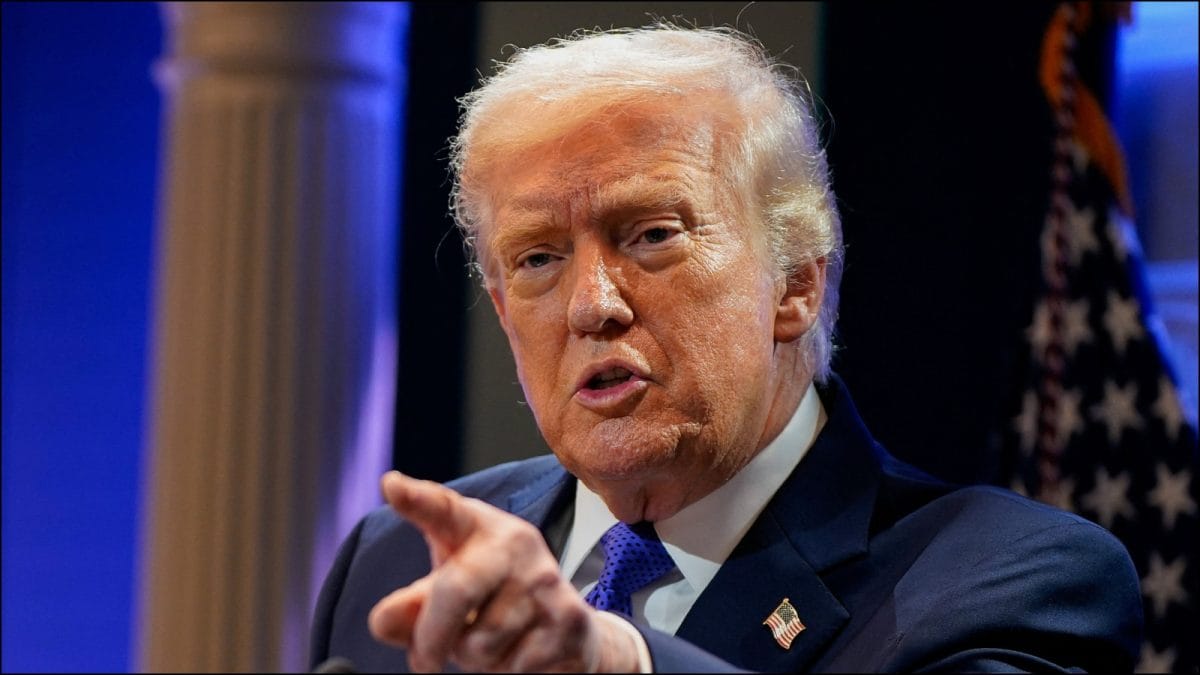
This diplomatic spat underscores the 'trust deficit' that persists between the US and Pakistan. Representational pic/PTI
Former Pakistani Foreign Minister Jalil Abbas Jilani has publicly challenged assertions made by Tulsi Gabbard, the United States Director of National Intelligence (DNI), regarding Pakistan’s missile capabilities. The exchange has reignited long-standing debates over the scope, intent, and reach of Pakistan’s nuclear arsenal.
The Spark: Gabbard’s Senate Testimony
The controversy began during a high-profile Senate hearing where Tulsi Gabbard suggested that the United States homeland could potentially fall within the range of Pakistan’s nuclear-capable conventional and nonconventional missiles. This assertion caused immediate ripples in diplomatic circles, implying that Pakistan is developing Intercontinental Ballistic Missiles (ICBMs) designed for global power projection rather than regional security.
Such a claim contradicts decades of established intelligence, which suggests that Pakistan’s delivery systems are primarily focused on theatre-level and intermediate-range targets. The DNI’s testimony was viewed by many in Islamabad as a significant mischaracterisation of their strategic posture, prompting a swift response from veteran diplomat Jalil Jilani.
Jilani’s Rebuttal: A Doctrine of Deterrence
Taking to the social media platform X, Jilani was unequivocal in his dismissal of the DNI’s claims. He argued that the assertion is not grounded in strategic reality, reinforcing the position that Pakistan’s nuclear doctrine remains strictly India-specific. According to Jilani, the primary objective of the programme is the maintenance of a “credible minimum deterrence" within South Asia, rather than an attempt to project military force globally or threaten the American mainland.
Jilani’s intervention serves to clarify that Pakistan’s investment in missile technology—such as the Shaheen and Ghauri series—is calibrated to counter the conventional and nuclear superiority of its immediate neighbour. By stating the doctrine is India-specific, Jilani is attempting to lower the temperature with Washington while simultaneously reaffirming Islamabad’s “Full Spectrum Deterrence" against New Delhi.
Strategic Reality vs Political Rhetoric
Technically, most independent defence analysts support Jilani’s view. Pakistan’s longest-range missile currently in operation is the Shaheen-III, which has an estimated range of approximately 2,750 kilometres. While this allows Pakistan to reach any corner of the Indian landmass and parts of West Asia, it falls thousands of kilometres short of the distance required to threaten the continental United States.
For a missile to reach the US from South Asia, it would require a range exceeding 10,000 kilometres. Intelligence reports have yet to provide public evidence that Pakistan is testing or deploying such ICBM technology. The focus remains on short-range “tactical" nuclear weapons (such as the Nasr) designed for battlefield use, which further underscores the regional, rather than global, nature of their strategy.
The Geopolitical Fallout
The timing of this friction is particularly sensitive. As the US navigates complex relationships with both India and Pakistan amid shifting alliances in West Asia, statements from the DNI carry immense weight. Jilani’s response highlights a growing concern in Islamabad that its strategic intent is being viewed through an increasingly suspicious lens in Washington.
Ultimately, this diplomatic spat underscores the “trust deficit" that persists between the two nations. While the US continues to monitor the security of Pakistan’s nuclear assets, Islamabad remains fiercely protective of its right to maintain a deterrent that it views as essential for its survival against a much larger conventional adversary.
First Published:
March 19, 2026, 16:42 IST
News world 'Pakistan’s Nuclear Doctrine Strictly India-Specific': Decoding The Tulsi Gabbard-Jalil Jilani Spat
Disclaimer: Comments reflect users’ views, not News18’s. Please keep discussions respectful and constructive. Abusive, defamatory, or illegal comments will be removed. News18 may disable any comment at its discretion. By posting, you agree to our Terms of Use and Privacy Policy.
Read More







 English (US) ·