
 (6).png) 57 minutes ago
1
57 minutes ago
1
ARTICLE AD BOX
SpaceX scrubbed the debut launch of its next-generation Starship V3 rocket on Thursday evening, pushing the 12th test flight of the world's largest rocket to Friday at the earliest.
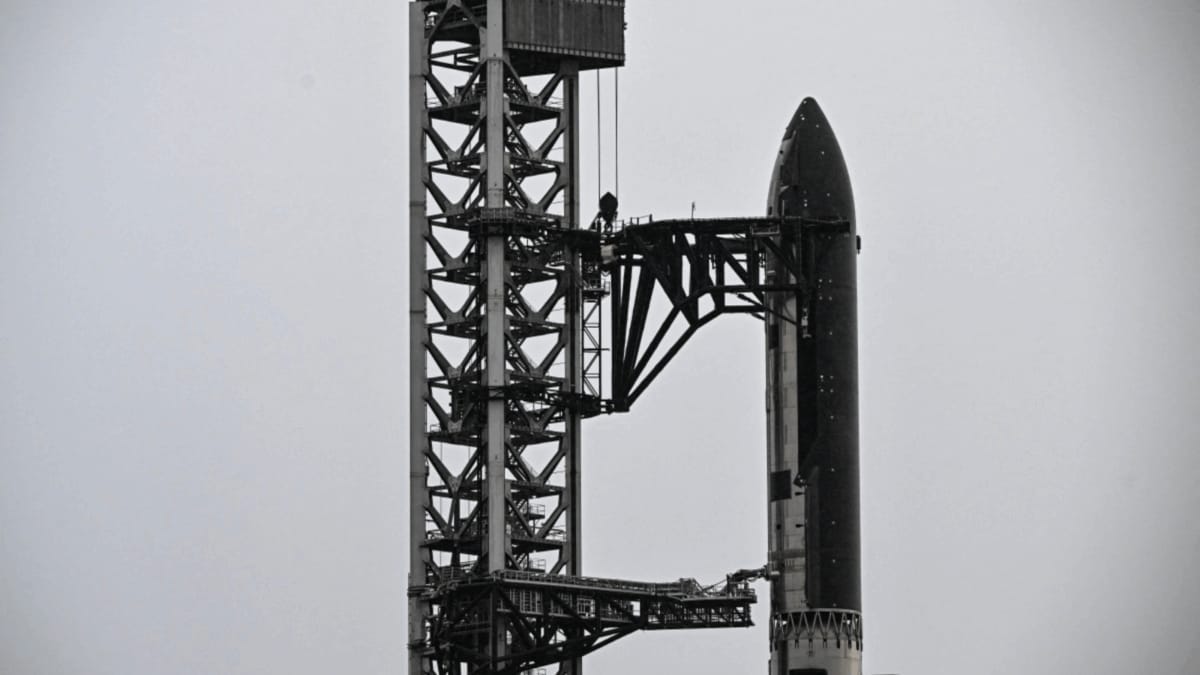
 The SpaceX Starship spacecraft sits atop the Super Heavy Booster, ahead of the 12th test flight of the Starship spacecraft in Starbase, Texas, U.S., May 21, 2026. REUTERS/Steve Nesius(REUTERS)
Flight 12 would have been the first test flight for this new block upgrade. Five flights of Starship Version 2 were completed throughout 2025, but the transition to Version 3 was not without difficulty. Two explosive incidents during ground testing destroyed a Super Heavy booster and a Starship upper stage before the programme reached this point.
No astronauts or operational cargo are aboard for this test. SpaceX is carrying mock Starlink satellites in their place.
Starship Flight 12 Mission Profile: Satellites, Heat Shield Tests and Engine Relights
The planned mission was notable for the breadth of objectives packed into a single suborbital flight.
Twenty Starlink simulator satellites were to be deployed on a sub-orbital trajectory over approximately 10 minutes, beginning around 17 minutes after liftoff. Two further modified Starlink satellites had a separate and specific role: scanning Starship's heat shield and relaying imagery to operators on the ground. Several tiles on the upper stage had been painted white to simulate missing tiles and serve as imaging targets, part of SpaceX's ongoing effort to develop reliable methods for assessing heat shield readiness ahead of future flights.
A Raptor engine relight was also planned for around 39 minutes into the mission, during a coast phase. The exercise is intended to generate data that will inform future deorbiting burns as SpaceX eventually transitions Starship from suborbital to fully orbital flight profiles.
Super Heavy Booster 19 was not scheduled to return for a tower catch on this flight. Instead, it was to execute a controlled splashdown in the Gulf of Mexico roughly seven minutes after launch, a deliberate concession to the novelty of the vehicle. Ship 39, the upper stage, was to follow with its own controlled splashdown in the Indian Ocean more than an hour after launch.
SpaceX IPO Filing Reveals $15 Billion Starship Investment and $657 Million Space Segment Loss
The scrub landed against the backdrop of a significant financial disclosure. On Wednesday, SpaceX submitted its IPO prospectus to the US Securities and Exchange Commission, offering an unusually detailed look at the economics underpinning the Starship programme.
The company confirmed it has invested more than $15 billion in Starship development. The filing also laid bare the financial performance of its space business: "In 2025, our Space segment generated a loss from operations of $657 million and Segment Adjusted EBITDA of $653 million, including the impact of funding [$3 billion] in research and development expense for our next-generation Starship launch vehicle program," the company wrote.
The filing made clear how central Starlink remains to the company's overall financial health. The connectivity unit brought in $11.4 billion in sales and $4.4 billion in operating income in 2025, accounting for 61 per cent of SpaceX's total revenue for the year and 69 per cent in the first quarter.
On the strategic importance of Starship, the prospectus was direct: the company's "growth strategy depends on our ability to increase our launch cadence and payload capacity, which is dependent on the successful development of Starship at scale."
NASA Moon Landing and Mars Ambitions Riding on Starship's Success
The pressure to deliver extends well beyond commercial satellite launches. NASA has contracted SpaceX to use Starship as the lunar lander for its Artemis IV mission, currently scheduled for early 2028. That mission would see US astronauts return to the surface of the moon for the first time in more than half a century.
Elon Musk has also long articulated a broader ambition for the vehicle: using Starship to transport cargo and up to 100 people at a time toward Mars as part of his stated goal of establishing a human presence on the planet.
What Comes Next: Could Flight 13 Be Starship's First Orbital Launch
The postponement of Flight 12 also delays what could follow it. SpaceX has previously said that a successful outcome from this test could open the door for Flight 13 to attempt a fully orbital trajectory, though no firm commitments have been made on that front.
For now, the company turns its attention to Friday's rescheduled window and the question of whether Starship V3 can complete the debut flight its developers have been building toward through years of testing, setbacks, and more than $15 billion in investmen






 English (US) ·