
 2 hours ago
2
2 hours ago
2
ARTICLE AD BOX
Last Updated:March 20, 2026, 13:22 IST
According to multiple reports, at least one oil tanker operator has reportedly paid around $2 million for safe transit through Strait of Hormuz.


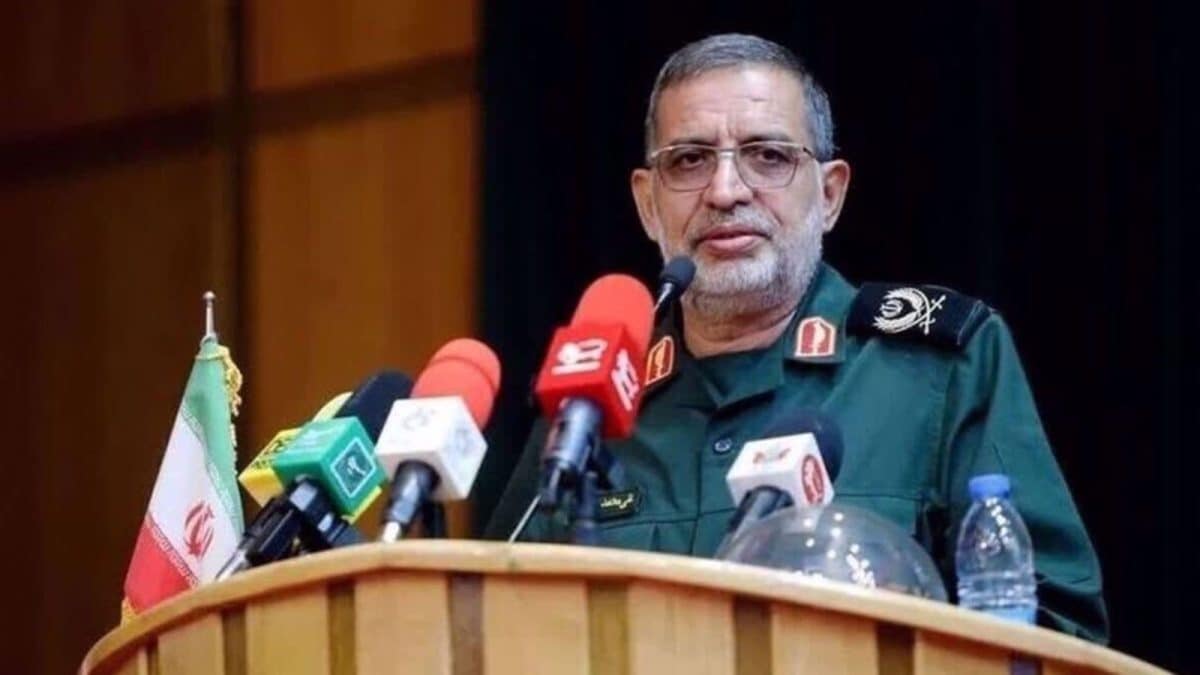
Iran is planning to levy transit fees/tolls on vessels passing through the Strait of Hormuz. (AP Image for Representation)
Iranian lawmakers have publicly proposed a bill to levy transit fees/tolls on vessels passing through the Strait of Hormuz — including charges on states and companies using it for shipping, energy, and food transport — as part of broader retaliation in the ongoing war involving United States and Israel.
Iranian authorities — particularly elements of the Islamic Revolutionary Guard Corps (IRGC) — have begun to establish what is being portrayed as a “safe passage" corridor for vessels willing to engage with Tehran’s terms. According to multiple reports, at least one oil tanker operator has reportedly paid around $2 million for safe transit through the narrow channel near Larak Island, and several other countries are in talks with Tehran to negotiate vessel movements under this arrangement. Critics argue this amounts to an unofficial toll system, with Iran vetting and selectively allowing ships to pass while the broader strait remains extremely dangerous and largely closed due to militia threats and military actions.
Iran’s framing of this fee arrangement is couched in security terms, suggesting that ships must contribute to “maintaining safe access" in a region fraught with threats from mines, missiles and drones. While Iranian officials have hinted that “safe passage" can be discussed with nations not directly involved in hostilities, the legal basis for such tolls is questionable and the mechanism remains opaque, occurring amid ongoing diplomatic and naval negotiations rather than under a recognised international regime.
Who Owns The Strait Of Hormuz?
No single country owns the Strait of Hormuz. It is an international strait — a naturally narrow passage connecting two larger bodies of water — linking the Persian Gulf with the Gulf of Oman and onwards to the Arabian Sea. Because it is used for global navigation and carries a massive share of the world’s oil and gas shipments, the waterway falls under international maritime rules rather than the sovereign control of any one state. That means it functions less like national territory and more like a shared global transit corridor.
Geographically, however, the strait lies between two coastal states — Iran to the north and Oman to the south. Each country exercises sovereignty over its territorial waters extending from its coastline. In practice, that means parts of the shipping lanes pass through Iranian waters and parts through Omani waters. Yet this coastal control does not translate into ownership of the passage itself. Commercial vessels and naval ships do not need prior permission to cross, as long as they follow internationally accepted navigation rules.
The legal framework that governs this arrangement comes from the United Nations Convention on the Law of the Sea (UNCLOS), which defines such chokepoints as international straits subject to the principle of transit passage. Under this regime, ships and aircraft of all nations enjoy the right to move through continuously and without obstruction, even during geopolitical tensions. Coastal states can regulate safety and environmental rules, but they cannot shut the route or treat it as private waters. In effect, Iran and Oman border the Strait of Hormuz, but the right to use it belongs to the world.
Can Iran Legally Charge A Transit Fee At Strait Of Hormuz?
Under widely accepted principles of international law, states are not legally entitled to impose unilateral tolls on commercial shipping simply for passing through an international strait like the Strait of Hormuz. The key legal framework here is the concept of “transit passage" under the United Nations Convention on the Law of the Sea (UNCLOS), which applies to straits used for international navigation. Transit passage allows all ships and aircraft complete freedom of navigation or overflight through the waterway for the purpose of moving from one part of the high seas or an Exclusive Economic Zone to another, without interference by nearby coastal states. This right is unconditional — it applies regardless of a vessel’s nationality, ownership, or cargo — and is meant to ensure that vital sea lanes remain open for global commerce and security.
Iran and Oman both border the Strait of Hormuz and exercise sovereignty over their territorial waters. But sovereign rights over waters adjacent to a coast do not equate to full control of the entire strait or the power to charge export tariffs or passage fees on international shipping. Although Iran has at times articulated conditions and even demanded permission or notification for certain naval vessels entering its coastal waters, these positions conflict with UNCLOS provisions that safeguard transit passage rights and are not recognised by many maritime powers. Indeed, historical practice shows that other states, including the United States, reject any coastal state’s attempt to require such permissions or impose fees.
In practical terms, the idea of Iran charging tolls for Hormuz transit — as floated by some Iranian lawmakers and officials — exists more as a political proposition tied to current conflicts and leverage rather than a lawful maritime regime accepted internationally. Any attempt to enforce such tolls unilaterally would likely be met with strong diplomatic pushback and legal challenges from countries that depend on freedom of navigation through the strait. In theory, states could negotiate agreed fees or security arrangements through multilateral treaties, but international law as it stands does not give Iran (or Oman) the right to impose arbitrary tolls on all passing shipping just because it controls part of the strait’s coastline.
Many countries have condemned Tehran’s tactics as a challenge to freedom of navigation. In a joint statement, the leaders of Britain, France, Germany, Italy, the Netherlands, Japan and Canada stated they were “strongly concerned" by Iran’s attacks on unarmed commercial vessels, mine-laying and attempts to disrupt shipping, and called on Tehran to “cease immediately" such threats in order to uphold international law and keep the vital sea lane open. France’s President Emmanuel Macron also urged Iran to halt regional attacks and “restore Hormuz navigation," underscoring that freedom of passage through this chokepoint is essential for global trade.
At the same time, the United States has stepped up its military posture in the region to counter perceived Iranian efforts to impede maritime traffic. US forces have deployed aircraft such as A-10 Warthogs and Apache helicopters to target Iranian drones, fast boats and mine-laying activities, actions that US commanders have described as integral to countering threats in and around Hormuz.
First Published:
March 20, 2026, 13:22 IST
News world Strait Of Hormuz Explained: Who Controls It, And Can Iran Impose Tolls On Vessels Passing Through?
Disclaimer: Comments reflect users’ views, not News18’s. Please keep discussions respectful and constructive. Abusive, defamatory, or illegal comments will be removed. News18 may disable any comment at its discretion. By posting, you agree to our Terms of Use and Privacy Policy.
Read More






 English (US) ·