
 (6).png) 2 hours ago
1
2 hours ago
1
ARTICLE AD BOX
The Iranian mission to UN also criticised the American naval attack that sank the Iranian frigate IRIS Dena in international waters, resulting in the ‘deaths of over 100 sailors’

Iranian mission to United Nations, on Thursday, denied all ‘claims’ that the Islamic Republic has closed the Strait of Hormuz. Describing the “claims” as “baseless” and “absurd,” the Iran mission claimed that “in reality, it is the US that has endangered maritime security.”
“The claim that Iran closed the Strait of Hormuz is baseless and absurd. Iran remains committed to international law and freedom of navigation. In reality, it is the U.S. that has endangered maritime security,” the Iran mission's post on X read.
On Monday, 2 March – a senior commander from Iran's Revolutionary Guard said that the Strait of Hormuz had been shut and warned that any vessel attempting to transit the waterway would be targeted, Iranian media reported.
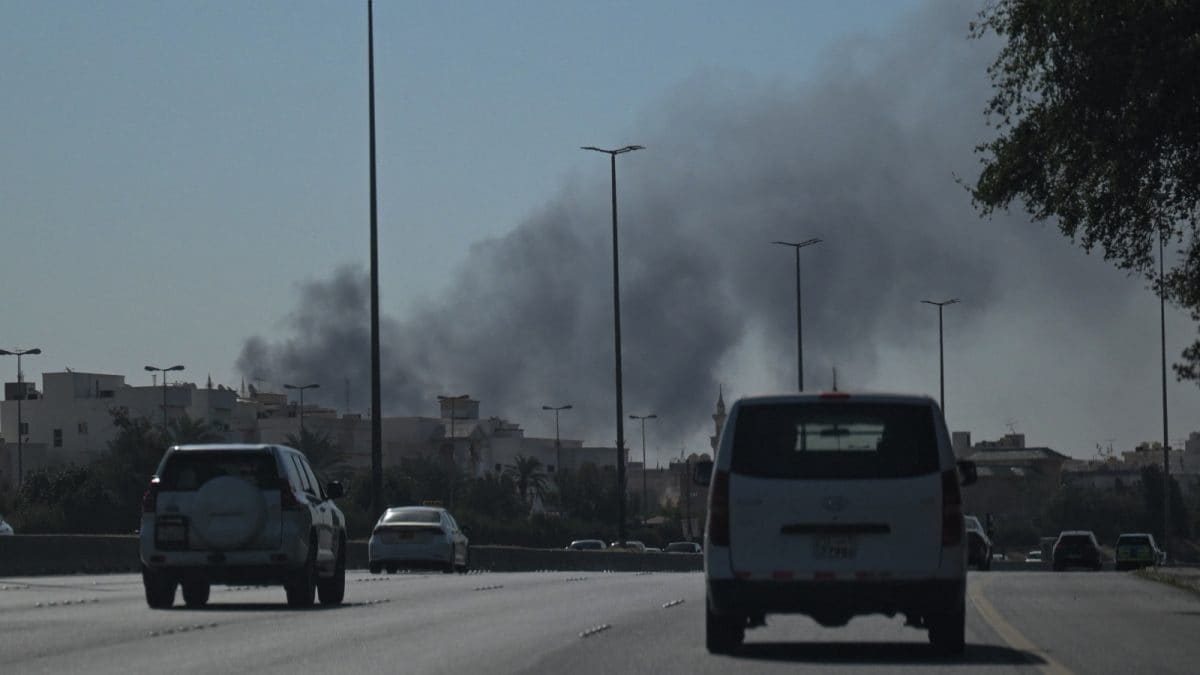
The series of claims comes amid the ongoing Israel-Iran-US conflict which entered its sixth day on Thursday, 5 March – with explosions also reported across Abu Dhabi, Qatar, Dubai – among other key Gulf cities.
Where is Strait of Hormuz?
The Strait of Hormuz connects the oil-rich Persian Gulf to the Indian Ocean and sits between Iran and Oman’s Musandam exclave. At just around 50 kilometres (30 miles) wide and no deeper than 60 metres (200 feet) in places, the strait is geographically vulnerable to military disruption.
Why is it important?
Described by the US Energy Information Administration (EIA) as one of the world’s most important oil chokepoints – Strait of Hormuz – handles about 20 million barrels of oil per day — which is roughly one-fifth of global consumption — and around one-fifth of global LNG trade, mainly from Qatar.
Several strategically important islands dot the waterway, including Iran’s Hormuz, Qeshm and Larak. Also located there are the disputed Greater Tunb, Lesser Tunb and Abu Musa islands, under Iranian control since 1971, offering Tehran a commanding position over passing ships.
In its X post, the Iranian mission to UN also criticised the American naval attack that sank the Iranian frigate IRIS Dena in international waters, resulting in the “deaths of over 100 sailors.”
Strike on IRIS Dena
On Wednesday, 4 March, a US submarine sank an Iranian warship in international waters, US Defense Secretary Pete Hegseth said.
Iranian officials said the vessel – IRIS Dena – had been visiting India before the attack and was carrying around 130 sailors when it was struck off the coast of Sri Lanka.
IRIS Dena, the 1,500-ton Moudge-class frigate, was on its way to Iran after taking part in a multilateral maritime exercise, Milan 2026, in Visakhapatnam.
On Thursday, Iran Foreign Minister Seyed Abbas Araghchi accused Washington of launching an unprovoked strike thousands of miles from Iranian territory, warning that the United States would ultimately “bitterly regret precedent it has set.”
About the Author
Sudeshna Ghoshal
Sudeshna Ghoshal is a Content Producer for Livemint, where she decodes international affairs, US politics, besides covering general news. With nearly ...Read More




 English (US) ·