
 1 hour ago
1
1 hour ago
1
ARTICLE AD BOX
Last Updated:April 07, 2026, 20:29 IST
Despite the clear language of the law, the enforcement mechanism is famously toothless against an incumbent US President


Trump’s explicit focus on destroying 'every bridge' and 'every power plant'—infrastructure indispensable to human survival—directly challenges the principle of distinction, which requires militaries to separate combatants from non-combatants. (File pic/AFP)
As the clock ticks towards the 8pm (ET) deadline on Tuesday, the world is not only watching the skies over Tehran but also the fine print of the Geneva Conventions. President Donald Trump’s declaration that a “whole civilisation will die tonight" has moved beyond mere political blustering, entering a murky legal territory where “maximum pressure" meets the international definition of a war crime.
While the White House maintains that its actions are necessitated by the “economic warfare" of the Strait of Hormuz blockade, international legal scholars are raising alarms. The question is no longer just whether the US will strike, but whether the very threat of doing so has already crossed a non-derogable legal line.
Does threatening to ‘wipe out a civilisation’ constitute a war crime?
Under the Rome Statute and the 1949 Geneva Conventions, the answer is increasingly “yes". Specifically, Article 8 of the Rome Statute classifies the “intentional directing of attacks against the civilian population" and “civilian objects" as war crimes. Trump’s explicit focus on destroying “every bridge" and “every power plant"—infrastructure indispensable to human survival—directly challenges the principle of distinction, which requires militaries to separate combatants from non-combatants.
Furthermore, Article 2(4) of the UN Charter strictly prohibits the “threat or use of force" against the territorial integrity of any state. Legally, a threat of this magnitude can be classified as incitement to commit a war crime or even “direct and public incitement to commit genocide" if the intent is to destroy a group “in whole or in part." By claiming a “whole civilisation" will be “never brought back again", the rhetoric arguably meets the threshold of intentionality required for such a grave legal designation.
Why is civilian infrastructure considered a ‘protected’ target?
In modern international law, “civilisation" is not an abstract concept; it is supported by a physical “industrial backbone". Under Protocol I of the Geneva Conventions, it is forbidden to attack or destroy objects indispensable to the survival of the civilian population, such as drinking water installations and irrigation works.
If the US military follows through with the “energy plant destruction" campaign scheduled for tonight, the humanitarian fallout—including the collapse of hospital systems, water purification, and food refrigeration—would be catastrophic. Military necessity can be used to justify the destruction of a munitions factory, but international law does not recognise the “resetting" of an entire society to a pre-industrial state as a legitimate military objective. This is what legal experts call “wanton destruction", a crime that carries no statute of limitations.
Why has international law never been enforced against a US President?
Despite the clear language of the law, the enforcement mechanism is famously toothless against an incumbent US President. The primary reason is jurisdictional immunity. The United States is not a party to the Rome Statute that established the International Criminal Court (ICC). In fact, the US has passed domestic laws—popularly known as the “Hague Invasion Act"—that authorise the use of force to “rescue" any American personnel detained by the ICC.
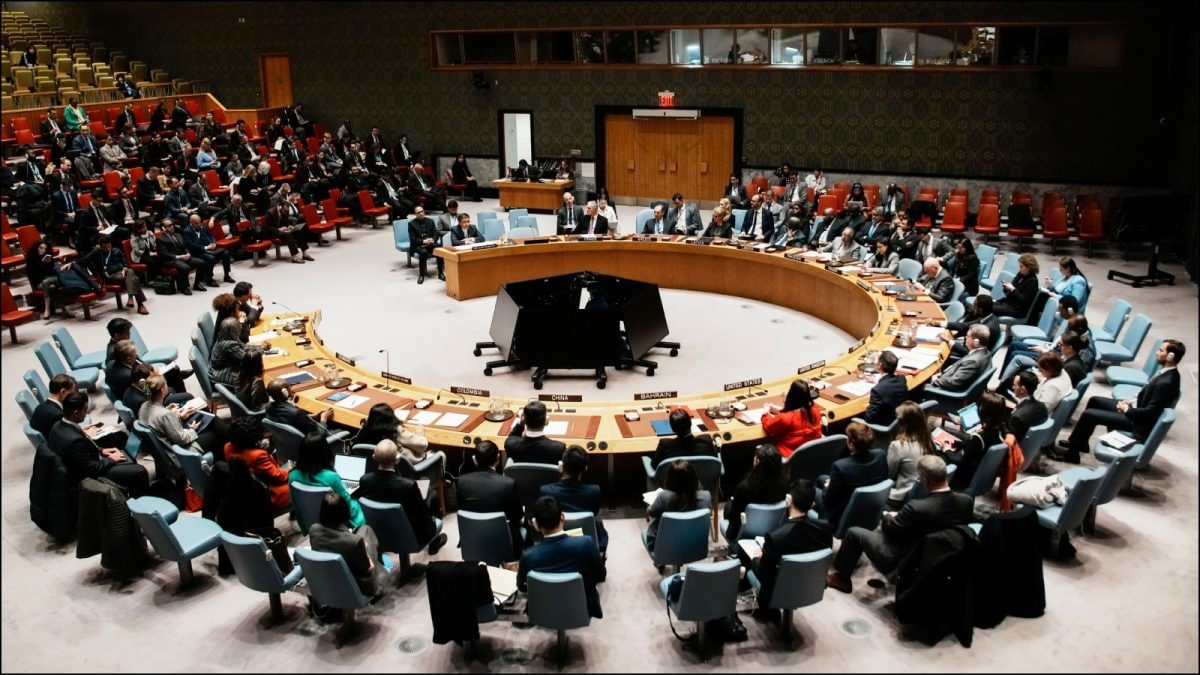
Moreover, the UN Security Council, which is the only body with the power to refer a case to the ICC or authorise a global response, is hamstrung by the US veto power. Historically, international law has functioned more as a framework for diplomatic pressure than a practical courtroom for leaders of the world’s most powerful militaries. While the International Court of Justice (ICJ) could issue a “provisional measure" order to halt the strikes, such rulings have been ignored by Washington in the past.
First Published:
April 07, 2026, 20:29 IST
News explainers The 'Verbal' War Crime: Is Trump’s Civilisational Threat To Iran Already A Breach of International Law?
Disclaimer: Comments reflect users’ views, not News18’s. Please keep discussions respectful and constructive. Abusive, defamatory, or illegal comments will be removed. News18 may disable any comment at its discretion. By posting, you agree to our Terms of Use and Privacy Policy.
Read More






 English (US) ·