
 (6).png) 1 month ago
1
1 month ago
1
ARTICLE AD BOX
As the US and Iran continue to work towards a framework agreement to end the war, which started in late February, Pentagon is now considering to rename the war in Iran. The development comes as President Donald Trump has threatened to resume military strikes if the two sides fail to make a deal
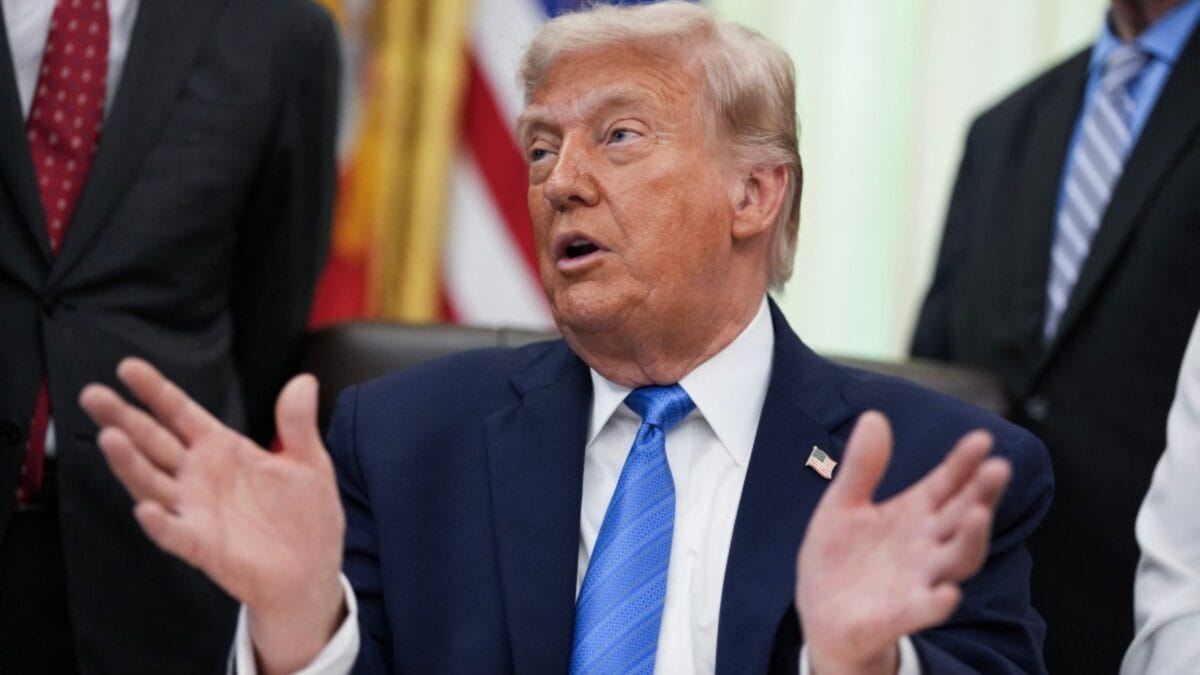
 US President Donald Trump threatens Iran of renewed military strikes(AP)
As the United States and Iran continue to work towards a framework agreement to end the war in the region, US military officials are now mulling officially renaming the war with Iran "Operation Sledgehammer” if the current ceasefire collapses and President Donald Trump decides to restart major combat operations.
Citing two US officials, NBC News on Wednesday reported that discussions regarding possibly replacing "Operation Epic Fury" with "Operation Sledgehammer" highlight how seriously the Trump administration is considering resuming the war, which started in late February. Additionally, it could allow Trump to argue that it restarts the 60-day clock that would require congressional approval for war.
Trump administration ends Operation Epic Fury?
The Trump administration announced an end to Operation Epic Fury after Washington and Tehran agreed to a ceasefire in early April to move forward with diplomatic negotiations. At the time, the administration also informed the US Congress that all hostilities with Iran remained terminated and that the two sides had continued holding the shaky ceasefire. However, the Pentagon has continued describing the conflict with Iran as Operation Epic Fury, including when providing public updates. Citing one Pentagon official, the report noted that Epic Fury continues and that the ceasefire has simply paused major combat operations.
US Secretary of State Marco Rubio told reporters last week that "Operation Epic Fury" is over. During a White House briefing, Rubio noted, "The president notified Congress, we’re done with that stage of it," and added, "Operation Epic Fury is concluded. We achieved the objectives of that operation.”
According to a White House official, any new military operation against Tehran would be conducted under a new name and operation, and added that the administration's point of view is that this would effectively restart the clock with Congress. According to US officials, Operation Sledgehammer is not the only name under consideration.
US-Iran exchange fire
In the last few days, Washington and Tehran have exchanged fire after the Islamic Republic halted ship passage in the Strait of Hormuz, a key waterway through which a fifth of the world's oil transits. This comes at a time when the US president continues to enforce a naval blockade of Iranian ports. According to an official, Trump is weighing several options to reopen the strait and end the standoff, though he remains doubtful that diplomatic talks with Iran will succeed. The official added that the president has not ordered the military to resume major combat operations.
The official noted, "The blockade is giving decision space without major combat operations or putting a lot of folks at risk," and added, "The status quo will not persist.”
Iran cannot have a nuclear weapon: Trump
Trump has consistently maintained that Iran cannot have a nuclear weapon. Speaking in the Oval Office on Monday, he explained that Tehran's nuclear weapon programme continues to be a major sticking point and that the ceasefire is now “unbelievably weak.”
“I would call it the weakest right now, after reading the piece of garbage they sent us, I didn’t even finish reading it, they said — I’m not going to waste my time reading it. I would say it’s one of the weakest right now,” Trump said, adding: “I would say the ceasefire is on massive life support, where the doctor walks in and says, ‘Sir, your loved one has approximately a 1% chance of living.’”
On Tuesday, the US president reiterated that Tehran cannot have a nuclear weapon and said that he is not worried about the economic impact of the war on Americans. Before departing for his visit to China, Trump was asked to what extent "Americans' financial situations" were motivating him to make a deal with the Islamic Republic. He responded, "Not even a little bit," and added, "The only thing that matters when I’m talking about Iran — they can’t have a nuclear weapon. I don’t think about the Americans’ financial situation. I don’t think about anybody. I think about one thing — we cannot let Iran have a nuclear weapon. That’s all."
According to US officials, if Trump decides to launch another bombing campaign, the US military presence in the region is now larger than it was when Operation Epic Fury began in February. Public remarks by Hegseth indicate that the US military has deployed an additional carrier strike group and replaced and rearmed some assets used during the operation’s first two months.
Key Takeaways
- The Trump administration is seriously considering a military escalation if the ceasefire with Iran collapses.
- Renaming the conflict could legally reset the clock for Congressional approval regarding military operations.
- Tensions in the Strait of Hormuz highlight the ongoing volatility in US-Iran relations.
About the Author
Swati Gandhi
Swati Gandhi is a digital journalist with over four years of experience, specialising in international and geopolitical issues. Her work focuses on foreign policy, global power shifts, and the political and economic forces shaping international relations, with a particular emphasis on how global developments affect India. She approaches journalism with a strong belief in context-driven reporting, aiming to break down complex global events into clear, accessible narratives for a wide readership.<br><br> Previously, Swati has worked at Business Standard, where she covered a range of beats including national affairs, politics, and business. This diverse newsroom experience helped her build a strong grounding in reporting, while also strengthening her ability to work across both breaking news and in-depth explanatory stories. Covering multiple beats early in her career has helped her be informed about her current work, allowing her to connect domestic developments with wider international trends.<br><br> At Live Mint, she focuses on international and geopolitical issues through a business and economic lens, examining how global political developments, foreign policy decisions, and power shifts impact markets, industries, and India’s strategic and economic interests.<br><br> She holds a Bachelor’s degree in English (Honours) from the University of Delhi and a Master’s degree in Journalism and Mass Communication from Guru Gobind Singh Indraprastha University. Her academic training has shaped her emphasis on precision, analytical rigour, and clarity in writing. Her interests include global political economy and the intersection of geopolitics with business.<br><br> Outside work, Swati focuses on exploring her passion and love for food. From fancy cafes to street spots, Swati explores food like a true foodie.





 English (US) ·