
 10 months ago
14
10 months ago
14
ARTICLE AD BOX
Last Updated:July 11, 2025, 15:40 IST
A federal judge blocked Donald Trump's executive order to end birthright citizenship but the case is likely headed to US Supreme Court. What happens next?

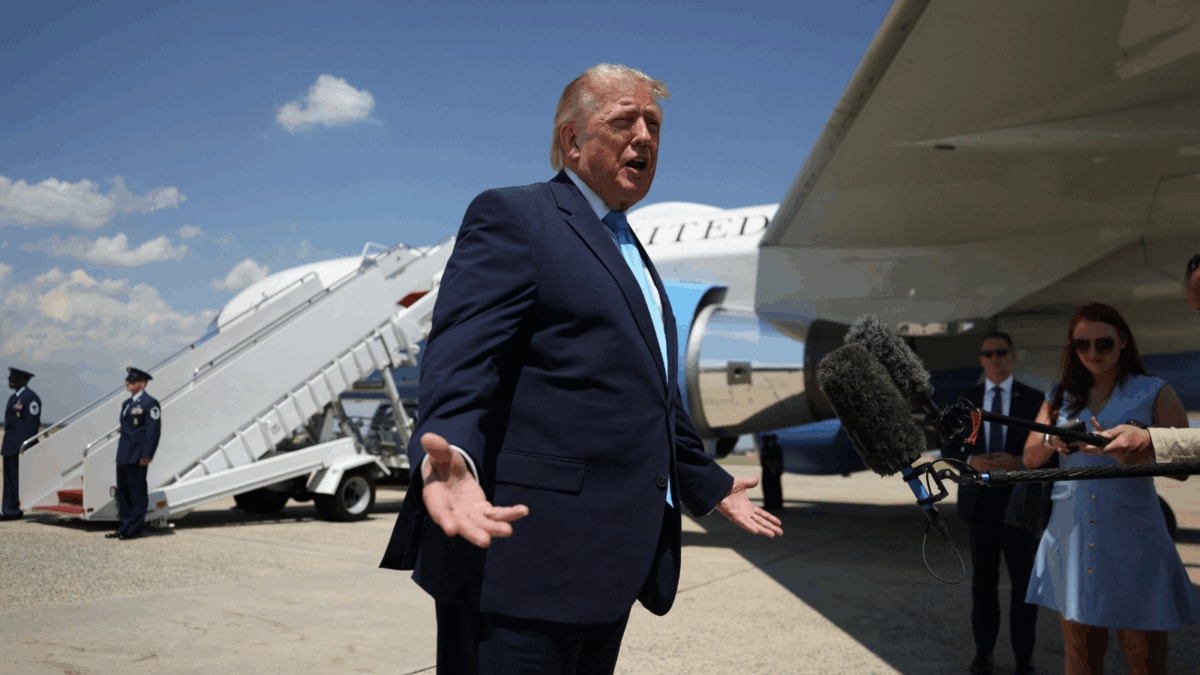
US President Donald Trump (Reuters Image)
The legal fight over US President Donald Trump’s controversial executive order to end birthright citizenship for children born to undocumented immigrants is advancing toward the Supreme Court, following a new federal court ruling that halts the order nationwide.
On Thursday, a federal judge in New Hampshire issued a preliminary injunction blocking the implementation of Donald Trump’s January executive order, which sought to deny US citizenship to children born on American soil to parents living in the country illegally or on temporary visas. The ruling applies across the entire United States but includes a seven-day stay, allowing the federal government time to file an appeal.
“This is a blatantly unconstitutional order," US District Judge John Coughenour said during earlier proceedings, adding, “I’ve been on the bench for over four decades. I can’t remember another case where the question presented was as clear as this one."
The ruling sets up a likely constitutional showdown at the Supreme Court- just weeks after the high court limited the ability of lower courts to issue sweeping nationwide injunctions without resolving the constitutional question at hand.
What Is Birthright Citizenship?
Birthright citizenship is enshrined in the 14th Amendment, ratified in 1868 in the wake of the Civil War to ensure citizenship for formerly enslaved people. It states, “All persons born or naturalized in the United States, and subject to the jurisdiction thereof, are citizens of the United States."
The clause has long been interpreted to mean that anyone born on US soil is a citizen-regardless of their parents’ immigration status. This interpretation was affirmed by the Supreme Court in 1898 in United States v. Wong Kim Ark, which ruled in favor of a man born in San Francisco to Chinese immigrant parents who were denied reentry after traveling abroad.
With few exceptions, including children of foreign diplomats, birthright citizenship has remained a bedrock of American immigration and constitutional law.
What Is Donald Trump’s Hardline Push?
Donald Trump’s January executive order, one of the boldest moves in his continued immigration crackdown, reinterprets the phrase “subject to the jurisdiction thereof" in the 14th Amendment to argue that children of undocumented or temporary immigrants should not be granted automatic citizenship. He and his allies have long claimed that the current interpretation creates a “magnet for illegal immigration" and needs to be undone.
What Happens Next?
The Department of Justice is expected to appeal the New Hampshire ruling swiftly. With class certification now in place, the case is positioned to move toward the US Supreme Court, which may ultimately decide whether Donald Trump’s executive order can stand.
Though the US Supreme Court previously ruled to limit nationwide injunctions by individual judges, it did not weigh in on the constitutionality of the birthright citizenship order itself.
For now, the order remains blocked nationwide and children born in the US continue to be granted citizenship under the 14th Amendment.
view comments- Location :
Washington D.C., United States of America (USA)
- First Published:
News world Trump’s Move To End Birthright Citizenship Faces US Supreme Court Test: What's Next?
Disclaimer: Comments reflect users’ views, not News18’s. Please keep discussions respectful and constructive. Abusive, defamatory, or illegal comments will be removed. News18 may disable any comment at its discretion. By posting, you agree to our Terms of Use and Privacy Policy.




 English (US) ·