
 (6).png) 3 hours ago
1
3 hours ago
1
ARTICLE AD BOX
The intelligence community projects that the collective missile threat to the US could expand from the current 3,000+ missiles to more than 16,000 by 2035.

US Director of National Intelligence Tulsi Gabbard warned the Senate on Wednesday (March 18) that several nations are developing missile capabilities that could directly threaten the United States.
“Russia, China, North Korea, Iran and Pakistan have been researching and developing an array of novel, advanced, or traditional missile delivery systems with nuclear and conventional payloads, that put our Homeland within range,” Gabbard said.
The intelligence community projects that the collective missile threat to the US could expand from the current 3,000+ missiles to more than 16,000 by 2035.
China and Russia advancing capabilities
Gabbard highlighted concerns over advanced delivery systems designed to bypass US missile defenses.
“The IC assesses that China and Russia are developing advanced delivery systems meant to be capable of penetrating or bypassing U.S. missile defenses,” she said.
North Korea and Pakistan’s nuclear ambitions
North Korea’s intercontinental ballistic missiles (ICBMs) already have the range to strike the US, she said and that the regime is actively expanding its nuclear arsenal.
“North Korea’s ICBMs can already reach U.S. soil, and it is committed to expanding its nuclear arsenal,” Gabbard noted.
She also warned about Pakistan: “Pakistan’s long-range ballistic missile development potentially could include ICBMs with the range capable of striking the Homeland.”
Iran’s potential ICBM development
Gabbard flagged Iran’s missile program, noting that Tehran has demonstrated technology that could support ICBM development in the future.
“Iran has previously demonstrated space launch and other technology it could use to begin to develop a militarily viable ICBM before 2035, should Tehran attempt to pursue the capability,” she said.
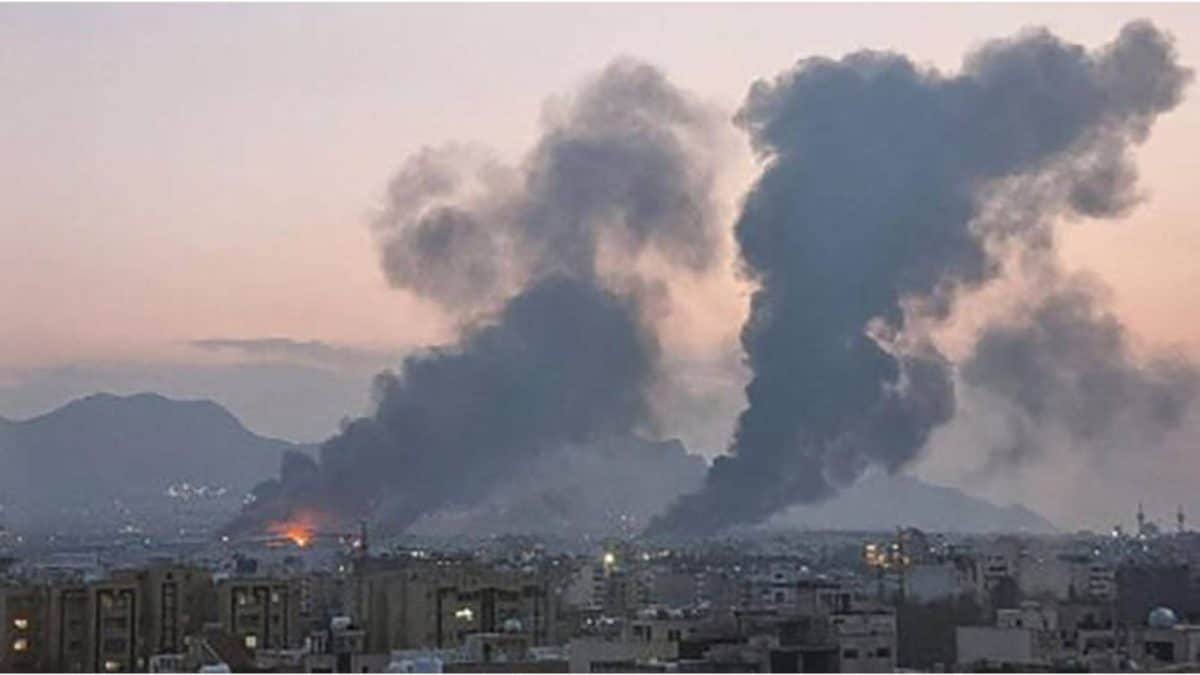
She added that US strikes in Operation Epic Fury could affect Iran’s future missile production: “These assessments will be updated as the full impact of Operation Epic Fury’s devastating strikes on Iran’s missile production facilities, stockpiles, and launch capabilities is determined.”
Nations monitoring US missile defense
The intelligence community expects these countries to closely track US missile defense plans to guide their own development.
“These nations will likely seek to understand US plans for advanced missile defense for the Homeland, probably for the purpose of shaping their own missile development programs and assessing US intentions regarding deterrence,” Gabbard said.
Her remarks came amid ongoing scrutiny of the US war in Iran, which was launched on February 28 following claims of an imminent nuclear threat.
Top counterterrorism official resigns over Iran war
Gabbard’s testimony came a day after Joe Kent, director of the US National Counterterrorism Center, resigned in protest over Iran war. Kent argued that Iran “posed no imminent threat” to the United States and criticized President Donald Trump’s decision to enter the conflict, claiming it violated his “America First” pledges.
Gabbard defends Trump’s decision
Despite the resignation, Gabbard defended Trump’s actions. She emphasized that the President has the authority to determine threats and respond accordingly:
“As our Commander in Chief, he is responsible for determining what is and is not an imminent threat, and whether or not to take action he deems necessary to protect the safety and security of our troops, the American people and our country,” Gabbard said.
She also described the role of her agency in providing intelligence to the President:
“After carefully reviewing all the information before him, President Trump concluded that the terrorist Islamist regime in Iran posed an imminent threat and he took action based on that conclusion.”







 English (US) ·