
 6 hours ago
2
6 hours ago
2
ARTICLE AD BOX
Last Updated:June 10, 2026, 19:33 IST
If the Senate alters the text into a joint resolution, it goes to Trump's desk, where he will almost certainly veto it. News18 explains


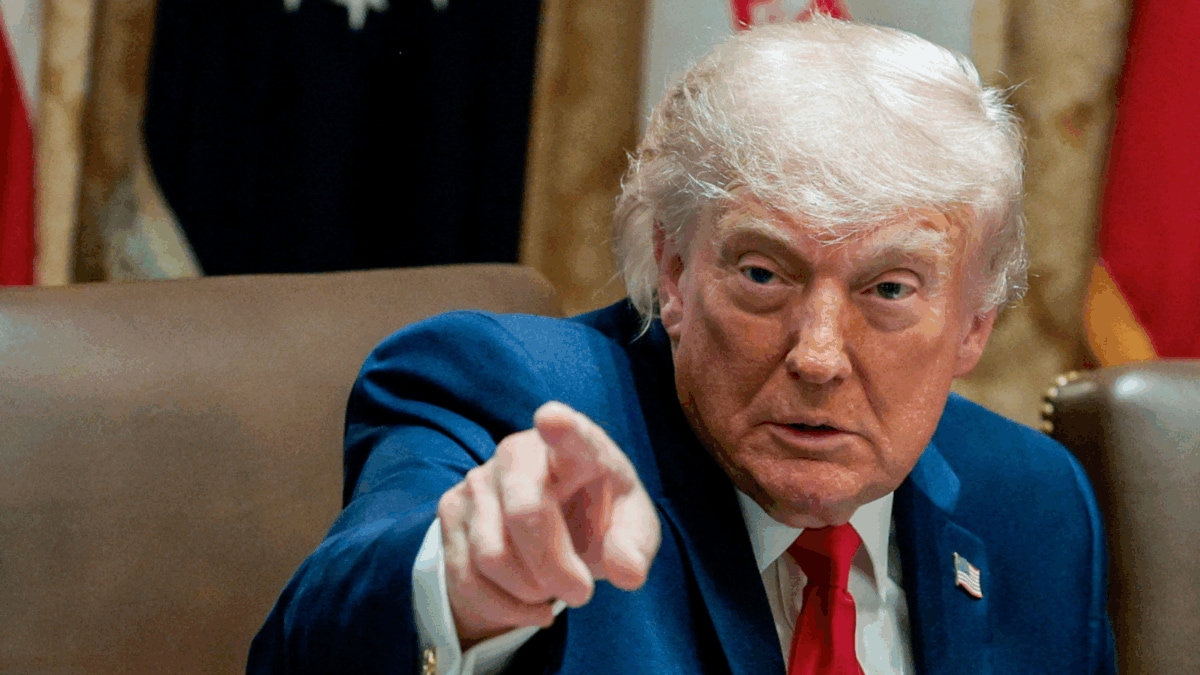
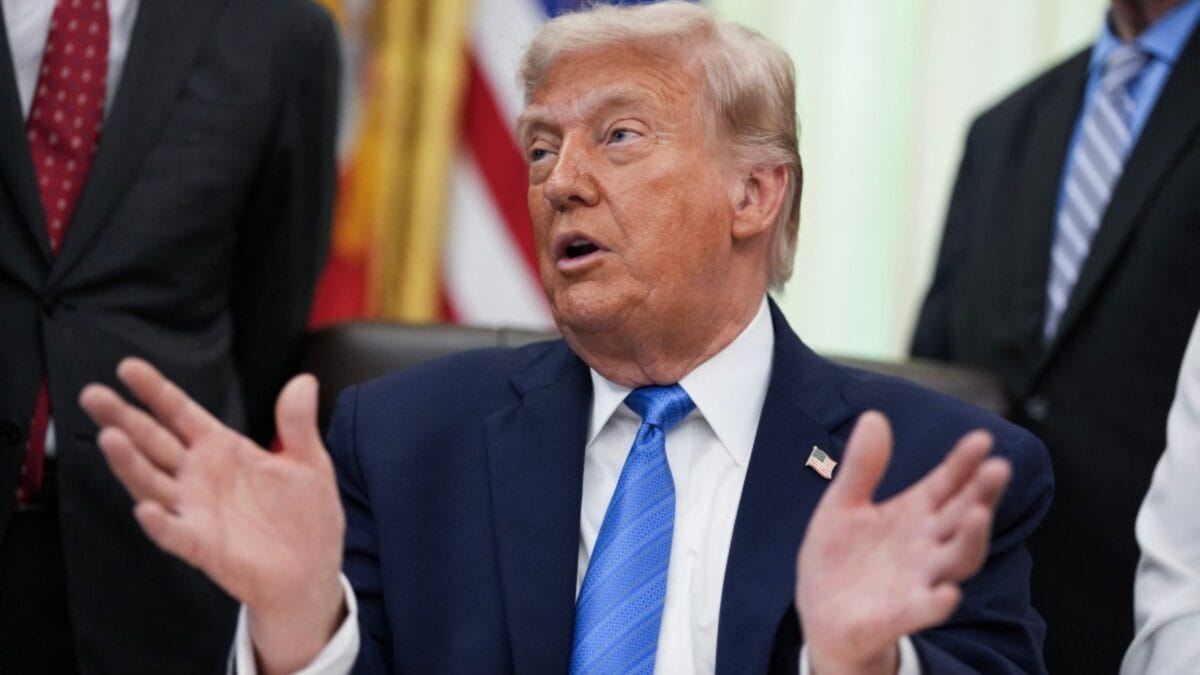
US President Donald Trump. (AFP photo)
The US Congress recently backed the Iran War Powers Resolution to reassert its constitutional authority and demand that President Donald Trump withdraw US military forces from unauthorised hostilities against Iran.
The bipartisan rebuke follows growing legislative frustration over an ongoing conflict that has passed the 100-day mark without explicit congressional approval. Is it enough to stop Trump?
What is the War Powers Resolution?
The War Powers Resolution passed by the House of Representatives (215–208) is a legislative measure invoked under the War Powers Act of 1973.
The House of Representatives voted in favour of the resolution on June 4 and the Senate advanced a separate, but similar, resolution in a procedural vote on May 19 as a handful of Republicans broke with party leadership to vote with almost every Democrat.
It directs the White House to remove US armed forces from active hostilities against Iran unless Congress officially declares war or passes a specific Authorization for Use of Military Force (AUMF). Under the original framework, a president must notify Congress within 48 hours of deploying forces into combat and terminate unauthorised operations within 60 days.
The 60-day deadline for the Iran conflict passed in May. President Trump bypassed it by sending a letter claiming hostilities had technically “terminated" due to an uneasy ceasefire, despite continuous maritime skirmishes and a blockade of Iranian ports.
Four House Republicans broke ranks to vote with Democrats to pass the measure. The Senate also advanced its own version of the bill with bipartisan backing.
The hurdles
The Senate has considered seven resolutions and the House four resolutions related to the Iran conflict. Both the resolutions face significant hurdles.
The Senate measure has survived only a procedural vote and has not passed the full chamber. Even if it is passed, to go into effect it must also clear the House, whose Republican leaders are unlikely to allow a vote. And even if it passed the House, the measure would have to garner the two-thirds majorities needed in both chambers to overcome an expected Trump veto.
The separate measure passed by the House this month would have to pass the Senate, where aides said they were waiting for the parliamentarians to decide whether it is “privileged". If not, Republican Majority Leader John Thune of South Dakota, who rarely breaks with Trump, is not expected to allow a vote.
A resolution against Trump that may go back to Trump
While the resolution is a major political blow, it does not immediately halt military operations.
The House passed a concurrent resolution, which means if the Senate passes an identical version, it acts as a collective declaration that the war is unlawful without requiring the president’s signature.
However, if the Senate alters the text into a joint resolution, it goes to Trump’s desk, where he will almost certainly veto it. Congress currently lacks the two-thirds majority required to override a veto.
While the text of the War Powers Resolution claims concurrent resolutions are binding instructions to withdraw, their legal force is highly debated. President Trump has furiously condemned the votes as “unpatriotic" and maintains that the 1973 law is an unconstitutional infringement on his powers as Commander-in-Chief.
Why does it matter then?
The resolution carries significant domestic and global weight for several reasons:
Constitutional Showdown: It brings the long-standing legal battle over war-making powers to a head. Experts note this sets up a potential judicial showdown over whether a president can use a “ceasefire" loophole to sustain a war without legislative consent.
Domestic Economic Pain: The three-month-long war has cost US taxpayers billions, caused global oil market disruptions, and sent domestic petrol prices soaring, fueling broader inflation.
Electoral Fallout: The war is highly unpopular — recent Reuters polling indicated only 25% of Americans believe the benefits of the strikes outweigh the costs. This growing public discontent directly threatens the Republican Party’s ability to retain control of Congress in the upcoming November midterm elections.
Unfulfilled Military Goals: Lawmakers are pushing back because the administration’s stated objectives, such as dismantling Iran’s missile program, halting uranium enrichment, or forcing regime change, remain unachieved despite active combat.
Strong Signal: “The war powers resolution that was passed by the House sends a strong signal to the president that lawmakers across the aisle think that this war has gone on for too long and violates the war powers resolution as well as the Constitution," Katherine Yon Ebright, a war powers expert at the Brennan Center for Justice at New York University, told Reuters.
With Reuters inputs
Handpicked stories, in your inbox
A newsletter with the best of our journalism
About the Author
At the news desk for 20 years, the story of her life has revolved around finding pun, facts while reporting, on radio, heading a daily newspaper desk, teaching mass media students to now editing speci...Read More
News explainers US Congress’s Powers That May Not Be: How Resolution Against Trump’s Iran Attack May Go Back To Him Itself
Disclaimer: Comments reflect users’ views, not News18’s. Please keep discussions respectful and constructive. Abusive, defamatory, or illegal comments will be removed. News18 may disable any comment at its discretion. By posting, you agree to our Terms of Use and Privacy Policy.
Read More




 English (US) ·