
 (6).png) 3 hours ago
1
3 hours ago
1
ARTICLE AD BOX
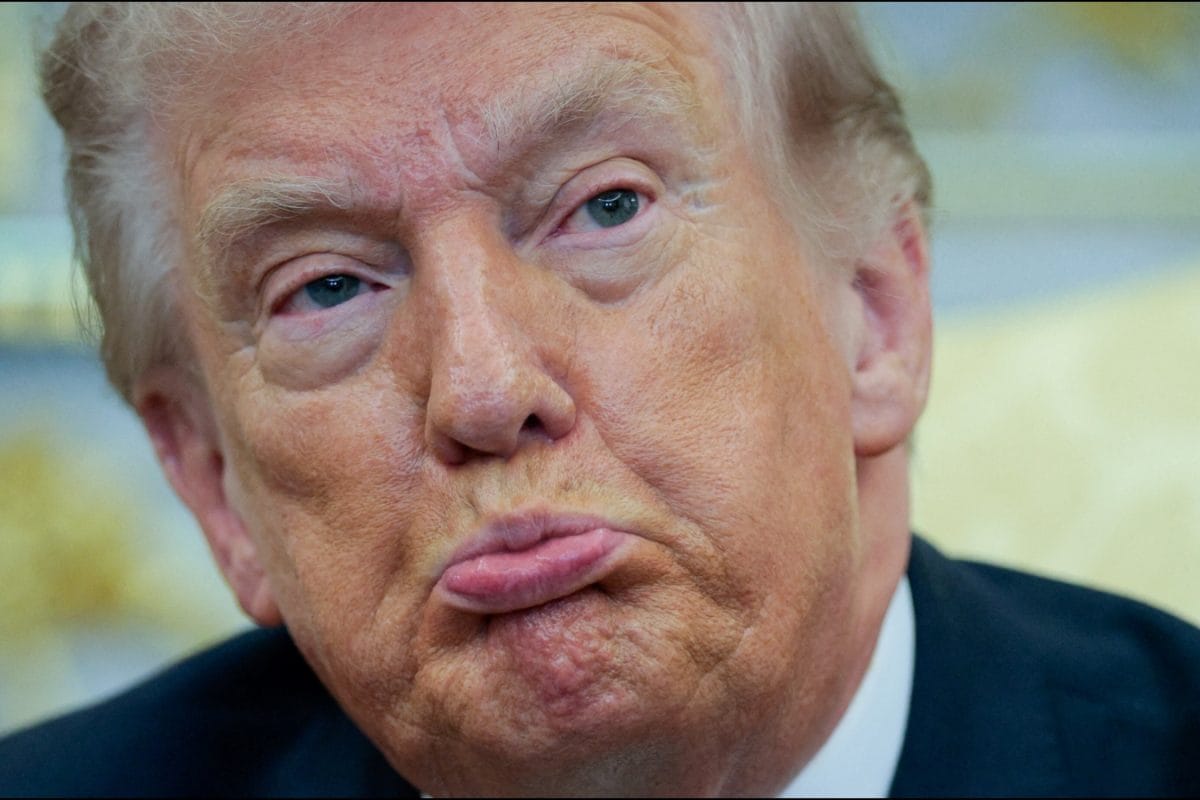
President Donald Trump announced Tuesday that he had agreed to suspend imminent attacks on Iranian infrastructure for a period of two weeks, stepping back from earlier threats to target Iran’s “whole civilization”.
 US Senator Lindsey Graham with Donald Trump (REUTERS)
US-Iran Ceasefire: A tentative pause in hostilities between the US and Iran has raised fresh questions about whether the conflict is truly nearing an end, as influential voices in Washington DC caution that any formal settlement remains far from guaranteed. Even as President Donald Trump signals a willingness to delay further military escalation, senior lawmakers insist that the authority to conclude the war rests with Congress, not the White House alone.
Trump pauses strikes but stops short of ending war
President Donald Trump announced Tuesday that he had agreed to suspend imminent attacks on Iranian infrastructure for a period of two weeks, stepping back from earlier threats to target Iran’s “whole civilization”.
The decision comes more than five weeks after the US and Israel initiated military operations against Iran, and appears to be tied to a conditional diplomatic opening.
The pause, Trump stated, is “subject to the Islamic Republic of Iran agreeing to the COMPLETE, IMMEDIATE, and SAFE OPENING of the Strait of Hormuz,” underscoring the strategic importance of the vital maritime corridor.
Announcing the development on Truth Social, Trump described the arrangement as a reciprocal de-escalation: “This will be a double sided CEASEFIRE!”
He further noted that the shift followed direct engagement with Pakistan’s leadership, writing that the decision was “based on conversations with Prime Minister Shehbaz Sharif and Field Marshal Asim Munir, of Pakistan”.
Strait of Hormuz emerges as key bargaining chip
At the centre of the evolving negotiations lies the Strait of Hormuz, a critical artery for global energy supplies. Washington has made clear that ensuring uninterrupted and secure navigation through the waterway is a precondition for any pause in military operations.
The demand reflects broader concerns that disruptions in the strait could have far-reaching economic and geopolitical consequences, particularly given its role in global oil transit.
Senator Graham: Congress must approve any deal
Despite the apparent diplomatic opening, Republican Senator Lindsey Graham has emphasised that the war cannot be formally concluded without legislative approval.
“As to an Iranian ten point proposal to end the war, I look forward to reviewing it at the appropriate time and its submission to Congress for a vote, like we did with the Obama JCPOA,” Graham posted on X, invoking the precedent of the 2015 nuclear agreement with Iran.
Hardline stance on Iran’s nuclear programme
Lindsey Graham also outlined stringent conditions that he believes must underpin any agreement with Tehran, particularly concerning its nuclear capabilities.
“I want to reaffirm that from my point of view, every ounce of the approximately 900 lbs. of highly enriched uranium has to be controlled by the US and removed from Iran to prevent them in the future from having a dirty bomb or returning to the enrichment business,” Graham added.
Dispute over Iran’s ‘10-point plan’
While the White House has yet to publicly detail the contours of Iran’s proposed “10-point plan”, Iranian officials have indicated that it includes US recognition of Tehran’s right to continue uranium enrichment and maintain control over the Strait of Hormuz.
Such provisions are likely to face strong opposition in Congress, where scepticism of Iran’s intentions remains deeply entrenched.
Graham underscored this concern, warning: “We must remember that the Strait of Hormuz was attacked by Iran after the start of the war, destroying freedom of navigation. Going forward, it is imperative Iran is not rewarded for this hostile act against the world,” Graham said.
About the Author
Sayantani Biswas
Sayantani Biswas is an assistant editor at Livemint with seven years of experience covering geopolitics, foreign policy, international relations and global power dynamics. She reports on Indian and international politics, including elections worldwide, and specialises in historically grounded analysis of contemporary conflicts and state decisions. She joined Mint in 2021, after covering politics at publications including The Telegraph. <br> She holds an MPhil in Comparative Literature from Jadavpur University (2019), with a specialisation in postcolonial Latin American literature. Her research examined economic nationalism through Eduardo Galeano’s Open Veins of Latin America. She also writes on political language, cultural memory and the long shadows of conflict. <br> Biswas grew up in Durgapur, an industrial town in West Bengal shaped by migration, which drew families from across India to the Durgapur Steel Plant. As the only child in a joint family, she spent years listening—almost obsessively—to her grandparents’ testimonies of struggle, fear and loss as they fled Bangladesh during the Partition of 1947. This formative exposure to lived historical memory later converged with her training in Comparative Literature, equipping her to analyse socio-economic structures and their reverberations. <br> Outside the newsroom, she gravitates towards cultural history and critical theory, returning often to texts such as Paulo Freire’s Pedagogy of the Oppressed. As a journalist, she is committed to accuracy, intellectual rigour and fairness, and believes political reporting demands not only clarity and speed, but historical depth, contextual precision, and a disciplined resistance to spectacle.






 English (US) ·