
 (6).png) 2 hours ago
1
2 hours ago
1
ARTICLE AD BOX
A Pakistani-brokered pause on the brink of war has opened a narrow diplomatic window between Washington and Tehran- but Iran's conditions for a lasting settlement are sweeping, and its warnings pointed.
 People gather for a 'No War on Iran' rally outside of City Hall in Seattle(REUTERS)
A fragile diplomatic opening has emerged in the escalating US-Iran confrontation, with both sides agreeing to a two-week ceasefire framework brokered by Pakistan. The pause, announced amid looming threats of military escalation, is intended to create space for high-stakes negotiations in Islamabad—though Tehran has signalled that any lasting peace will hinge on sweeping concessions outlined in its controversial “10-point plan”.
A two-week pause amid brinkmanship
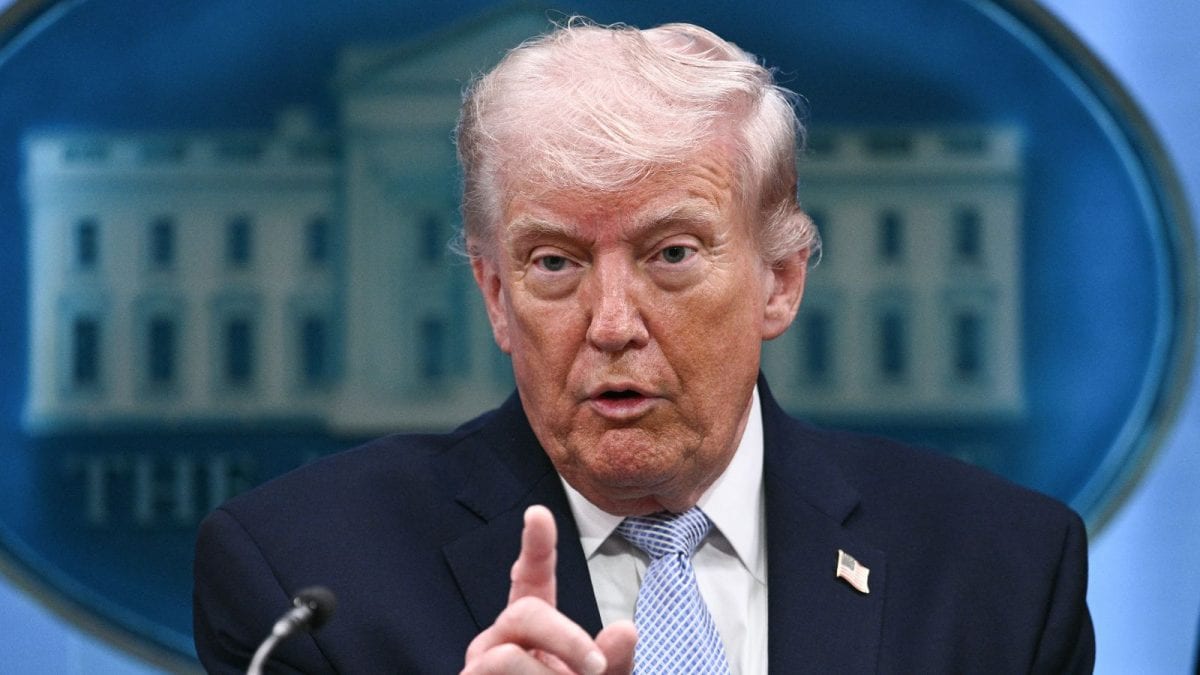
The breakthrough follows days of heightened tensions, during which President Trump had set a deadline for potential large-scale strikes against Iran. According to the latest developments, Washington has agreed to a temporary cessation of hostilities under a Pakistani-mediated proposal.
The arrangement includes a limited de-escalation window during which both sides are expected to refrain from offensive actions. Crucially, this period is also designed to facilitate direct negotiations, scheduled to begin Friday, April 11, in Islamabad.
Iran’s foreign minister Abbas Araghchi confirmed that maritime stability would be part of the temporary understanding, stating:
“For a period of two weeks, safe passage through the Strait of Hormuz will be possible via coordination with Iran’s armed forces and with due consideration to technical limitations.”
Strait of Hormuz: A critical flashpoint
The Strait of Hormuz—through which a significant share of the world’s oil supply passes—has been central to the crisis. Tehran’s willingness to ensure temporary safe passage signals a tactical concession, though it remains tightly controlled.
Iran has underscored that any such arrangement will be managed directly by its military, reinforcing its claim to authority over the strategic waterway during the ceasefire period.
Tehran’s conditional ceasefire stance
Iran’s Supreme National Security Council has framed the ceasefire not as a concession, but as a conditional pause dependent on reciprocal restraint from Washington.
In an official statement, the council declared:
“if attacks against Iran are halted, our Powerful Armed Forces will cease their defensive operations”.
The language reflects a defensive posture while leaving open the possibility of renewed conflict should negotiations falter.
The “10-point plan”: Iran’s sweeping demands
At the core of the upcoming talks is Iran’s assertion that it has compelled the US to accept its “10-point plan” as the basis for negotiations. The plan outlines far-reaching political, military and economic demands:
- Commitment to non-aggression
- Iran’s control over the Strait of Hormuz
- Acceptance of Iran's uranium enrichment
- Lifting of all primary sanctions
- Lifting of all secondary sanctions
- Termination of all UN Security Council resolutions
- Termination of all Board of Governors resolutions
- Paying compensation to Iran
- Withdrawal of US combat forces from the region
- Cessation of war on all fronts, including in Lebanon
Tehran has characterised this framework as a diplomatic victory, though Washington has not publicly confirmed acceptance of all terms.
Islamabad talks: High stakes, low trust
Negotiations are expected to be led by Vice President Vance on behalf of the US, with Pakistan acting as host and intermediary. Iranian officials have made clear that the talks will proceed with deep scepticism.
The National Security Council statement emphasised:
“Accordingly, it was decided at the highest level that Iran will hold negotiations with the American side in Islamabad for two weeks and solely on the basis of these principles.”
It added:
“It is emphasised that this does not mean an end to the war and Iran will accept an end to the war only when – in view of Iran’s acceptance of the principles envisaged in the 10-point plan – its details are also finalised in the negotiations.”
US-Iran War reaches a ceasefire, not a peace settlement
Despite the diplomatic movement, Tehran has issued a stark warning that the conflict remains unresolved. The two-week window is explicitly framed as provisional and reversible.
Iran’s statement concluded with a pointed message:
“If the surrender of the enemy in the field becomes a decisive political achievement in the negotiations, we will celebrate this great historical victory together. Otherwise we will fight side by side in the field until all the demands of the Iranian nation are achieved. Our hands are on the trigger, and as soon as the slightest mistake by the enemy is made, it will be responded to with full force.”
About the Author
Sayantani Biswas
Sayantani Biswas is an assistant editor at Livemint with seven years of experience covering geopolitics, foreign policy, international relations and global power dynamics. She reports on Indian and international politics, including elections worldwide, and specialises in historically grounded analysis of contemporary conflicts and state decisions. She joined Mint in 2021, after covering politics at publications including The Telegraph. <br> She holds an MPhil in Comparative Literature from Jadavpur University (2019), with a specialisation in postcolonial Latin American literature. Her research examined economic nationalism through Eduardo Galeano’s Open Veins of Latin America. She also writes on political language, cultural memory and the long shadows of conflict. <br> Biswas grew up in Durgapur, an industrial town in West Bengal shaped by migration, which drew families from across India to the Durgapur Steel Plant. As the only child in a joint family, she spent years listening—almost obsessively—to her grandparents’ testimonies of struggle, fear and loss as they fled Bangladesh during the Partition of 1947. This formative exposure to lived historical memory later converged with her training in Comparative Literature, equipping her to analyse socio-economic structures and their reverberations. <br> Outside the newsroom, she gravitates towards cultural history and critical theory, returning often to texts such as Paulo Freire’s Pedagogy of the Oppressed. As a journalist, she is committed to accuracy, intellectual rigour and fairness, and believes political reporting demands not only clarity and speed, but historical depth, contextual precision, and a disciplined resistance to spectacle.





 English (US) ·