
 (6).png) 4 days ago
1
4 days ago
1
ARTICLE AD BOX
Trump faces a 60-day War Powers Act deadline as the US-Iran conflict hits a legal threshold. The White House says a ceasefire pauses the clock and avoids congressional approval, but lawmakers are divided.
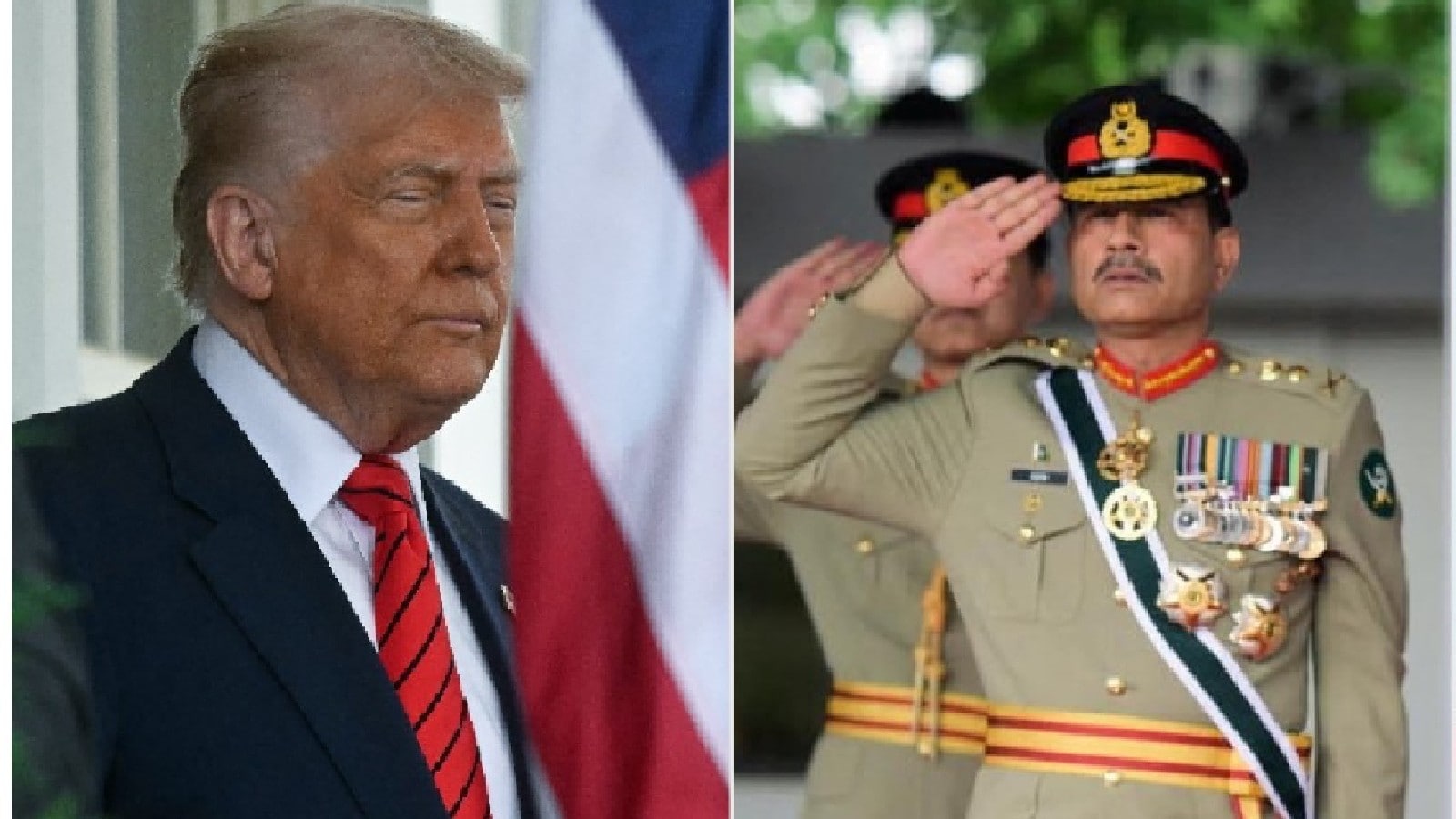
 US President Donald Trump(AFP)
US President Donald Trump is now facing a crucial deadline as Washington's war with Iran has hit the 60-day mark on Friday. This is because a decades-old Vietnam-era law states that the US Congress must sign off on the war after it crosses the 60-day mark, CNN reported.
The War Powers Resolution of 1973 clearly lays out a timeline for when lawmakers must be notified of hostilities and when a president is required to withdraw American forces from a conflict in the absence of congressional authorisation. Without explicit congressional authorisation, the law says that once that deadline is reached, the president “shall terminate any use of the United States Armed Forces.”
Discrepancy over war dates?
The report suggests that many lawmakers view 1 May as the 60-day mark, since that's when the US president notified Congress of the beginning of hostilities on 2 March. However, some Senate Republicans have argued that this should mark an inflexion point, where the US Congress must intervene and authorise the conflict or at least carry out further oversight. But others insist that Trump can unilaterally extend the military's involvement for another 30 days, with Republicans stating that ceasefire days do not count toward the total.
The disagreement between lawmakers adds further uncertainty to the six-week-long conflict that has already raised questions about Congress's role in overseeing Trump's authority to launch a war abroad. Since the war started in late February, US lawmakers have engaged in debates over the scope of that power.
Is the US-Iran war over?
The White House on Friday told CNN that the war in Tehran is over, citing a ceasefire between the countries, an interpretation that could allow the administration to avoid seeking congressional approval. The truce was extended indefinitely by Trump shortly before the two-week ceasefire, which was announced on 8 April, ended on 22 April.
In a statement, a senior administration official said that “the hostilities that began on Saturday, February 28, have terminated.” The official went on to say that there has been no exchange of fire between the US and Iran since the two sides agreed to a ceasefire on 7 April.
The statement from the White House official echoes an argument made by Defense Secretary Pete Hegseth during his testimony on Capitol Hill on Thursday, when he said the Trump administration interprets the law to mean that "the 60-day clock pauses or stops during a ceasefire.”
A similar statement was made by US House Speaker Mike Johnson, who reiterated that the US Congress doesn't need to weigh in on the administration's military action in Tehran, since the two sides are not currently at war.
Speaking to NBC, he said, "I don’t think we have an active, kinetic military bombing, firing, or anything like that. Right now, we are trying to broker a peace," and added, "I would be very reluctant to get in front of the administration in the midst of these very sensitive negotiations, so we’ll have to see how that plays out.”
Hostilities continue?
While the ceasefire was extended indefinitely, there is no clarity on how the hostilities will end. After the first round of talks failed, the US enforced a naval blockade of Iranian ports, a move that prompted Tehran not to agree to a second round of talks. Last week, Iran's Foreign Minister Abbas Araghchi visited Pakistan for a bilateral meeting with his counterpart Ishaq Dar, a move that renewed hopes of lasting peace. However, the Iranian regime denied reports of engaging with Washington while Araghchi was in Islamabad, citing the naval blockade as the primary reason. Before Trump's team could depart for Islamabad on Saturday, Araghchi left Islamabad, leaving the future of a peace deal in limbo.
Iran's state-run news agency IRNA reported today that the Islamic Republic has sent a fresh proposal to Pakistani mediators for negotiations with Washington. However, what remains to be seen is whether the two sides will finally agree to come to the negotiating table this time.
About the Author
Swati Gandhi
Swati Gandhi is a digital journalist with over four years of experience, specialising in international and geopolitical issues. Her work focuses on foreign policy, global power shifts, and the political and economic forces shaping international relations, with a particular emphasis on how global developments affect India. She approaches journalism with a strong belief in context-driven reporting, aiming to break down complex global events into clear, accessible narratives for a wide readership.<br><br> Previously, Swati has worked at Business Standard, where she covered a range of beats including national affairs, politics, and business. This diverse newsroom experience helped her build a strong grounding in reporting, while also strengthening her ability to work across both breaking news and in-depth explanatory stories. Covering multiple beats early in her career has helped her be informed about her current work, allowing her to connect domestic developments with wider international trends.<br><br> At Live Mint, she focuses on international and geopolitical issues through a business and economic lens, examining how global political developments, foreign policy decisions, and power shifts impact markets, industries, and India’s strategic and economic interests.<br><br> She holds a Bachelor’s degree in English (Honours) from the University of Delhi and a Master’s degree in Journalism and Mass Communication from Guru Gobind Singh Indraprastha University. Her academic training has shaped her emphasis on precision, analytical rigour, and clarity in writing. Her interests include global political economy and the intersection of geopolitics with business.<br><br> Outside work, Swati focuses on exploring her passion and love for food. From fancy cafes to street spots, Swati explores food like a true foodie.





 English (US) ·