
 6 hours ago
2
6 hours ago
2
ARTICLE AD BOX
Last Updated:April 05, 2026, 13:55 IST
The F-15E has been a primary asset for the US deep-strike missions during the Iran conflict, which began on February 28. Why does the US continue to use a 50-year-old F-15?


News18
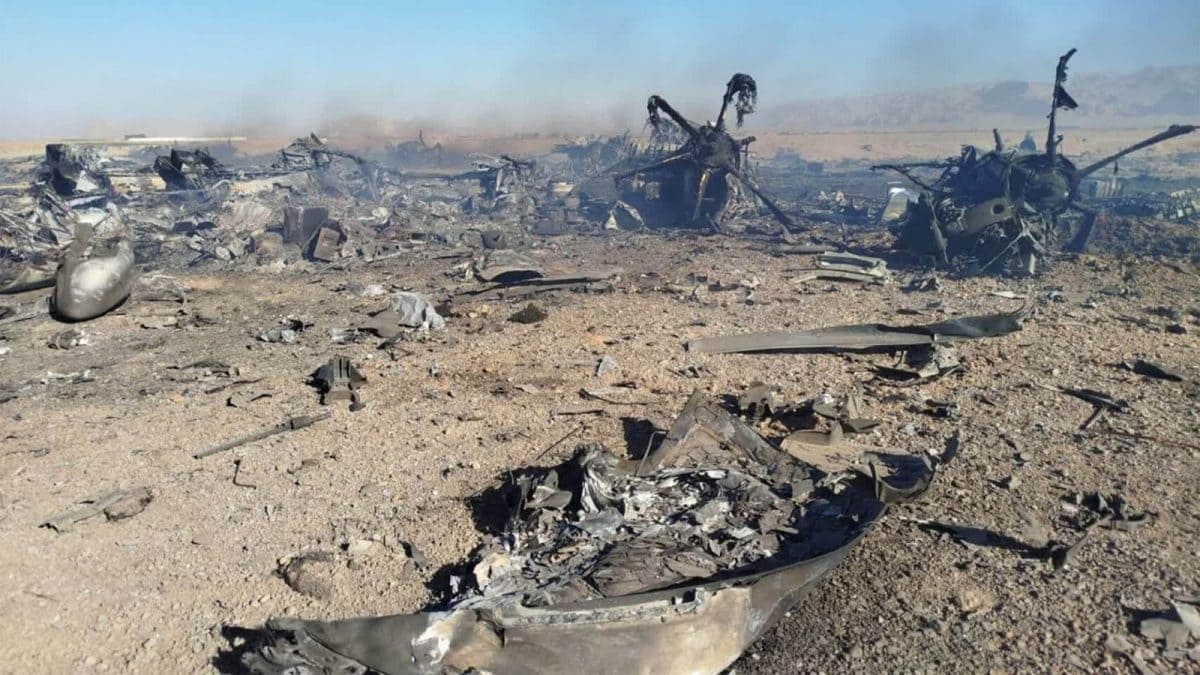
The F-15E has been a primary asset for the United States (US) deep-strike missions during the Iran conflict, which began on February 28. An F-15E Strike Eagle was shot down over southwestern Iran on April 3, marking the first time a US fighter jet has been lost to enemy fire in over 20 years.
Why does the US continue to use a 50-year-old F-15 in the war? News18 explains.
WHAT IS F-15?
The F-15E Strike Eagle is a dual-role fighter designed by McDonnell Douglas (now Boeing) to perform both air-to-air and air-to-ground missions. It is a modernised, “deep strike" version of the original F-15 air superiority fighter, specifically optimized to hit high-value targets deep behind enemy lines without the need for escort or electronic warfare support.
The F-15E was introduced in 1988 and reached initial operational capability in 1989. It has seen extensive combat in major conflicts including Operation Desert Storm (Iraq), Operation Enduring Freedom (Afghanistan), Operation Iraqi Freedom.
WHY F-15 IS A PREFERRED CHOICE
While the original F-15 design dates back to the 1970s, the United States (US) continues to use the F-15E Strike Eagle in battle because it remains one of the world’s most capable and versatile “bomb trucks". It fills several critical gaps that even 5th-generation stealth fighters like the F-35 cannot easily match, specifically in payload capacity, range, and mission management.
The F-15E remains a cornerstone of US airpower for several reasons:
Massive payload and firepower : The F-15E is essentially a heavy bomber in a fighter’s body. It can carry over 10,400 kg (23,000 lbs) of ordnance—nearly double what an F-35 can carry internally to stay stealthy. This allows it to deliver a devastating array of precision-guided bombs, air-to-air missiles, and even tactical nuclear weapons in a single mission.
Extreme speed and range: Powered by twin Pratt & Whitney F100 engines, the Strike Eagle can reach speeds exceeding Mach 2.5 (1,875+ mph). Its conformal fuel tanks (CFTs) allow it to fly deep into enemy territory and remain on station for extended periods without sacrificing weapons space, a capability vital for modern long-range operations.
The two-crew advantage: Unlike single-seat modern fighters, the F-15E features a pilot and a Weapon Systems Officer (WSO). This division of labor is critical for complex strikes; the WSO manages advanced sensors, electronic warfare, and targeting while the pilot focuses on maneuvering and tactical threats.
Continuous modernisation: The aircraft being used today are not the same as those from decades ago.
THE RECENT UPGRADES
- AN/APG-82(V)1 AESA Radar: Provides superior long-range target detection.
- EPAWSS: The Eagle Passive/Active Warning and Survivability System is a cutting-edge electronic warfare suite that allows the jet to survive in highly contested environments.
- Hypersonic Weapons: Future versions like the F-15EX are designed to carry next-generation hypersonic missiles that older airframes cannot support.
Proven reliability and recent service: The F-15E has an unmatched combat record with zero losses in air-to-air combat over decades of service. It remains a primary asset in active conflicts, such as recent operations over Iran in April 2026, where its deep-strike capabilities were heavily utilized despite the risks posed by modern air defense systems.
The US Air Force plans to keep a modernised fleet of Strike Eagles in service until at least the 2030s, eventually transitioning to the even more advanced F-15EX Eagle II.
F-15E DURING US-IRAN CONFLICT
On April 3, an F-15E was downed by Iranian air defenses during a mission. Both crew members—the pilot and the Weapon Systems Officer (WSO)—successfully ejected. A massive, high-stakes combat search and rescue (CSAR) operation was launched. The pilot was rescued shortly after the crash on Friday. The WSO (a Colonel) was rescued on April 5, after spending two days evading capture in a mountain crevice.
President Trump described the recovery as “one of the most daring search and rescue operations in U.S. history," involving dozens of aircraft. During the mission, U.S. forces had to destroy two of their own Special Operations MC-130J aircraft on the ground to prevent them from falling into enemy hands.
‘Eyes & Ears’ To Top Cover: The US Aircraft That Powered Daring Iran F15E Rescue Operation
The F-15E is being tasked with “Operation Epic Fury" and other missions to strike heavily defended infrastructure and nuclear-related sites because of its ability to carry a massive payload of precision-guided munitions. However, the recent shootdown has sparked debate among military experts at The New York Times and WION regarding the vulnerability of older, non-stealth “4th-generation" jets against modern Iranian surface-to-air missiles.
KEY FAQs
Why is a 50-year-old jet still in service?
Because it’s been continuously upgraded. The F-15E may be based on an older design, but modern versions have advanced radar (AESA), updated avionics & targeting systems, compatibility with modern precision weapons
What makes the F-15E still effective in combat?
It’s extremely powerful and versatile. It can carry huge weapon loads (bombs + missiles). It is long range for deep strike missions. The two-seat crew — pilot plus weapons systems officer — improves effectiveness. It excels at strike missions, ground attack, and long-range operations.
Why not replace it entirely with newer jets like the F-35 Lightning II?
Because they serve different roles. F-35 is for stealth, first-day-of-war missions. F-15E can handle heavy payload, has endurance with lower cost per mission.
With agency inputs
First Published:
April 05, 2026, 13:53 IST
News explainers Why US Is Using 50-Year-Old Jets In Iran War: The Deadly F-15E Strike Eagle ‘Bomb Trucks’ Explained
Disclaimer: Comments reflect users’ views, not News18’s. Please keep discussions respectful and constructive. Abusive, defamatory, or illegal comments will be removed. News18 may disable any comment at its discretion. By posting, you agree to our Terms of Use and Privacy Policy.
Read More





 English (US) ·