
 (6).png) 1 hour ago
1
1 hour ago
1
ARTICLE AD BOX
In the statement shared by Araghchi, Iran added that 'for a period of two weeks, safe passage through the Strait of Hormuz will be possible via coordination with Iran's Armed Forces and with due consideration of technical limitations.'
 FILE- A man walks along the shore as oil tankers and cargo ships line up in the Strait of Hormuz, seen from Khor Fakkan, United Arab Emirates(AP)
Iran has agreed to the two-week ceasefire announced by US President Donald Trump. Iran's Foreign Minister, Sayed Abbas Araghchi, said the country will cease its defensive operations if strikes against it are halted.
“If attacks against Iran are halted, our powerful armed forces will cease their defensive operations,” Araghchi said in a statement on X on behalf of Iran's Supreme National Council.
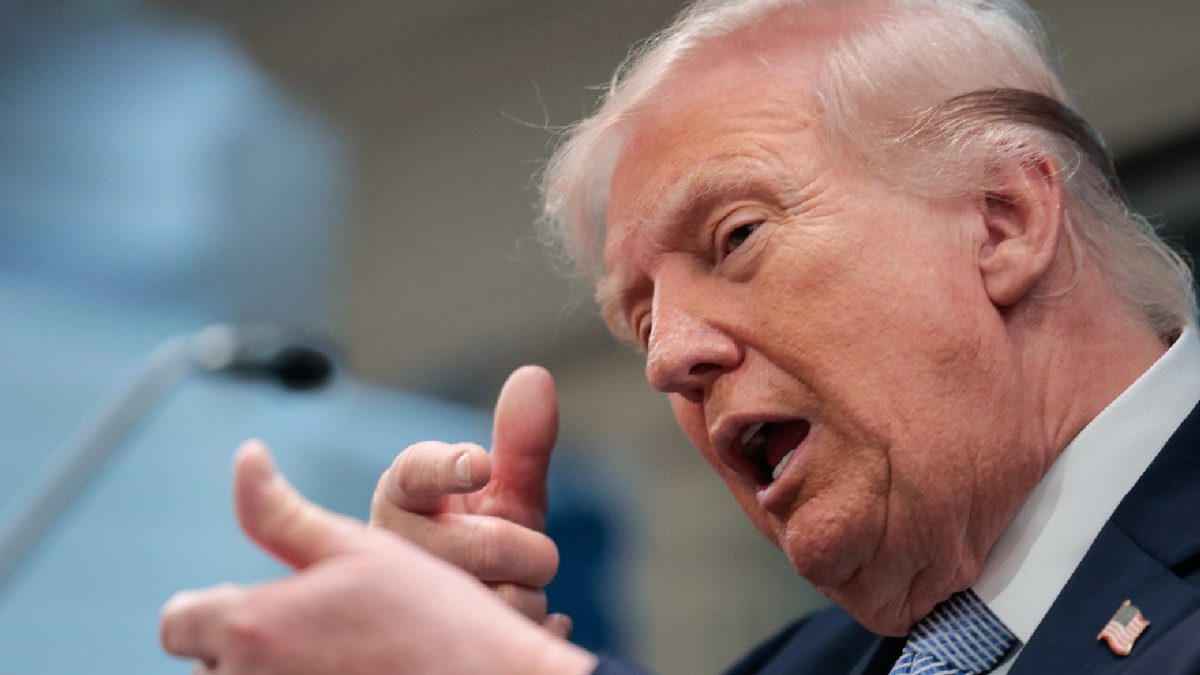
The statement came hours after US President Donald Trump announced on Tuesday that he had agreed to suspend military actions against Iran for two weeks, citing progress in negotiations and diplomatic interventions by Pakistan.
“Based on conversations with Prime Minister Shehbaz Sharif and Field Marshal Asim Munir, of Pakistan, and wherein they requested that I hold off the destructive force being sent tonight to Iran… I agree to suspend the bombing and attack of Iran for a period of two weeks,” Trump wrote on Truth Social.
The US and Iran reached a deal on Tuesday evening (US Time), hours after Trump had warned that“A whole civilisation will die tonight, never to be brought back again,” if Iran failed to make a deal that includes reopening the vital Strait of Hormuz.
It's been six weeks since the West Asia war began with joint US-Israeli attacks on Iran. Tensions escalated following the killing of 86-year-old Iran's Supreme Leader, Ayatollah Ali Khamenei, in the military strikes on 28 February.
In retaliation, Iran targeted Israeli and US assets across several Gulf countries, causing further disruptions to the waterway and impacting international energy markets as well as global economic stability, disrupting trade routes through the Strait of Hormuz.
The fighting has left thousands dead, most of them in Iran and Lebanon, and brought vessel traffic through Hormuz — through which about a fifth of the world’s oil and liquefied natural gas exports normally flow — to a near standstill.
Is the Strait of Hormuz open now?
In the statement shared by Araghchi, Iran added that 'for a period of two weeks, safe passage through the Strait of Hormuz will be possible via coordination with Iran's Armed Forces and with due consideration of technical limitations."
Iranian state media said talks with the US will be held in Islamabad to finalise the details of an agreement aimed at ‘confirming Iran’s battlefield achievements.' Iran's Supreme Security Council submitted a 10-point proposal to the US via Pakistan.
If attacks against Iran are halted, our powerful armed forces will cease their defensive operations.
The 10-point proposal, according to Iranian media reports, included a protocol for safe passage through the Strait of Hormuz apart from Iranian demands for sanctions to be lifted, reconstruction of damaged infrastructure and an end to regional hostilities.
The Strait of Hormuz is a narrow, highly important sea passage in the Middle East which connects the Persian Gulf with the Gulf of Oman. It is one of the world’s most critical oil transit chokepoints with roughly 20% of global oil supply passing through it. Major oil-producing countries like Saudi Arabia, Iraq, Kuwait, and the UAE export oil through this route.
Key Takeaways
- The Strait of Hormuz is critical for global oil supply, with 20% of it passing through.
- Iran's 10-point proposal seeks an end to hostilities and economic sanctions in exchange for safe passage.
- The ceasefire reflects the delicate balance between military actions and diplomatic negotiations in the region.
About the Author
Gulam Jeelani
Gulam Jeelani is Political Desk Editor at LiveMint with over 16 years of experience covering national and international politics. Based in New Delhi, Jeelani delivers impactful political narratives through breaking stories, in-depth interviews, and analytical pieces at LiveMint since February 2024. The expertise in video production fuels his current responsibilities, which include curating content and conducting video interviews for an expanding digital audience.<br><br> Jeelani also travels during elections and key political events and has covered assembly elections in key states apart from national elections. He has previously worked with The Pioneer, Network18, India Today, News9Plus and Hindustan Times.<br><br> Jeelani’s tenure at LiveMint and previous experience at print and digital newsrooms have honed his skills in creating compelling text and video stories, explainers, and analysis that resonate with a diverse viewership.<br><br> Before moving to New Delhi in 2015, Jeelani was based in Uttar Pradesh, where he worked for five years as a reporter. In 2018, Jeelani was one of the two Indian journalists selected for the Alfred Friendly Fellowship in the US. There, he attended training workshops on reporting and data journalism, and he was attached to the Minneapolis Star Tribune in Minnesota, where he worked as a reporter.<br><br> Jeelani is a Bachelor's in Chemistry and holds a Masters Degree in journalism and mass communication from Aligarh Muslim University. Outside work, he enjoys poetry, cricket and movies.






 English (US) ·