
 (6).png) 1 day ago
1
1 day ago
1
ARTICLE AD BOX
Following Trump's threats, the EU suspended its trade agreement with the US. German Chancellor Merz called for EU unity and competitiveness to counteract 'great-power politics'.

German Chancellor Friedrich Merz stated that Europe must strengthen its unity and competitiveness to counter a new wave of “great-power politics” that has disrupted the transatlantic relationship. He welcomed US President Donald Trump’s vow not to use force to take Greenland.
Tensions at the annual gathering of global business leaders and policymakers eased on Wednesday after Trump suddenly backed down from his threat to impose new tariffs on several European nations that had resisted his attempt to gain control of Greenland, a semi-autonomous Danish territory.
What did Merz say?
Merz said Thursday in a speech at the World Economic Forum in Davos, “The international order of the past three decades — anchored in international law — has always been imperfect. “Today, its very foundations have been shaken.”
Trump cited a “framework of a future deal” on Wednesday, but it was unclear what the agreement would entail. Denmark has repeatedly ruled out negotiations over ceding the semi-autonomous island to the US.
Merz has called for a more measured approach to Trump’s tariff threat compared with French President Emmanuel Macron, who suggested using the European Union’s so-called anti-coercion instrument. However, Merz noted earlier this week that Germany’s greater reliance on exports makes it less inclined to deploy the bloc’s most powerful trade response.
“New tariffs would undermine the foundations of transatlantic relations,” Merz said, adding, "“Europe’s answer would be united, calm, measured and firm.”
Following Trump’s threats, the European Union suspended its trade agreement with the US, which many in the bloc already viewed as unfair. That accord, which was clinched last summer, saw the bloc agree to remove nearly all tariffs on American products while accepting a 15% duty on most exports to the US and 50% on steel and aluminum.
Details of Trump’s so-called framework on Greenland were vague. Denmark earlier Wednesday ruled out negotiations over ceding the semi-autonomous island to the US.
Danish Prime Minister Mette Frederiksen said her nation is prepared to negotiate “on all political matters — security, investments, the economy. But we cannot negotiate our sovereignty.”
NATO Secretary General Mark Rutte told Bloomberg in an interview at the World Economic Forum that his discussion with Trump centered on Arctic security in a “practical sense,” and how to prevent Russia and China from accessing the semi-autonomous Danish territory.
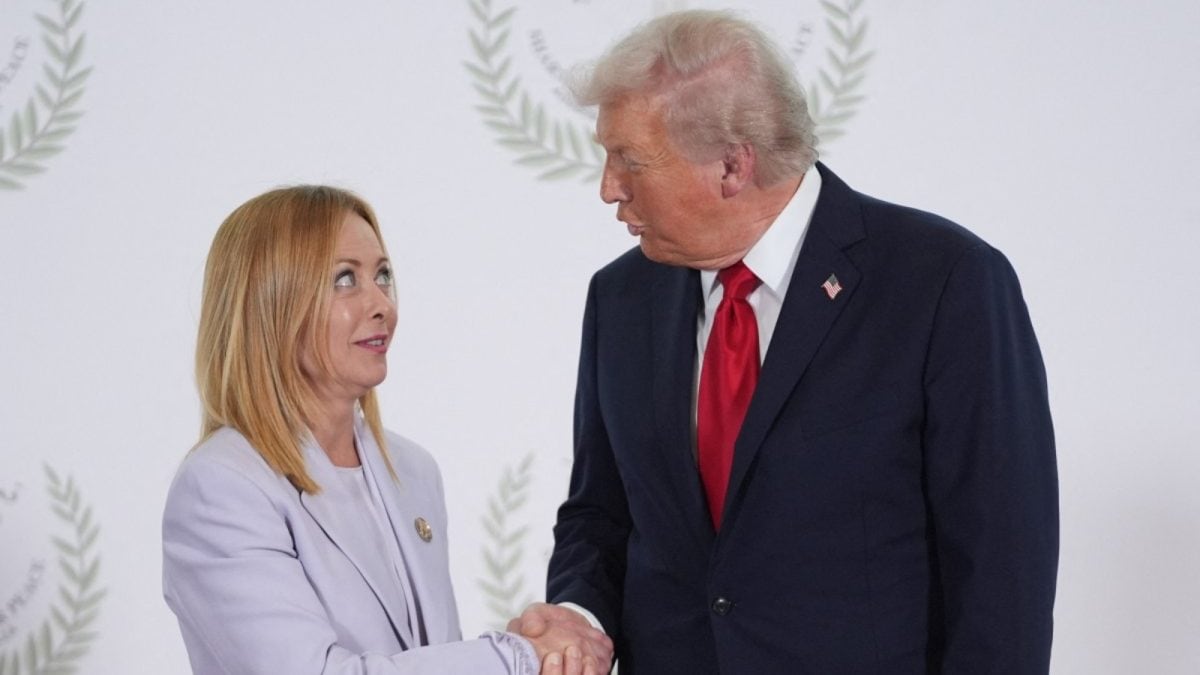
Merz also emphasized Europe’s need to become more competitive economically and to create a better environment for domestic businesses to flourish. The German leader will meet with Italian Prime Minister Giorgia Meloni to chart out how to address priorities.
Merz said they’ll propose an emergency brake for bureaucratic processes and modernizing the EU’s budget to make the bloc more competitive. He argued that Europe’s geopolitical influence depends on the continent’s economic momentum.
“I will insist that rapid progress be made, including on the capital markets union,” he said. “We cannot allow our European champions to continue being dependent on the US capital markets.”
German Chancellor Friedrich Merz emphasised the importance of expanding the EU’s trade partnerships and coordinating them strategically worldwide. He slammed the European Parliament for voting to submit the new Mercosur trade agreement to judicial review, asserting that the deal would proceed.
However, the battle over Greenland and the tariff threat has sunk transatlantic relations to a new low. EU leaders are set to meet in Brussels on Thursday to address the recent deterioration and plan the way forward. He stressed that democracies should view each other as allies, partners, and trusted friends, rather than as subordinates.






 English (US) ·